In many ways, 2026 is the year of peptides.
Injectable research peptides, like BPC-157 and TB-500, exploded in popularity last year, going from niche biohacker protocol to mainstream curiosity. Now, an influx of new wellness businesses have sprung up to handle the demand just as the FDA is loosening regulations to further proliferate their availability.
This coincides with the democratization of GLP-1 peptides. After three years of short supply, GLP-1s like Ozempic are now widely available and, as of this month, three GLP-1 pills have been released, including the Wegovy Pill.
Now, after a topical peptide surge in 2023 that included peptide skin care from Goop, Glow Recipe and Naturium, it seems that the beauty industry is in for another wave.
‘’At the end of the day, peptides [in skin care] have been around, so it’s interesting how we start to think about things differently once they’re kind of reframed in a way that’s category-specific,” said Lorne Lucree, innovation advisor for YSE Beauty, founder of Quiet Coyote Consulting, and founder and CEO of Wizard Wellness.
Some of the category’s growth this year can be traced back to the overall popularity of peptides across social media and in online searches. For example, as a whole, “peptide therapy” grew in year-over-year popularity by 281% on Google, 459% on TikTok and 412% on Instagram as of early April of this year, according to Alyssa Williams Atkinson, category insights manager at Spate market research. The firm predicts an additional 33% growth across the board over the next year. Recent searches for “peptide therapy” are often accompanied by search terms like NAD, up 601%; GLP-1, up 177%; and anti-aging, up 162%, she told Glossy.
But the shift we’re seeing today in beauty is more nuanced than just a halo effect from health and wellness launches. Lucree attributes cross-category growth in beauty to the groundwork laid by K-18, the peptide hair-repair brand that launched in 2020, skyrocketed to sales success, and sold to Unilever in 2023 for more than $1 billion.
“It wasn’t until K-18 came out that I think people were like, ‘Oh my God, peptides!’ [because] they did an amazing job educating on what peptides are and how they work,” Lucree said. “When you look upstream, ingredient suppliers often think the same way, too.”
For example, Lucree saw similar proliferation within collagen as an ingredient in years past. Now, he’s spotted an influx of peptides developed by ingredient manufacturers and ready to be dropped into new formulas. “Add in consumer trends, like longevity and preventative health and biohacking, … and all of a sudden we have a great market for peptides. I mean, it’s fascinating,” Lucree said.
In June of 2025, Lucree took YSE Beauty founder Molly Sims to Supplier’s Day in New York City, a convention where ingredient manufacturers show their latest offerings, and the duo secured access to a new proprietary ingredient made with peptides Tripeptide-1 and Hexapeptide-9, plus hyaluronic acid. Lucree was wowed by the combination of immediate and long-term benefits.
“It’s rare in peptides that you can get some of these more immediate claims that speak outside of some of the [long-term] firming benefits, elastin benefits, etcetera,” he said.
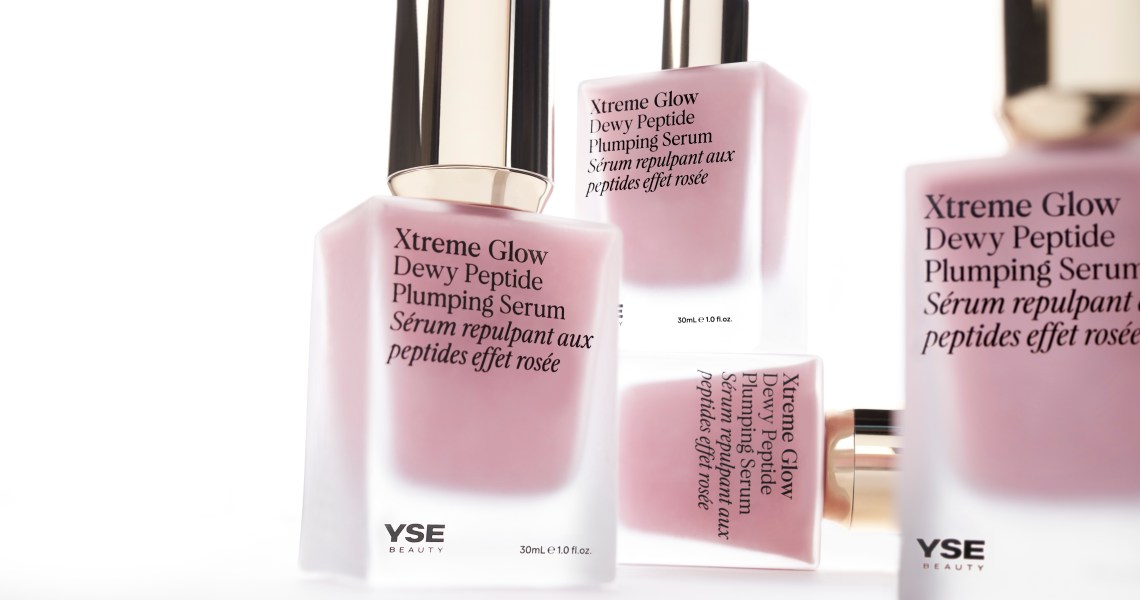
On March 26, YSE Beauty unveiled the $68 Xtreme Glow Dewy Peptide Plumping Serum, which offers a glass-skin effect from the H.A., plus long-term firming from the peptide blend. According to the company, the serum has been its strongest launch to date in terms of units sold, setting records for both first-day sales and first-week sales, over-delivering on its four-week unit forecast by 10%, and selling out on Sephora.com.
Licensing a peptide from a manufacturer is perhaps the quickest and easiest pathway for new brands, although brands then lack exclusivity. However, some brands have been created around custom peptides. For example, One Skin was launched in 2016 by four PhD scientists. It was built around a single topical peptide called OS-01 that helps to remove senescent cells from the body, also known as ‘zombie cells’, which are no longer functioning properly and create inflammation.
“It cost millions of dollars to go the route we did, so it was very expensive, and we know that not all brands can do something like that to really discover something new,” Alessandra Zonari, PhD, chief science officer and co-founder of One Skin, told Glossy in December. “[But] if you find something, the pay-off is really high, because then you have something that’s unique, that’s proprietary and of which you can validate the efficacy.”
Dr. Zonari and her co-founders procured the OS-01 peptide molecule from a peptide library in Brazil, validated it through testing and built One Skin as the consumer-facing brand. One Skin is backed by Prelude Growth Partners, Unilever Ventures, Selva Ventures and Plus Capital. It currently sells peptide formulas for face, body, lips, scalp and hair. Its bestselling face moisturizer sells for $100.
Then there is Auro Wellness, founded by longtime peptide expert Nayan Patel, PharmD, professor at USC’s School of Pharmacy. His line sells in doctor offices and DTC. It uses a popular peptide within a bespoke delivery system.
The line’s Copper Tripeptide serum sells for $160 and taps into a growing awareness around copper peptides, also known as GHK-Cu.
Behind BPC-157, GHK-Cu is perhaps the most popular peptide to inject among biohackers. But GHK-Cu is also effective when applied topically, a rarity among other injectable peptides. However, like many parts of the skin-care industry, a lack of precision delivery can prevent the ingredients from being effective.
In 2007, Dr. Patel released a patented delivery system called “Auro GSH” that helps to deliver his peptides to cells. “The question is, ‘How do I get the GHK inside the body?’ Because any peptides, I don’t care what it is, can never get through your skin [without the right delivery system],” Dr. Patel said. “Our goal is not to just get through your skin and into your bloodstream. … My goal is to get inside your skin cells [and stay there] where the benefits are going to be.”
As the market expands, proprietary peptides and precision application will be the next frontier, according to Dr. Zonari and Dr. Patel, respectively.
But peptides aren’t just trending in skin care. P&G-owned Ouai Haircare launched a $50 topical hair peptide product called Bond Repair Balm in March. In May, Omi Well Beauty, the brand behind four peptide supplements launched in 2025, will expand its offerings with a hair-loss-focused range called Hair Growth Peptides. Then there is Mendora Health from Kami Parsa, MD, the Beverly Hills surgeon who went viral in 2025 for his content chronicling tissue expansion caused by dermal fillers. His new line launched in February with skin-focused oral collagen peptides.
Meanwhile, Neurogan Health, the oral and topical supplement line launched in 2023, is a first mover in the body-care space with a copper peptide body care, launched earlier this month. The brand uses 2% GHK-Cu, which yielded a 32.8% reduction in wrinkle depth and a 20-30% improvement in skin firmness in 12-week clinical trials.
Newfound consumer demand, mixed with technological advances in AI, means a rapidly expanding opportunity within peptides for use across the industry.
“Really understanding how you can deliver something that’s very precise to activate a desired target is kind of the beauty and the opportunity of working with peptides, and it’s interesting, because the opportunities are endless, right?” Dr. Zonari told Glossy. “Now with AI, you can even expedite this in many ways. So, from cosmetics to skin care to longevity, it’s an area that will continue to grow, but I think it needs to continue to have a high level of high standards [to] deliver the benefits that [brands] are promising.”