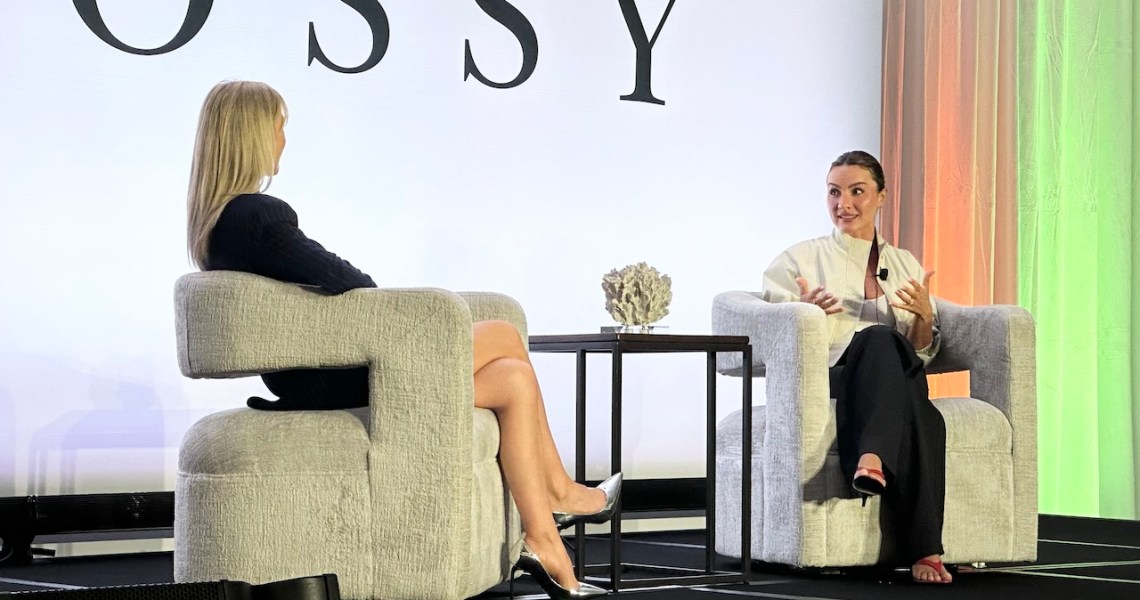
At this month’s Glossy’s E-Commerce Summit in Miami, brand and retail executives used town hall and interactive speaker discussions to workshop their next strategies, with considerations including the rise of AI, the evolution of creator marketing and the new fragility of consumer loyalty. The conversations sparked new ideas, provided immediately actionable takeaways, and shaped the overall direction of fashion and beauty, informing plans and priorities. Below is a rundown of the state of the industry and brands’ next steps, accordingly, based on Summit discussions.
The rise of agentic commerce and the widespread integration of AI are changing retail.
Brands are rapidly embedding artificial intelligence into both internal workflows and consumer-facing experiences, treating it not as a replacement for humans, but instead as a means of enabling next-level efficiency and personalization.
Internally, brand leaders are fostering a culture of experimentation, where teams use AI to code, analyze data and draft email communications, for example.
“I’m constantly telling my team, ‘If it takes you longer than 15 minutes to do something, there’s a faster way, and you should learn and try to figure it out via AI,’” Jenna Manula Linares, vp of digital marketing at Tarte, said during a panel discussion on how beauty industry leaders are managing the AI explosion.
Externally, retail is moving toward “agentic commerce,” where AI agents are given permission to shop on a consumer’s behalf. For now, AI has opened the door for interactive digital storefronts, virtual try-on and chatbots providing customer service.
“Quite simply, agentic commerce is using an [AI] agent to buy a good or service, … enabling an agent to make a purchase on your behalf or interacting with that agent,” said Juan Pellerano, CMO of Swap. “And our belief is that agentic commerce — for now and for the foreseeable future — will be human-led and human-guided.”
Brand and product discovery is evolving.
Namely, consumers are moving from searching via Google to leveraging AI search and the search functions on social platforms.
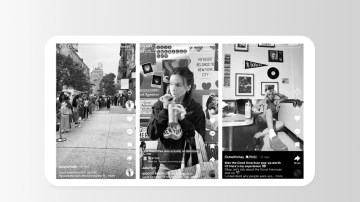
“Seventy-four percent of Gen Z is going to TikTok to search. And now, we have 59% of Americans using Gen AI shopping tools to search and start their buyer journey,” said Kristen Wiley, founder and CEO of Statusphere. “No matter what, you can’t escape this AI search.”
In turn, brands are realizing the need to pivot from standard search engine optimization (SEO) to generative engine optimization (GEO) and answer engine optimization (AEO), structuring their backend data so AI models can find, read and recommend their products as the “solution” to a user’s prompt.
“The LLM, in its own words, will take a prompt for the consumer and write its own queries,” said Kimberly Shenk, co-founder and CEO of Novi. “So, you need to not only understand how machines evaluate and recommend products, but you also need to understand what the machine is going to translate the consumer prompt into, and you need to make sure you then have the right content available for every single product so the machine knows your product is the right solution.”
Authenticity, trust and a ‘human touch’ remain valuable brand differentiators.
Despite the transformative technological leaps in e-commerce, making a purchase remains an emotional act.
AI is useful for parsing data, among other tasks, but it can’t create brand trust.
“The consumer doesn’t care if you’re using AI to run the backend,” said David Baker, chief revenue officer at Beekman 1802. “They care if the story is bad. That authenticity is really needed and wanted — and that comes through in the storytelling, not in the asset.”
Brands and retailers are realizing that they should use technology to augment human connections, not replace them, and that consumers ultimately care about authentic stories and real human interactions.
“I believe quite passionately, especially in apparel — an emotional category — that there’s nuance [in consumers’ purchase decisions], and there’s empathy,” said Matt Baer, CEO of Stitch Fix. “So, we [leverage] the leading technology and innovation, while ensuring that each client has a human stylist who can work with them, understand them and bring that empathy to each situation.”
Brands are seeing more value in UGC, micro-creators and affiliate communities, less in mega-influencers.
For many brands, large celebrity endorsements’ return on investment is decreasing, while authentic user-generated content, micro-influencers and affiliates are increasingly converting.
“Someone with 10,000 followers who is so engaged in their community and liking every comment will convert so much higher than someone who has 600,000 followers and is just posting pretty pictures of themselves and no one gives a shit,” said Krissy Cela, co-owner and creative director of the Oner Active activewear brand.
The modern consumer can recognize forced marketing and is more likely to shop based on genuine recommendations from people who truly use a product, whether that’s college students, passionate brand fans or members of a niche subculture.
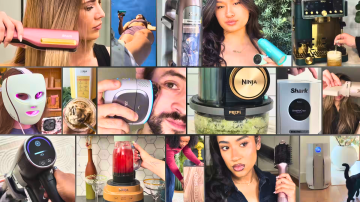
“We actually look to have about 70% of our content be UGC and only 30% be paid [content] from our brands, because that is the magic formula for us,” said Julie Bailey Blanche, vp of global marketing at Shark Beauty. “A trusted community of individuals, when they start using a product and posting about it purely on their own, that’s where the magic happens — because, then, you’ve got credibility, you’ve got authenticity, and it feels real and not forced.”
A synergistic omnichannel distribution strategy is proving effective, and benefits all channels.
Brands are abandoning siloed sales channels in favor of a cohesive ecosystem where their direct-to-consumer e-commerce sites, Amazon, TikTok Shop and retail partners, like Target or Ulta, all support one another.
“We see Amazon and Target as places where we can increase awareness and drive demand,” said Lauren Weinberg, chief marketing officer at Supergoop. “[Launching] on Amazon was for us to just have more control as a brand over how we show up to make sure we’re helping to guide consumers.”
Instead of viewing distinct channels as threats that cannibalize sales, brand leaders have come to believe that visibility on social commerce platforms, for example, creates a “halo effect” that drives foot traffic to physical retail stores and boosts searches on Amazon and their own website.
“You should be thinking about TikTok as a media channel to halo everything, including Amazon and retail,” a retail executive speaking on background shared during a town hall discussion. “We’re getting the lift in sales from TikTok driving to in-store at Ulta — and the lift we’re seeing, versus Amazon, is six times greater for in-store sales traffic, because the consumer sees it and they want to buy it at a trusted retailer.”
Brands are protecting brand equity by pushing back on discount culture.
Despite the increasingly saturated and economically strained fashion and beauty markets, many prestige and premium brands are refusing to participate in the aggressive discount cycles being demanded by major retailers.
“If I had a partner who said to me tomorrow, ‘You guys need to be 30% off every day, or we can’t carry you anymore,’ I would say, ‘Great. Please send us our stuff back,’” said Jason LaRose, chief executive officer at the sock brand Bombas. ‘If their vision is now that they’re going to be a hardcore discount retailer, and that’s not what we want to be, then we won’t be there, and that’s OK.”
Instead of degrading their brand value with constant promotions to secure shelf space or website prominence, these brands are holding firm to their pricing and opting to offer value through other means, such as product quality, trial kits or perks for their loyal communities.
“We have cut all of our discounting, like a lot of brands, and we saw customers shopping a bit less frequently in the last 12 months,” said an in-house brand strategist speaking on background. “But we had more customers overall who were spending more in each order. … We don’t need to give her 10-20% off.”

More E-Commerce Summit highlights
How execs from Ulta Beauty, Tarte and Beekman 1802 are implementing AI into workflows
How are beauty and wellness business leaders actually using AI today? That was the question posed on stage to three longtime industry executives during Glossy’s annual E-Commerce Summit in Miami Beach earlier this month – and the answers may surprise you. Listen in now.
Oner Active expects its creator workforce to generate $52 million in sales this year
Having started as a creator herself, Krissy Cela started Oner Active with a deep understanding of just how valuable creators can be. One way that currently plays out at Oner is through its Move Ambassadors program, which receives about 30,000 applicants each time it opens.
How Shark Beauty is leveraging community to reach stunning annual growth
Julie Bailey Blanche, vp of global marketing at Shark Beauty, joined the stage at Glossy’s annual E-Commerce Summit to discuss the secret sauce behind Shark Beauty’s industry disruption. This includes 40% growth in skin-care device sales during its Q1 2026. Blanche drilled down her winning strategy, from acquisition to repeat purchase, during an insightful fireside chat on community building in 2026.
Bombas CEO Jason LaRose on opening stores and partnering with Target to fuel growth
The sock brand Bombas is known as one of the OG DTC brands of the 2010s. But in the last year, new CEO Jason LaRose has been pushing the brand in new directions, opening three of its own stores and striking deals with big retailers like Target and DSW.
Sephora is bringing prestige beauty shopping into Google’s AI ecosystem
Sephora has long been known for its in-store beauty advisors, product discovery and loyalty-driven personalization. But as more consumers start their shopping journeys inside AI-powered platforms like ChatGPT and Claude, the retailer is moving to bring that same beauty expertise into new digital environments.
Wellness Briefing: How top brands are training employees to use AI tools, plus news
For the Wellness Briefing, Glossy is reporting from our annual E-Commerce Summit, where brand leaders from Ulta Beauty, Supergoop!, SharkNinja, Tarte, Sephora, Beekman1802 and more shared tactics and tips to supercharge brand success with AI tools.
Stitch Fix CEO Matt Baer on why AI can supplement, but not replace, human stylists
Stitch Fix has always been known for its personal stylists who curate boxes of clothes for their specific clients. But the company has spent the last year building up its AI infrastructure to help supplement the human element.