Curology is finding that a Walmart shelf is a more effective way to bring people into its prescription skin-care business than its traditional online funnel.
The teledermatology company said customers coming through its Walmart Prescription Acne Kit are converting to a medical consultation and prescription at five times the rate it sees online. Curology is also seeing minimal overlap between those customers and its existing subscriber base, suggesting the retailer is bringing in new patients rather than moving current customers to a different channel.
Curology’s Prescription Acne Kit launched at 1,000 Walmart stores on July 6, building on the brand’s entry into Walmart with non-prescription skin-care products in August 2024. Available through August, to start, the kit is stocked across stores in 49 states, with locations selected in areas Curology identifies as “dermatologist deserts.” The term refers to areas where patients have little or no access to in-person dermatology care, often because too few specialists are nearby, according to the brand.
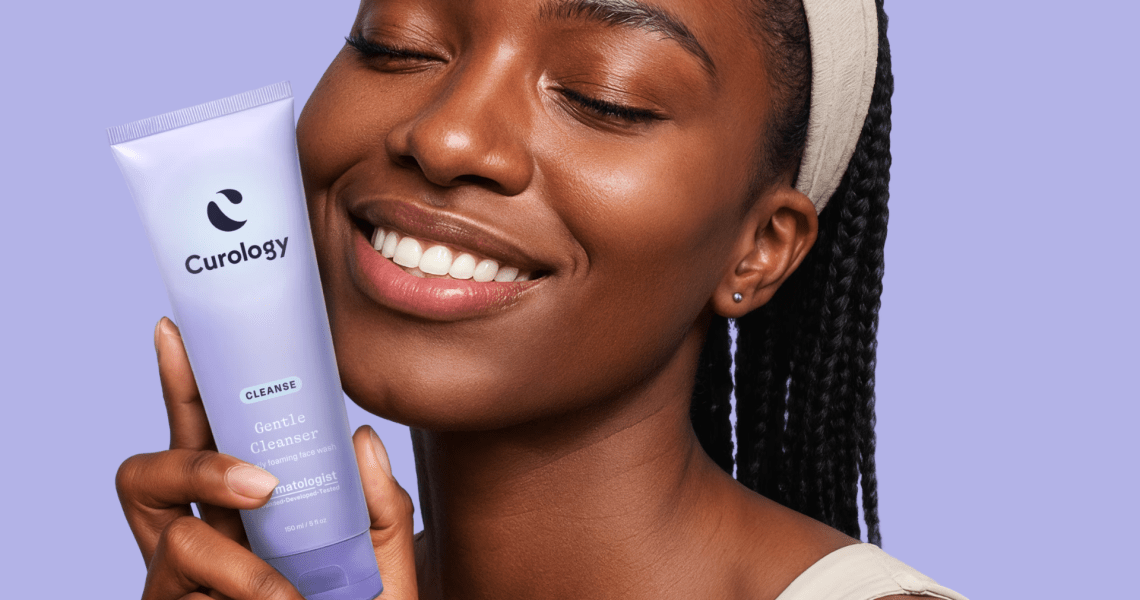
The $24.97 kit pairs Curology’s non-prescription cleanser and moisturizer with a digital code for a 60-day supply of its personalized Custom Formula Rx, following an online consultation. After the initial 60-day prescription, customers can subscribe for a 60-day refill at $59.90 or buy a one-time 30-day supply for $34.95.
Curology and Walmart are promoting the kit through prominent in-store end-cap merchandising and store events, including live dermatologist consultations, while Walmart has also folded Curology into its Fall Beauty Event and back-to-college assortment.
Curology already sells non-prescription products through retailers including Target, CVS and Amazon, but Walmart is being used more directly as an entry point into its prescription business.
“Retail is an incredible billboard for our business,” Mike Penake, CFO of Curology, told Glossy. Curology’s DTC operation still makes up the “lion’s share” of its revenue, Penake said, but stores offer another way to bring shoppers into the prescription side of the company.
Since its personalized prescriptions cannot simply be placed on a pharmacy shelf, the company had to create a system that moves customers from Walmart into Curology’s digital medical platform.
“It is a very different acquisition model than what our current DTC model is,” Penake said.
Curology had to “rebuild a full onboarding platform” specifically for Walmart shoppers, he said. Customers scratch off a code included in the box, enter Curology’s digital sign-up flow and complete their medical information and consultation. Curology said the onboarding takes less than seven minutes, with medication shipped within 24 hours of completion.
Walmart said the partnership fits with changing shopping habits around skin care.
“Customers are increasingly looking for skin-care solutions that fit into their everyday routines,” said Vinima Shekhar, vp of beauty at Walmart U.S. “Curology was a natural addition to our back-to-college assortment during the Fall Beauty Event because it brings together personalized, dermatologist-backed skin care in a way that’s relevant to how students are shopping today.”
A Walmart representative said the retailer has also seen growing interest in dermatologist-backed skin care and products that help customers build effective routines. Its Fall Beauty Event, which runs from August 14 through September 4, includes Curology alongside other established and emerging skin care brands.
The partnership also brings Walmart’s beauty business closer to healthcare. Customers can already access virtual care providers, including dermatology care, through Walmart’s Better Care Services. And it fits with Walmart’s broader omnichannel strategy. On its second-quarter earnings call last week, the retailer said its stores now act as fulfillment nodes for 80% of its e-commerce orders, as it increasingly blends physical stores with digital services rather than treating the two as separate channels.
Walmart is also placing more emphasis on health and wellness customers. On its earnings call, Walmart U.S. CEO David Guggina said health and wellness customers spend about three times more than the average Walmart shopper, with spending even higher among those who also use pharmacy delivery.
The Walmart launch comes as more prescription skin care has moved online, with telehealth companies including Nurx and Musely offering virtual consultations and treatments shipped directly to consumers. What is less common about Curology’s test is that it uses a mass retailer as the starting point for that digital prescription journey.
Curology has described the tie-up as a “first-of-its-kind retail partnership.” The test is therefore less about moving dermatology online and more about whether an offline beauty shopper can be brought into an ongoing prescription relationship.
For now, the 1,000-store rollout remains a test. Penake said Walmart has roughly 5,000 U.S. stores, leaving room to expand if the program performs well. The companies have already begun discussing what a future version could look like.
“If this performs the way we expect it to, we’ll have sold through the product, and then we’ll have conversations,” he said. “We’ve already started some conversations, like, what does the next iteration look like?”
Curology is not disclosing sales, customer acquisition costs or its overall subscriber retention rate. But Penake said the company is already comparing Walmart point-of-sale activity with the number of customers entering its prescription flow, and that early conversion has been encouraging.