This is an episode of the Glossy Fashion Podcast, which features candid conversations about how today’s trends are shaping the future of the fashion industry. More from the series →
Subscribe: Apple Podcasts • Spotify
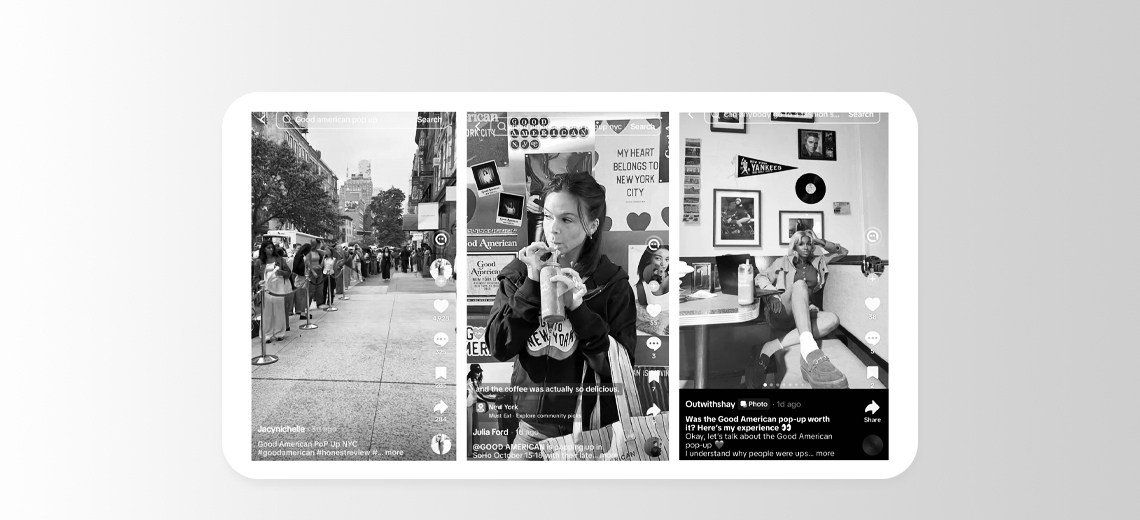
This past weekend, the Khloé Kardashian- and Emma Grede-founded denim brand Good American hosted a pop-up in New York City, inviting dozens of content creators and influencers. Many of the influencers who showed up, however, did not get the experience they were expecting.
In the days after the pop-up, social media was flooded with videos of disgruntled creators sharing their experience. Believing the event was an “exclusive” experience for VIPs, some flew from other cities only to face a long line in the rain and decidedly less-than-VIP treatment.
Since then, there has been widespread public debate over who was in the wrong here. Did Good American err by poorly communicating the exact nature of the event? Or did the influencers, as some have said, have too high an opinion of themselves or fail to read between the lines, expecting special treatment at what was ultimately a standard pop-up event?
On the Glossy Podcast this week, senior fashion reporter Danny Parisi, international reporter Zofia Zwieglinska and editor-in-chief Jill Manoff discussed what exactly went wrong with this pop-up and what it says about how brands work with influencers, who are increasingly central to their marketing efforts.
“The problem was that a lot of these creators are nano-influencers or micro-influencers,” said Zwieglinska. Typically, a nano-influencer has 1,000-10,000 followers, while a micro-influencer has 10,000-100,000. “A lot of them thought this was an exclusive invite and, for their size, having an opportunity to work with a big brand like Good American could be a really big deal.”
Zwieglinska pointed out that a separate, actually exclusive event later in the day let influencers with much larger followings in without issue. They posted far more positively about how much fun they had, adding to the bitterness for smaller creators, many of whom never even got into the store before being turned away.
Manoff said she understood why the situation provoked such an intensely negative reaction from the influencers who felt burned.
“I’ve had similar experiences,” she said. “I’ve been invited to fashion shows, and they tell you you have a seat, and you get there, and it’s such a scene — they’ve clearly invited too many people, or they’re a buzzy brand and the public swarms it, and you don’t get in. You have certain expectations when you get invited. You’re there to do your job. And, bluntly, you feel like a loser. Like, what am I doing here? It’s a really bad feeling.”
Fashion brands are increasingly relying on influencers and content creators to magnify their reach, and brand executives often tell Glossy reporters that micro-influencers are key to that strategy. Despite their smaller followings, they often have more engaged audiences, and their influence can be just as valuable as big-name celebrities.
Yet in reality, brands often use a tiered system, and influencers with bigger follower counts still get the glamorous treatment.
The hosts also discussed how they could have avoided this. All it really would have taken was Good American being more direct about what exactly the event entailed.
“I think there is also a scourge of PR, in their efforts to make their clients look good, increasingly exaggerating their pitches,” Parisi said. “I get a lot of PR pitches, and I feel like they are getting longer, vaguer and more exaggerated. They want to make every event sound sexy and cool, so they’re going to call it ‘VIP’ or ‘exclusive,’ but that’s confusing if it’s not actually VIP or exclusive. So I think an issue here is when your wording goes from exaggeration to straight-up misrepresentation.”