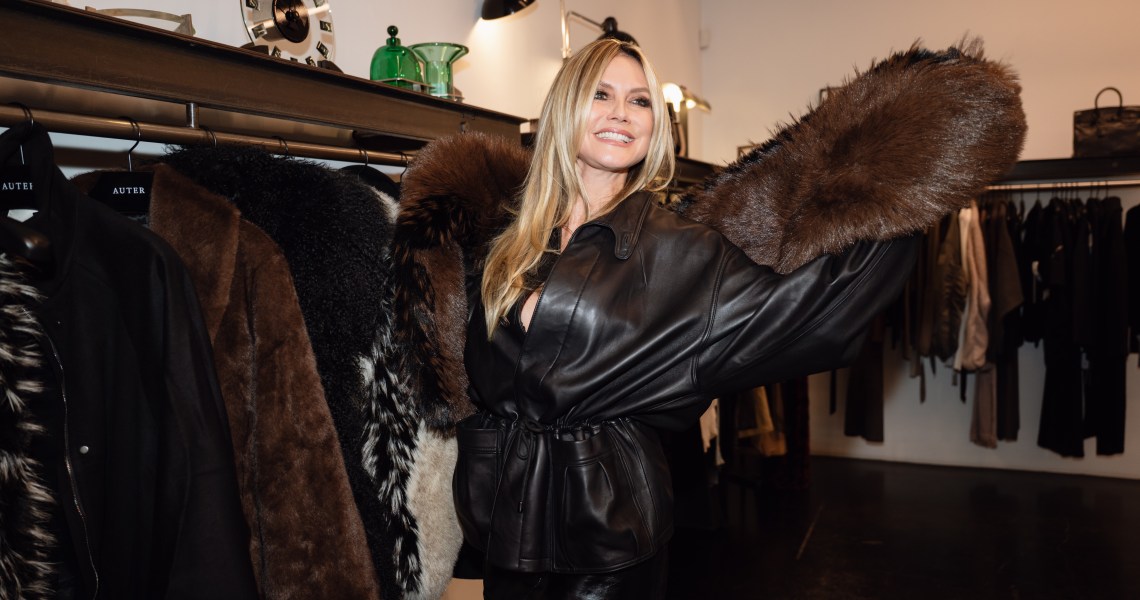
This week, the coat is the outfit, and brands are building repeat business around making an entrance every winter. I spoke with Auter founder Rob Zangardi, Shrimps founder Hannah Weiland and Mint Velvet trading director Laura Boyd about what shoppers want from statement outerwear and why one standout coat doesn’t always stay their only one. Plus, The Gstaad Guy dresses up the Whoop wrist, and Vans finds fresh momentum on resale. For tips or comments, email me at zofia@glossy.co.
Have you felt the chill in the air this week? I definitely have — so it’s time to pull out the big coat. Runway looks by Miu Miu, Prada and Saint Laurent have helped put textured outerwear with fur (fake and not) at the center of winter dressing. Across recent collections, glossy shearling, oversized collars and plush trims have made the coat a focal point. By October, Net-a-Porter was highlighting fur details across jackets, knitwear and accessories, extending the appeal beyond a full-length winter coat.
The new attention has reinforced a category independent brands have spent years developing: recognizable statement coats that customers can wear repeatedly, then buy again in another color or shape the following year. At London-based Shrimps, California label Auter and Ukrainian “it” brand Katerina Kvit, outerwear is both a substantial purchase and a way to bring customers back.
The opportunity is growing across retail assortments. Fashion-data company Trendalytics reported on November 6 that faux fur’s market adoption increased 57% year on year, alongside 95% growth for suede jackets. These measure product availability rather than sales but indicate retailers are expanding their commitment to tactile outerwear.
“The coat really is the outfit,” Auter founder and celebrity stylist Rob Zangardi told Glossy. The phrase has become a recurring styling refrain in fashion coverage, including Who What Wear’s story this autumn on an Instagram-favorite coat by Nour Hammour.
For brands, that creates a useful proposition: a distinctive coat can transform familiar clothes underneath. But selling something intended to last for years begs for a reason for customers to return before it needs replacing.
Auter, whose retail partners include Bergdorf Goodman and Antonia in Milan, offers a $950 faux-fur Sand Fox Coat and a $2,950 alpaca topcoat. Accessories provide another entry point. At Maxfield in Los Angeles this October, a shopper seeking the brand’s leather trench left with both the coat and a $300 faux-fur collar, Zangardi said.
“You can wear it over almost any coat or on its own as a scarf, and it even has pockets,” he said. “It gives you a lot of versatility in one piece.”
Ducie, meanwhile, shows how an outerwear specialist can build on that appeal. Founded by Ducie Keam-George in 2006, the London label began at Portobello Road Market and now sells leather, suede, shearling and faux-fur designs through its own website and retailers including Revolve and Farfetch. Its Harper coat combines suede with what the brand describes as technologically advanced faux fur.
The company is investing in expansion. In May, Ducie appointed former Perfect Moment brand director Julie Robinson to oversee brand and growth, including digital sales, wholesale and partnerships. At the time, the company reported that it is anticipating 400% growth this year, citing increasing wholesale demand and direct sales.
At Shrimps, repeat purchasing centers on color. Its approximately $922 Dallas coat, a structured wool-bouclé style with a faux-fur hood and cuffs, has been its bestselling product for three consecutive years. The brand sells directly online and lists Printemps in Paris and Isetan Mitsukoshi in Tokyo among its stockists.
“We’ve actually kept the fit and fabric exactly the same since we first introduced it, and have just played with the colors each season,” founder Hannah Weiland said in an interview with Glossy.
Dallas launched for Resort 2023 and returns this autumn with its Harper coat in butter yellow and forest green. Some customers own several colorways. Shrimps generally does not reproduce colors once they sell out, keeping silhouettes familiar while giving existing owners something new.
Outerwear accounts for around 40% of Shrimps’ product sales, Weiland said. The brand has increased its stock commitment across eight styles after previous collections arrived in late August and sold out by the end of October.
“This year, we’ve bought much more heavily due to selling out so early last year and because we’d really like to have stock available for customers throughout the winter season,” she said.
One of the more recognizable names in the space is another London-based brand, Charlotte Simone, which maintains limited online buying windows. Its offerings include the approximately $524 Maxine jacket, which combines faux leather with Mongolian lambswool trims, and the approximately $763 Pandora patchwork coat. Vogue Business reported in March 2025 that Instagram generated 80% of the brand’s sales, showing how recognizable outerwear can drive direct purchases.
Katerina Kvit, meanwhile, has ensured customers can return to the brand through another category. Katerina Kvit, founder of the Ukrainian brand, whose offer includes $1,370 tailored coats and a $2,800 leather fringe trench, says coat buyers often subsequently purchase knitwear. She added that Antonia in Milan is one of its accounts this season; other stockists include Chegini in Vienna.
Outerwear generates 65–70% of Kvit’s revenue. According to the company, early-season outerwear sales are up about 30% from last year, driven by the introduction of down jackets.
The appeal of outerwear that makes an outfit extends to more accessible price points. At Mint Velvet, where leather jackets start around $479, September jacket sales rose 20% year over year.
“Customers are responding well to fashion-led outerwear, particularly fur- and fur-trimmed styles,” said trading director Laura Boyd.
Boyd said customers want “a clear combination of quality, longevity and fashion relevance.” Familiar investment shapes are selling with new colors, oversized collars and textured trims — details that let the outer layer do the styling. As she put it, outerwear remains key to “completing the outfit.”
The Gstaad Guy is charming the Whoop crowd
Poubel, the jewelry brand founded by the anonymous creator behind the social account The Gstaad Guy, is opening a year-long residency at Selfridges Oxford Street, complete with a vending machine for charms compatible with the fitness wearable Whoop. The idea came from prospective customers who resisted buying Poubel’s bracelets. “The only thing I wear on my wrist is my Whoop,” they told the founder.
“If someone’s Whoop is the only thing they want to wear, why shouldn’t they be able to express their personality through it?” he said. The brand has also begun stocking charms at Whoop’s first retail store, in Doha, according to the founder. More than 30% of Poubel’s customers are repeat buyers, he said.
Vans is finding its footing
Vans’ resale momentum is building: StockX’s November 12 report shows Vans’ sales on its platform increased 301% year on year through October, while average prices rose 49%. In addition, Vans’ Premium Authentic style ranked fourth on Lyst’s Q3 hottest-products list, which came out in October, suggesting interest extends beyond limited collaborations. Is this a short-term lift? We are waiting to see.
It is interesting that it follows the brand’s aim for premium positioning, which I explored with Ian Ginoza, creative director of Off The Wall, Vans’ luxe and niche shoe subbrand, at Milan Design Week last year. “It’s about creating a conversation between past inspirations and future aspirations,” he said at the time.
The attention is beginning to show up in direct sales. On October 28, VF CEO Bracken Darrell said Vans’ global DTC business was “growing again for the first time in almost five years.” The comeback remains incomplete: Vans’ total revenue fell 9.8% in the quarter ended September 26.
Listen in
What keeps Ralph Lauren winning? On last week’s Glossy Fashion Podcast, we unpacked the designer’s 12th CFDA award, the company’s double-digit revenue growth and the enduring appeal of its American dream. Listen here.
Executive moves
- Justin Boxford will succeed John Idol as Capri Holdings CEO on January 4. The former Estée Lauder executive will oversee Michael Kors and Jimmy Choo, while Idol stays on as a senior adviser through March.
- Matteo Tamburini is leaving Tod’s after almost three years as creative director. His spring 2027 collection was his last; a successor has not been announced.
- William Jackson succeeded Gerry Murphy as Burberry’s chair on November 12, completing the handover announced in May.
News to know
- Harrods is reclaiming creative control of Christmas after years of luxury-brand takeovers. Its 24 windows this year bring houses including Cartier, Ralph Lauren and Chanel Beauty under a retailer-led theme.
- Bloomingdale’s is renovating its Manhattan flagship and 12 other stores, reducing its product density and increasing staffing. More personal service is central to the overhaul, according to CEO Olivier Bron.
- Calvin Klein and Tommy Hilfiger parent PVH will cut approximately 4% of its global workforce, equivalent to 12% of office-based employees, after a 3% dip in revenue, reported in September.
- Maryland-based Hanifa, known for its colorful knitwear and curve-conscious occasionwear, is returning after an eight-month pause. It’s returning with ready-to-ship inventory replacing the pre-order model, plus new customer service and logistics partners. This comes following shipping delays that damaged customer trust earlier this year.
Read on Glossy
Pop stars and burning suitcases are helping sell Away’s aluminum luggage. Oner Active’s new NYC flagship comes with a tequila scent. Brands are banking on live shopping for the holidays. Ulta is betting on health wearables in its stores.