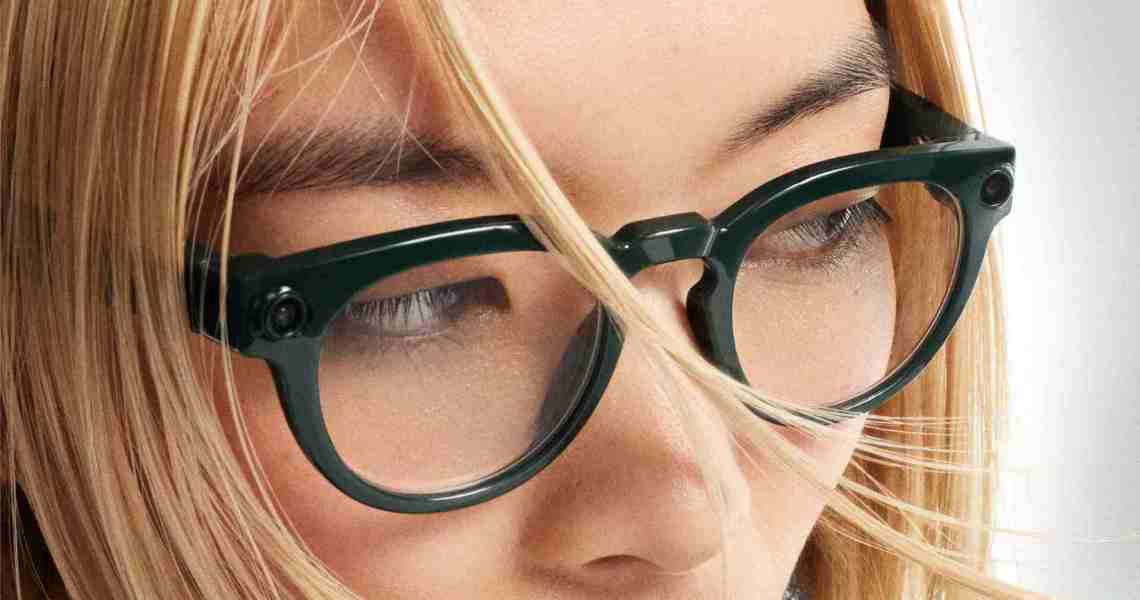
When Matthew Smith sees someone wearing Ray-Ban Meta glasses, he assumes they are recording.
The 22-year-old influencer marketing coordinator is not opposed to them. His sister uses a pair for fishing content, and he said he would consider trying them on a night out. But among his friends, “Meta” is also the de facto cringe nickname for someone wearing chunky black frames. He said his friends say, “Hey, Meta, what’s up?” to anyone with a pair.
On the other side, Addison Campbell, a 20-year-old college student and lifestyle creator, has worn Ray-Ban Meta glasses for a brand deal. She said she would consider using them for day-in-the-life videos, but would avoid the camera if someone wore them around her.
“There is a huge difference between choosing what you share online and having someone else make that decision for you,” she said.
Their ambivalence to the glasses came into more focus this week. On November 12, Google and Samsung opened preorders for Gemini-powered eyewear designed by Warby Parker and Gentle Monster. Warby Parker’s frames start at $395; Gentle Monster’s at $449. Both contain a camera.
The marketing behind the launches offers two fantasies for the same technology. Gentle Monster recruited Joaquin Phoenix for a surreal Jonathan Glazer film, after featuring Alex Consani and Anok Yai in earlier imagery. Its New York dinner drew Phoenix, Consani, Yai and Charles Melton.
Warby Parker, meanwhile, went for a literary angle instead. Its Jen Brill-designed Literatureland pop-up on Thursday turned a NoHo store into scenes inspired by “Moby-Dick” and “Alice’s Adventures in Wonderland.” Parker Posey attended, and guests received poems and star-chart readings between demonstrations.
Funnily enough, Ray-Ban Meta posted K-pop music artist Jennie in prescription frames on the same day, after using Kylie Jenner to introduce an expanded collection earlier this year — which drew a lot of criticism for trying to make the “creep glasses cool.” Gen Zer Campbell, who already sees the glasses as a content-creation tool, is exactly the consumer a Jennie campaign could convert: The right celebrity makes the camera-first glasses feel like part of the outfit.
Consumer electronics company HTC took a lower-wattage route, integrating VIVE Eagle frames into TTSWTRS’s spring 2027 “Wonderland” presentations at New York Fashion Week in September and Bucharest Fashion Week on October 16. That was followed by sponsored day-in-the-life posts from fitness and lifestyle creators in Chicago and Hollywood. Compared with Meta and Google’s celebrity-heavy campaigns, HTC positioned the glasses as an everyday creator tool and experimental fashion week prop rather than a status object.
Each campaign gives the wearer an ambitiously flattering role: reader, fashion obsessive, creator. And social media responses, based on the mounting security concerns with smart glasses, varied sharply by brand. In response to Warby Parker’s announcement, one commenter articulated the industry’s strategy succinctly: “This is how smart glasses finally win, make them look like normal glasses first.”
Some Ray-Ban Meta followers commented with praise and heart eyes for the frames, although one called the glasses “mass surveillance tools.” Gentle Monster’s audience was more hostile. “I love when aesthetics become a way of normalizing surveillance,” read one comment, liked nearly 800 times. Others called them “non-consensual surveillance chic,” “perv glasses” and “predator glasses.” Gentle Monster pinned Google’s privacy information above the objections.
Outside the brands’ feeds, criticism has become content. A TikTok search for “Meta glasses creepy” surfaces videos about women being unknowingly filmed in public, including posts with 85,000 and 117,000 likes.
The repellent idea of being filmed without consent is not new. In 2013, Google Glass wearers were called “Glassholes”. Snap gave its original Spectacles camera a yellow ring, then took a roughly $40 million write-down after they failed to sell. And in 2021, regulators questioned whether Ray-Ban Stories’ small light sufficiently warned bystanders.
And so companies are now attempting to build good behavior into the product.
Neil Blumenthal, Warby Parker’s co-founder and co-CEO, was most animated when describing the glasses as an alternative to looking down at a phone ahead of the launch this week. He imagined asking Gemini about the former Triangle Shirtwaist Factory while walking through New York, or translating a menu. The camera barely appeared in his pitch.
“Our messaging is really around usefulness and utility,” he said. “It’s not about content capture or creating a bunch of posts for social media.”
Blumenthal was sharper about competitors. Without naming Meta, he said early entrants had not done the category “any favors” on privacy. He ruled out facial recognition. Asked how Google may retain voice requests, images and prompts via the glasses, he deferred to Google’s privacy measures. Asked whether bystanders could eventually stop a recording in the future, he said more protections were being developed and didn’t rule it out.
Thomas Dexmier, vp of consumer electronics company HTC for Europe, the Middle East and Africa, more readily acknowledged the discomfort. The 16-year HTC veteran joined my Zoom a couple of weeks ago from Bordeaux wearing HTC’s smart glasses called VIVE Eagles. He praised their “berry red” frame and described himself as “a ChatGPT guy.” He later called covert public recording “madness.”
Dexmier kept returning to one question during our conversation: “Who do you trust?” He meant the company handling the data, but also the person behind the camera and the people standing in front of it.
His company’s answer is a setting that allows anyone nearby to say “stop recording,” “stop filming” or “no recording.” The glasses then end the video, even when the command does not come from the owner. Dexmier said the response to the feature differed by region. Europeans tended to view it as giving an unwilling bystander some control over being filmed. North Americans were quicker to imagine a police officer, robber or aggressor using the same command to prevent somebody from documenting what is happening.
That is the contradiction inside HTC’s safeguard: It can give a subject the power to withhold consent, but it can also give the most powerful person in the scene control over the evidence. The company has made the feature optional, and it is switched off by default.
Meta is testing another answer. In October, it introduced Ray-Ban Meta Audio, its first AI glasses without a camera, saying audio was “already the most-used feature.” Camera-equipped Gen 3 glasses launched at the same event.
Ultimately, the brand has not resolved the discomfort around camera glasses, but it created a separate product for people who want the intelligence without the camera. That is an important distinction, particularly as EssilorLuxottica’s wearables business, including Ray-Ban Meta and Nuance Audio, generated about $546 million in the third quarter, up 20%. The category is now valuable enough to accommodate both surveillance and objections to it, as more brands launch into the space.
Speaking to Blumenthal and Dexmier, the clearest difference between the two eyewear and technology executives was not how seriously they took privacy, but how they expected consumers to get comfortable with smart glasses becoming the norm.
Asked what he would tell a privacy-conscious 20-year-old, Blumenthal compared smart glasses to cars. “Cars, when they came into being, were incredibly dangerous technology,” he said, but society eventually “made cars pretty safe.” People now needed to distinguish responsible uses of technology and establish “the norms we want to enforce.”
Dexmier sounded less certain that acceptance was inevitable. Consumers were asking, “Who do I trust?” when putting “this mini computer on my face,” he said. The category would not be won through specifications or styling, but by whoever could offer the most “trust and confidence.”
That helps explain why executives charged with growing the category increasingly present privacy as another selling point, rather than a reason to remove the camera, restrict when it can record or slow the rollout. And while this industry is competing to make recording feel safer, more tasteful and easier to overlook, smart glasses’ rising popularity still requires trusting strangers to use the glasses correctly.
Week in review
- Skims pulled its $148 Advent calendar after shoppers took to TikTok and Reddit to complain about the contents, including hair accessories and keychains. The brand offered refunds or store credit.
- Loewe’s “The Nightmare Before Christmas” collection launched November 12, with Tim Burton appearing in the campaign. The house is connecting the film’s stop-motion animation to its own craftsmanship, a fairly persuasive excuse to put Jack Skellington on a bag and Zero the dog on a scarf.
- J.Crew introduced Style Advisor, an AI styling tool developed with Anthropic. Shoppers can ask for outfit suggestions on its website — although the advice does come from someone with a vested interest in selling them J.Crew.
Inside our coverage
How pop stars and a burning suitcase helped sell Away’s aluminum luggage
Inside Maybelline’s third summer in the “Love Island” villa
Mikayla Nogueira on building POV Beauty
Why Ulta is getting into health tracking
Reading list
Does influencer gifting still work in the algorithm age?