For the Wellness Briefing, Glossy is reporting from this week’s annual Glossy Beauty & Wellness Summit with takeaways from a fireside chat with Ulta Beauty’s Laura Beres and Oura Ring’s Dr. Chris Curry, MD, PhD. Additionally, Hims & Hers plots a research peptide rollout, and “Saturday Night Live” parodies health trackers.
Ulta Beauty’s Laura Beres, vp of wellness, unpacks its push into wearables
On Monday, Ulta Beauty announced a partnership with Oura Health to sell its wearable smart ring. As reported by Glossy, the Oura Ring 5, which starts at $399, will arrive online this week and in 1,000 U.S. Ulta stores on November 22 as the retailer’s first health tracker.
“Personalization is a big deal in wellness. No two individuals’ wellness journeys look the same,” Laura Beres, Ulta Beauty’s vp of wellness, said during a fireside chat Monday. “When you couple that with this desire for really measurable outcomes that our guests are now looking for, and frankly expecting in this space, we couldn’t think of a better partner to bring in as the first wearable.”
As for Oura, “Showing up in retail spaces, showing up in moments of self-investment, is the absolute most magical combination,” said Dr. Chris Curry, MD, PhD, Oura’s Clinical Director of Women’s Health.
Oura brought its first tracking ring to market in 2015 and has since released several iterations. It is widely available across retail, including tech retailers like Best Buy, big-box stores like Target and luxury retailers like London’s Harrods. But this marks Oura’s first entrance into specialty beauty retail.
“We want to show up where people are taking a beat out of their day to think about their bodies, to think about wellness, to think about their health,” Dr. Curry said. “We want to be in those moments of pause where you, or a consumer, gives themselves permission to think about themselves, [because] most of the day, they’re not thinking about themselves.”
As the wellness industry grows — now valued at $700 billion in the U.S., according to McKinsey — consumers want to validate the efficacy of their investments. “The tea leaves side of this is that consumers are smarter, they have far higher standards, [and] they want an ability to prove to themselves, or to their partner or to the payer [who bought them their wellness products], that the thing is working,” Dr. Curry said. As for women, Dr. Curry called out the rise of those seeking health measurement tools while navigating perimenopause or menopause. “Our members show up looking for a menopause solution, and they want proof that their progesterone is working, their supplement is working, their meditation routine is working.”
But Ulta’s push into wearables doesn’t stop there. Announced earlier this month, the retailer will also sell Whoop, the fitness-focused, screenless wrist wearable loved by athletes, starting in March 2027.
“[Our guests] use wellness products over six days a week,” Beres said. “It’s more than any other category in Ulta Beauty. … The [beauty and wellness] markets have converged. We’ve been talking about convergence … [and at this point] it’s done. We’re there.”
Beres told the audience that it’s millennials and Gen Z driving most wellness sales, with Gen X and Boomers closely following. “We’re seeing kind of millennials and the older Gen Z really start to lead the charge,” she said. “We’ve seen Gen X and Boomers start to take off as well. So really, [the wellness shopper is just the] Ulta Beauty shopper [now], which is really exciting.”
News to know:
- On Tuesday, smart ring maker Oura Health announced it will acquire Counsel Health in an all-cash $625 million deal, according to Reuters. Counsel Health is an AI-native virtual primary care company launched in October of 2025. Oura said the deal is expected to close before the end of the calendar year. It’s part of an ongoing vertical integration race amongst the top care and wearable companies.
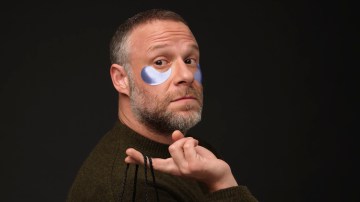
- In perhaps a meaningful rite of passage, health trackers have officially become fodder for “Saturday Night Live”. On Saturday, the NBC sketch comedy show parodied the rise of health tracking wearables with a sketch that compared in-app feedback to catcalls from a nosy “corner guy.” The star of the sketch is comedian and digital content creator Druski, the first digital creator to join the cast. Saturday was his first episode.
- Hims & Hers will soon sell unapproved research peptides including glutathione and sermorelin, as well as NAD+, a popular coenzyme tied to mitochondrial cell function. It comes on the heels of the FDA’s pending rollback of six research peptides and an overall laissez-faire approach to health and wellness regulation under health secretary Robert F. Kennedy Jr.
Stat of the week:
The global wellness market is attracting substantial investment. According to McKinsey, the six largest deals with a health and wellness component since 2021 were all announced or closed in 2025 or later. With a combined value of nearly $89 billion, this shows a strong runway for wellness growth. The global wellness market is now worth $2.7 trillion, with the U.S. accounting for around $700 billion of that total, according to the firm.
In the headlines:
‘I signed up for a marathon at the worst possible time—and it was the best decision I made’ [Women’s Health]. Julianne Moore reveals her 2 favorite workouts to help her age better [Today]. Lymphatic drainage: 4 simple habits to add to your daily routine [Vogue]. A new formula for wellness travel: Health tests, labs and Novak Djokovic [WSJ]. 50/50 isn’t good enough: Former Estée Lauder M&A exec Andrew Ross on what makes acquisitions succeed or fail [Beauty Independent]. OpenAI’s new business agents give brands a free way into the conversation it’s also selling as an ad [Digiday]. Amazon says more than 400M customers have used Alexa for Shopping in the last 12 months [Modern Retail]. Youth physical activity stalls worldwide [Fitt Insider].
Listen in:
One of the biggest industry headlines over the past few weeks has surrounded an unexpected lawsuit filed by indie makeup darling Patrick Ta Beauty against retailer CVS and Canadian distributor Akstrom. The lawsuit highlights ongoing friction between beauty brands and product diversion into the gray market, best described as the trade of authentic goods through unintended or unauthorized channels. In this episode of the Glossy Beauty Podcast, host Lexy Lebsack is joined by Julie Zerbo, lawyer, legal analyst and founder of The Fashion Law, and Ian Ginsberg, president of iconic Greenwich Village apothecary C.O. Bigelow Chemists and distribution arm Bigelow Trading.
Need a Glossy recap?
Rhode’s European summer fuels 51% sales spike for E.l.f. Beauty. Beauty Briefing: How Sephora is banking on expertise. K-beauty brand Laneige bets on experiential retail with new lip mask station. Exclusive: Ulta Beauty bets on health tracking with Oura in 1,000 stores. Interparfums, Inc. to launch new Off-White, Longchamp fragrances in 2027. Cardi B’s hair-care brand is bringing new shoppers to Revolve.