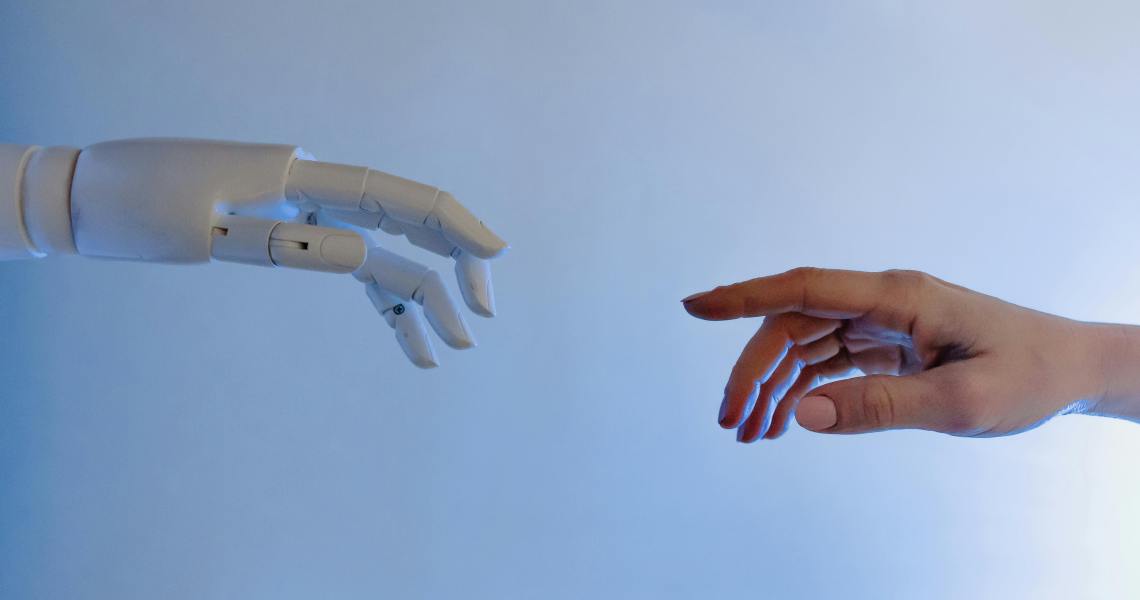
For the Wellness Briefing, Glossy is reporting from our annual E-Commerce Summit, where brand leaders from Ulta Beauty, Supergoop!, SharkNinja, Tarte, Sephora, Beekman1802 and more shared tactics and tips to supercharge brand success with AI tools. Additionally, Ōura drops its smallest tracker ring yet, Unilever invests $270 million in a new Connecticut R&D hub, Vladimir Putin invests $26 billion into longevity research, and Planet Fitness scales.
Brand leaders share the winning tactics to implement AI into day-to-day workflows
Glossy’s annual E-Commerce Summit kicked off on Monday in Miami Beach with panels, fireside chats and town hall discussions on the latest strategies driving industry growth online.
Leveraging artificial intelligence to streamline internal operations was a main theme discussed during the first two days of the conference. “Everyone’s afraid that AI is coming for their jobs,” David Baker, chief digital officer of Beekman 1802, said during a panel on the topic. “I firmly do not believe that AI is coming for anyone’s job, but someone who knows how to use AI is.”
Baker’s point resonated with many industry insiders who feel the challenge of onboarding new systems and training employees in the latest AI tools. Some brands have opted for daily, bite-sized lessons, while others have embraced week-long intensive training.
“A few weeks ago, we actually shut down every single office, and we hosted a ‘hack week,’ where all we did was [AI],” Julie Bailey Blanche, Shark Beauty’s vp of global marketing, said during a fireside chat. “We spent an entire week — no meetings, no calls, no retailer visits, no nothing. We built tools, and we had experts come in and teach us how to code. We did a year’s worth of work in one week.”
The week of all-day training was mandatory for Shark Ninja employees, Blanche told Glossy, and revolved around reducing day-to-day busy work and rudimentary training to ensure employees don’t get left behind. Shark Ninja grew by 15.6% in Q1 2026 to reach $1.4 billion in sales during the quarter.
Alternatively, many brand leaders told Glossy that they’ve added daily AI discussions to ease workers into AI tools.
“I’m constantly telling my team, ‘If it takes you longer than 15 minutes to do something, there’s a faster way, and you should learn and try to figure it out via AI,'” Jenna Manula Linares, vp of digital marketing at Tarte Cosmetics, said during a panel. “We don’t have any formal training in place at Tarte, but we’re creating a culture of experimentation.”
To keep Tarte staffers accountable for this experimentation, Linares does weekly check-ins. “Every week, I challenge my team to use AI in a new or different way,” she said. “In our weekly team meetings, we set aside 15 minutes at the very end, and we go around in a circle, and we call on each person, and they have to explain to the group how they leveraged AI and if it was beneficial or not.”
Still, there are those that resist AI in all its forms, brand leaders told Glossy. “We have incredible tools at our disposal, and someone choosing not to use them? That becomes a business risk,” Baker said. At Beekman 1802, Baker is focused on finding first adopters to lead the charge. “First and foremost, it’s finding the people who have an interest in it, and giving them the room and space to play,” he said.
Ulta Beauty lands somewhere in the middle. “We do have a little bit of training on how to use a couple of different tools, but it’s really peer-to-peer training,” Josh Friedman, svp of digital and e-commerce at Ulta Beauty, said. “Sharing [knowledge with colleagues in a formalized way] is really the best way [to learn]. … Hearing how your peer is doing it at the desk next to you, or someone across the hall who might be doing a different job, is just the easiest way.”
Meanwhile, at a town hall discussion, brand leaders spoke anonymously about their challenges with the implementation of various AI programs. The consensus in the room was clear on Day 1: Anthropic’s Claude is the most dynamic interface to train employees on, yet many legacy brands have resisted it in favor of Microsoft’s Copilot. However, many brand leaders, in an effort to save budget on preferred programs like Claude, first instruct staffers to refine requests using a secondary AI platform.
“Copilot is great for some of the more internal operations, [such as] financial things. But really, when it comes to creative and marketing, we really haven’t unlocked it yet,” said one executive.
Another executive shared that their team is well-versed on Claude and OpenAI’s ChatGPT, thanks to using it in their personal lives, which created a hurdle for compliance using leadership-recommended Copilot. One brand leader shared that they train employees to handle Microsoft-specific things on Copilot, while quietly allowing staffers to utilize alternatives in the background.
“Copilot does Excel really well, so if you need to build a financial model or just leverage it for like quick data analysis, it’s pretty strong in that respect — but definitely not concepting, ideation or research,” they said.
News to know:
- Ōura, the Finnish market leader for health tracker rings, released a fifth iteration of its tracker ring that’s 40% smaller than its 4th version. The new Ōura ring 5 is also waterproof and comes with several new software upgrades. It starts at $399. “By reimagining Oura Ring 5 to be smaller and easier to wear, and pairing it with our most advanced software yet, we’re making it possible for many more people to wear Oura every day — and to benefit from the personalized, predictive health insights that come with it,” Tom Hale, CEO at Oura, said in a statement. The company is valued at $11 billion thanks to record sales over the past two years on its Ōura ring.
- Move over, Bryan Johnson. Russian Federation president Vladimir Putin is making headlines this week for reportedly investing $26 billion into anti-aging sciences that include peptides, gene therapy and experimental research like bio-printing human organs. Putin garnered headlines last year for reportedly having a conversation with Chinese President Xi Jinping about achieving immortality through organ replacement.
- Planet Fitness will soon expand in the Pacific Northwest. Last week, one of the company’s biggest franchisees, Easy Mile Fitness, announced its plans to invest $30 million in new Planet Fitness locations in Oregon, including Bend and Eugene. Its first Portland location will open in the now-shuttered Nike Community Store in Portland. Nike closed its boutique fitness concept, Nike Studios, earlier this year.
- Speaking of Nike, the sportswear heavyweight announced its next in-person fitness concept in late May. It centers around a partnership with The Yard Gym, the fast-growing Australian gym chain, to be Nike’s first “global Nike training partner.” The two companies will co-create training experiences, activations and community events, according to Nike.
- The wellness industry’s vaginal health category is growing. Evvy, a 5-year-old telehealth company focused on at-home vaginal microbiome testing and care, released an AI-powered advisor to help users navigate care. According to the company, it has the largest proprietary vaginal microbiome dataset available.
Stat of the week:
Unilever is investing $270 million in a new research center in Connecticut. The company will use the new facility to drive innovation and product development for its beauty, wellness and personal-care business. The conglomerate hopes to have the facility open in 2029.
In the headlines:
AI earbuds engineer better sleep [Fitt Insider]. How Nocturnal Skincare created a spring campaign for under $100 [Modern Retail]. What actually increases your energy? The Buck Institute just figured it out [Super Age]. Snack workouts are the solution to being active in a time crunch [Vogue]. These tiny, mighty kid influencers are changing the face of fitness [NYT]. Gwyneth Paltrow suggests using arugula as a dairy substitute on Today and the internet can’t leaf it alone [Today]. 64% of personal trainers are using or exploring AI [ATN].
Listen in:
Is agentic shopping the next big thing in beauty? Sephora and Ulta are betting yes. In this week’s episode of the Glossy Beauty Podcast, Glossy editors Lexy Lebsack, Emily Jensen and Sara Spruch-Feiner discuss Sephora’s and Ulta’s recent investments in AI, and how agentic shopping is poised to evolve in the beauty industry.
Need a Glossy recap?
Why brands are running to Strava. Where is there still white space in beauty? Stitch Fix CEO Matt Baer on why AI can supplement, but not replace, human stylists. Why retailers like Target and Aerie are moving beyond straight affiliate deals with creators. The athlete influencer economy is now operating at scale. With J.Crew’s new Timex collab, watches are starting to follow the hype sneaker model.