Stitch Fix has always been known for its personal stylists who curate boxes of clothes for their specific clients. But the company has spent the last year building up its AI infrastructure to help supplement the human element.
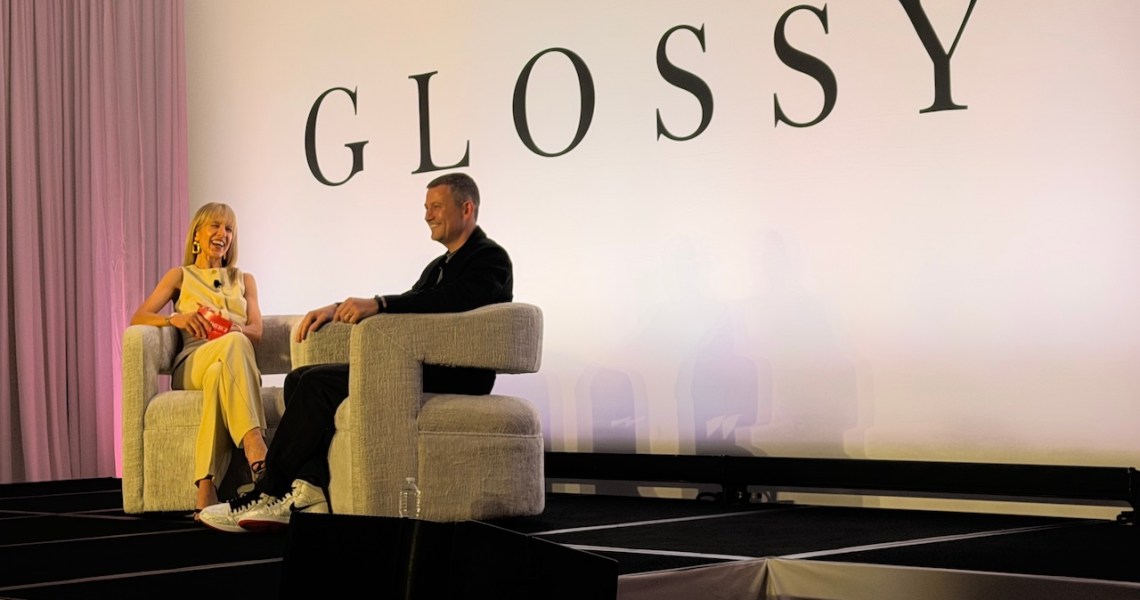
On the consumer-facing side, with tools like Stitch Fix Vision, as well as behind-the-scenes tools for its stylists, Stitch Fix has been investing heavily in AI. But at the Glossy E-Commerce Summit in Miami this week, Stitch Fix CEO Matt Baer positioned those AI tools as a supplement, not a replacement, to the humans who pick the clothes.
“We have a lot of AI tools and capabilities in the background that are tools for our stylists, but it’s just as important that we have many ways for clients and stylists to interact directly with each other,” Baer said. “We want our clients to see the nuance beyond what those algorithmic or AI recommendations are serving. The combination is the secret sauce.”
At the summit, Baer showed off Stitch Fix Vision, an AI tool the company launched late last year. It works by generating images of the client wearing different looks that combine algorithmic recommendations with the styling of the human clients. It helps communicate the stylist’s vision of a look for the client without cutting the stylists out.
Like many of Stitch Fix’s tools, it draws from a large amount of proprietary data about the clients and the product.
“An AI experience is only going to be as good or as powerful as the quality of the data you put into it,” Baer said. “We have 15 years of data, both in aggregate and, critically, on the individual level, and that enables us to move really quickly and bring it to life with the data we have.”
On the first day of the summit, AI was a frequent topic of conversation, with many speakers and attendees discussing how to manage rising AI costs and how to cut through and avoid creating “slop” amid the sheer volume of AI-generated content produced every day.
But for Baer, it’s always the human relationship that’s most important. And AI is only useful as far as it facilitates those relationships.
“My hot take about the future of retail is that it will be very much human-led and relationship-driven,” Baer said. “I worry sometimes that retail has moved far away from relationships between the business and the customer. I believe, at the end of the day, the consumer will pick the brands that are able to provide the best tech and innovation, but also the best human connection.”