This week, I checked in on Rachel Zoe’s return to the spotlight and how she’s leveraging the value of the “Real Housewives” empire. Additionally, Jo Malone speaks on the Esteé Lauder lawsuit regarding the use of her name, and K18 adds ex-Glossier CMO Kleo Mack to its C-suite.
How Rachel Zoe is converting her ‘Housewives’ fame into brand deals
The 2008 debut of “The Rachel Zoe Project” on Bravo was many viewers’ first introduction to Rachel Zoe. Then, she was the unapologetically glamorous celebrity stylist seeking to expand her empire through the launch of her own brand, all while balancing a marriage and becoming a mother.
More than a decade later, as a cast member of season 15 of “The Real Housewives of Beverly Hills,” Zoe is back on Bravo — now as a single mother navigating raising two teenage boys, but with the same extensive closet and unwavering commitment to platform heels and oversized sunglasses.
“Any way you slice it, I think the traditional marketing, organic marketing, of television is still very powerful. If people see you in a positive light, then I think opportunities can come from that,” said Zoe, who took a break from the public eye in part to focus on her children. “Despite the fact that I had never seen an episode of ‘Housewives’ of any county before I went on it, there is no denying the fact that people love it so much. It really is like a cult, devoted audience. It is like nothing I’ve ever seen before. And I think people really lose themselves in other people’s lives.”
At the time of Zoe’s first TV show, being a reality star was something of a gamble — especially in the exclusive world of fashion. On the 2026 Netflix documentary “Reality Check: Inside America’s Next Top Model,” cycle 6 winner Danielle Evans recounted how fashion brands refused to work with her due to her “Top Model” beginnings.
But just as Zoe’s life has changed since 2008, so too has reality TV. The medium has since become a well-established launch pad for both aspiring influencers and a second career opportunity for established names like Jenna Lyons and Lisa Rinna. And brands are seeing the value in joining in the conversation like never before.
“You look at people who won ‘Traitors,’ or even the ‘Vanderpump Rules’ type of people, where there is a very real pop culture moment that happens. And brands want to engage in that conversation. They’re looking to engage in relevant conversations. And so, if that relevancy comes from reality television, then so be it,” said Max Nagler, vp of branding and digital at talent agency Buchwald. “Looking at the last 10 years, I don’t think there is a category that a reality television star has not played in.”
As an established stylist before she delved into reality TV, Zoe was in part a bridge for brands and designers to wet their feet in the medium.
“In the first season [of ‘The Rachel Zoe Project’], all of the fashion magazines were like, ‘Absolutely not. Reality television, no way.’ And it was literally Michael Kors, Diane von Furstenberg, Marc Jacobs — they were the first ones who were like, ‘Rachel, we know you, we trust you. We know you’re not gonna make us look bad,’” recalled Zoe.
Today, fashion — and every industry — is far from camera shy. “Now, in the world of social media, there is no mystery anymore,” she said.
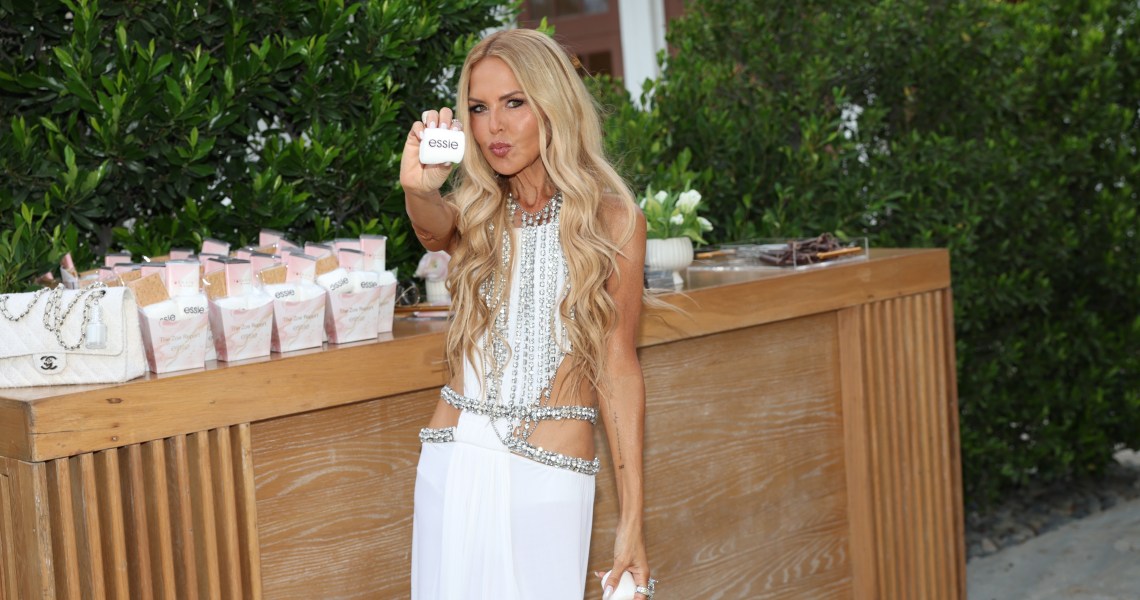
Already, before her first season of “Housewives” has concluded, Zoe has leveraged her return to TV into sponsored social media posts with the likes of Olaplex and Lancôme and a role as “chief color director” of L’Oréal-owned nail polish brand Essie. Zoe hosted a dinner with Essie over Coachella’s first weekend to kick off the partnership and will collaborate with Essie on further events and branded content later in the year.
“[Rachel Zoe] has this authenticity that has kept people who loved her around forever,” said Zoe Housman, vp of marketing, brand engagement and strategic projects at L’Oréal USA. “But it’s like people are more obsessed than ever, and they’re going back to her archives and going like, ‘Oh my God, did you know she was once known for this?’”
Any stigma that once existed around reality TV has faded as today’s viewers, accustomed to broadcasting their own lives on social media, are far less squeamish about the idea of putting the intimate details of one’s life up for public consumption.
“It is so different now that people can show their whole lives [on social media],” said Housman. “Whereas before it was, ‘Oh, my God, so vulgar. This person’s putting themselves out there.’ I don’t think there’s a stigma at all [around reality TV]. For the people who do it right, I think it can catapult their niche following and community building.”
While Zoe’s origins are in fashion, beauty has proven to be a valuable category for her to leverage her name. It helps, too, that the category translates well to the world of social media influence: According to Traackr’s Creator Advantage 2026 Report, beauty brands saw a 22% year-over-year increase in Traackr’s proprietary VIT ranking, which tracks content performance, average audience size and overall attention, while fashion brands saw a 5% decline.
“We’re finding that fashion and beauty are really melding together. People who have a very strong sense of style are considered an authority in the fashion space, and beauty is a very fashionable thing,” said Francesca Borgognone Salcedo, svp of celebrity and entertainment at Alison Brod Marketing + Communications, which has worked on brand deals with Zoe and other Housewives like Kathy Hilton and Garcelle Beauvais. “[Beauty] brands now have to embody an aesthetic to compete against the next brand.”
Few reality TV empires have penetrated the zeitgeist quite like the extended Bravo universe, including “The Real Housewives” franchise, its spinoff “Vanderpump Rules” and Hamptons-set “Summer House,” whose season 10 love triangle plotline has propelled cast member Ciara Miller to the spotlight.
With countless seasons and hotly anticipated reunion episodes, those shows have managed to get viewers invested in cast members’ lives — and preferred products — like few others. They have sprouted a new category of what Borgognone Salcedo called “celeb-fluencers,” who combine the commercial reach of mainstream celebrities with the intimate connection to viewers of influencers.
“We have found that the demo and the consumer who watches ‘Housewives’ and Bravo is very active in the marketplace. They’re very easily influenced. They want to know what Rachel is using on her hair to let it air dry. They want to know what SPF Kathy Hilton is using. They want to know what Jenna Lyons is using as an eye patch,” said Borgognone Salcedo. “Because they’re so plugged in, every nook and cranny, bell and whistle matters and is an opportunity for a brand. The nails, the hair, the shoes, the bag, the first look — it’s all an opportunity. [Viewers want to know:] What is the first brand deal after the reunion? Who’s going to be the first brand to work with Ciara Miller after this whole big breakup?”
The Bravo halo can translate into real dollars. On Wednesday, RoC Skincare launched a campaign with “The Real Housewives of New York City” alums Bethenny Frankel, Ramona Singer and Sonja Morgan to promote its Retinol Correxion Rich Cream. According to the brand, one-day sales of the cream were up 73% following the launch of the campaign, including a 407% lift on Amazon alone. Social content related to the campaign shared by RoC and the Housewives reached more than 4 million views.
“There’s been that shift [for brands], where it’s OK if there’s bleeping. It’s OK if Bethenny wants to talk about a different girl’s best friend in our video. Like, that’s what makes it real and authentic. If you filter too much, that’s where consumers kind of just tap out,” said Britni Rosato, vp of marketing at RoC Skincare. “[Now], we like the rawness, we like the realness. We want to showcase who these people are that you’re already seeing. Reality TV helped shape the culture, and brands dove right into it.”
But some “Housewives” stars do more than just sell other brands’ products. Frankel famously turned her “RHONY” fame into the Skinnygirl cocktail brand that she sold for an estimated $100 million in 2011. Zoe, too, is using “Housewives” to further the Rachel Zoe brand — the clothing, accessories and home goods brand whose beginnings were first documented on “The Rachel Zoe Project.”
“She does have a very strong following in TJ Maxx, Marshalls, Home Goods and Homesense. And I love that about Rachel’s brand, and Rachel herself — that she wanted to offer accessible products to America. And I think that dovetails very nicely into the demographics and the wide audience that’s watching ‘Real Housewives,’” said Carolyn D’Angelo, senior managing director and head of brand operations from Gordon Brothers, which took a majority stake in Rachel Zoe’s namesake lifestyle brand in December. “‘Housewives,’ in particular, really shows off Rachel’s style. That’s how Rachel built her business and built herself. People love her style. People want to dress like her.”
Not all Housewives have translated their time on TV into a long-term business. Jenna Lyons launched her false lash brand Loveseen in 2020 before joining RHONY in 2023, much to the excitement of viewers who remembered her heyday as J.Crew’s creative director. But the Loveseen brand has not updated its Instagram since 2024, and all products are listed as sold out on its website. Loveseen did not respond to Glossy’s request for comment.
While the public’s reaction to Zoe’s return to reality TV has been largely positive, she is far from naive about how quickly the tides can change. Unlike on “The Rachel Zoe Project,” where she was an executive producer, on “Housewives,” she has little control over how she’ll be portrayed.
“I’m very realistic about the fact that they could love me on a Sunday and hate me on a Monday,” Zoe said. “In terms of brands, I think that they wait to see how you are perceived or projected on the show. Because, I think, if people see me in a different light, where there’s negativity or there are things I’m doing behaviorally that are not OK, I don’t know that brands would be as excited to work with me.”
Image credit: Michael Simon
Executive moves:
- Kleo Mack joins K18 as chief marketing officer. Mack was most recently svp and chief marketing officer at Shark Beauty, which she joined in 2025 from Glossier. Mack succeeds Audrey Dorfman in the new role at the hair-care brand.
- Noelle Cantarano joined Ax Beauty as chief marketing officer. Cantarano most recently served as vp of global marketing at Future Beauty Brands. She is the first to hold the CMO role at Ax, whose portfolio includes brands like Indie Lee and Skin Rx.
- Ralph Toledano steps down as chairman of Victoria Beckham. Toledano’s New Investment Partners acquired a 30% stake in the brand in 2018.
News to know:
- Jo Malone addressed the Esteé Lauder lawsuit against her and Zara in an Instagram video. The cosmetics giant, which acquired the Jo Malone London perfume brand in 1999, has sued the fragrance maker for using her name in a collaborative fragrance made by Zara and her new perfume brand, Jo Loves. Malone said she and her team are putting together a defense to the suit and that she hopes “sense will prevail.”
- Selfridges opened a members-only club atop its London flagship. The exclusive space will offer fashion shopping services, a restaurant and beauty perks like access to a custom scent from the British perfume brand Perfumer H.
- Textured hair-care brand The Doux received a minority investment from private equity firm VMG Partners. The Doux was launched in 2012 and hit $38 million in sales in 2025. VMG’s portfolio also includes beauty brands like Vacation, Inc. and Snif.
- La Roche-Posay expands its U.S. presence with a rollout to 1,460 Walmart stores. Walmart pharmacists will also receive skin-care training to help educate consumers on the L’Oréal-owned French pharmacy brand.
Stat of the week:
Nano creators are seeing a 59% year-over-year increase in social media engagement, according to Traackr’s Creator Advantage 2026 Report. Micro creators are seeing a 19% increase, while VIP creators’ engagement rate is down 20%.
In the headlines:
Teens, turmoil, and $1,650 of swag at Sephoria. That eyeliner makes you look so … millennial. The panic over “tech neck”—and race for a cure. Why beauty brands are cutting SKUs instead of launching more.
Listen in:
On this week’s episode of the Glossy Beauty Podcast, co-host Sara Spruch-Feiner is joined by senior beauty reporter Emily Jensen to discuss the staple millennial brand Glossier — which famously helped pioneer the modern “clean girl” aesthetic — and what its next chapter may hold under new CEO Colin Walsh.
Need a Glossy recap?
Sol de Janeiro’s director of global influence on the rise of ‘non-followers’ and the new rules of social engagement. It’s a 10 Haircare taps Khloé Kardashian as ambassador, plots packaging rebrand, book release for 20th anniversary. Ipsy joins the WNBA craze as the official beauty partner of the Las Vegas Aces. Origins’ and Saie’s new initiatives reflect a change in beauty’s approach to sustainability.