In this week’s Luxury Briefing, buyers from Kirna Zabête, Bloomingdale’s and Harrods explain what they’re backing after Paris Fashion Week, and where prices could get in the way. Also, Frasers starts reshaping Harvey Nichols, Lacoste brings back its former CEO, and Golden Goose appoints a chief consumer officer. For tips or comments, email me at zofia@glossy.co.
Buyer Beth Buccini plans to buy one of her favorite looks from Paris Fashion Week for Kirna Zabête: a red satin peplum jacket shown with jeans at Givenchy. But its $6,900 retail price, according to Buccini, will determine how many customers get to share her love for the piece.
“At a lower price point, I know we could sell so many more,” said Buccini, the retailer’s founder. “You can love a piece, know your customer will love it and still recognize that the price is going to limit how many you can sell.”
Paris gave buyers plenty to want. Now they’re deciding what customers will want enough to pay for. For Kirna Zabête, Bloomingdale’s and Harrods, that means backing pieces that earn their place in a wardrobe, whether through Chloé’s easy-to-wear dresses, Dries Van Noten’s colorful jackets or Chanel’s covetable shoes.
“They know what things should cost, and they never want to feel like they’re being punked!” said Buccini. Her clients continue spending on favorite designers, she said, but are scrutinizing value as prices rise.
The spending backdrop is uneven. Citi’s October 6 research note showed U.S. credit-card spending at luxury brands fell 5.8% year over year in September. Ready-to-wear spending, however, was broadly flat, up 0.2%, following a 1.6% decline in August. Spending at high-end traditional department stores rose 3%, up from 1% in August. The figures reflect selected card transactions, rather than total market sales.
Buccini is increasing her spring budget, concentrating investment in designers and categories that already perform.
“We’re being very strategic, investing more heavily in the pieces we have the most confidence in rather than spreading our budgets too thin,” she said.
In terms of brands, Loewe stood out for both its collection and its pricing, which Buccini described as “really fair.” At Chloé, the showroom offered more wearable interpretations of the runway than she had previously seen. Alaïa was another priority.
Those showroom options matter: The collection that attracts attention must also supply pieces retailers can confidently sell. Buccini’s enthusiasm for Loewe’s value and reservations about Givenchy’s jacket illustrate how differently that calculation can play out, even among favorite collections.
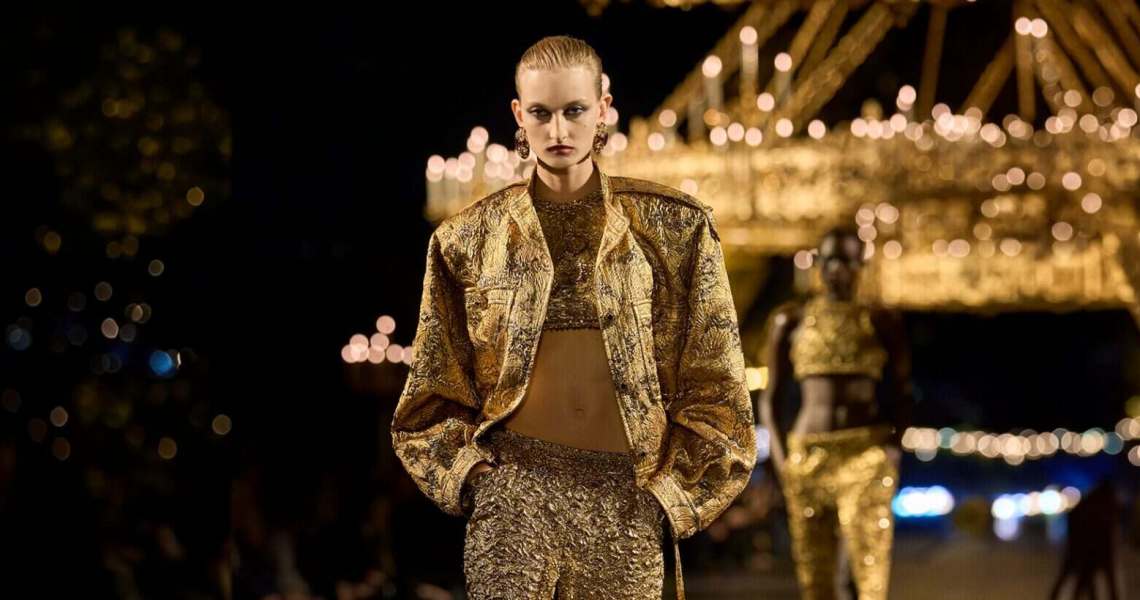
At Harrods, fashion buying director Simon Longland is prioritizing embellished runway pieces and investing heavily in skirts, spanning mini to maxi lengths, pencil and pleated shapes, and clean and ornate finishes. Leather and suede remain important across jackets, dresses, skirts and shirts. “Color and embellishment resonate strongly with our clients and showcase the extraordinary skills of the maisons and their artisans,” Longland said.
Bloomingdale’s fashion director David Thielebeule likewise sees potential in familiar garments made distinctive through design. “At Dries, Julian Klausner’s incredible sense of color and whimsical styling made simple skirts, knits and jacquard jackets feel truly special,” he said.
He also highlighted Valentino’s saturated dresses and jewel-toned separates, and Chanel’s softer tailoring, relaxed tweeds and playful accessories. Chanel’s appeal, he said, is already crossing generations in stores: “It’s truly been a frenzy.” Bloomingdale’s did not provide sales figures to quantify that response.
That enthusiasm is also being reported by Chanel itself. In an October 5 interview with WWD, president of fashion Bruno Pavlovsky described renewed momentum among employees and customers a year after Blazy’s debut. “Chanel is reenergized,” he said.
“Every single look had its own unique shoe and all of them were covetable,” Thielebeule said of Chanel’s spring 2027 collection.
For retailers, individual products like the Chanel shoes offer ways to translate an ambitious runway wardrobe into a purchase. But Longland’s buying priorities also reveal where the department store buyer’s enthusiasm stops.
Longland sees more room for color, print and embellishment in customers’ wardrobes after seasons dominated by understated dressing. “Quiet luxury isn’t dead, but it is far less dominant, giving clients a much more diverse and exciting choice,” he said.
That doesn’t mean every decorative runway trend will make it into Harrods ’ orders in equal measure. “Bra tops feel more like a runway styling device with limited appeal beyond the shows,” he said. “Fringing and ruffles were everywhere, but I see them having a more limited reach.” He said his bigger commitments are to skirts and embellished pieces that already resonate with Harrods clients.
The opportunity is to make that choice convincing at the point of purchase. As Thielebeule put it, the customer “just needs a very good reason to fall in love.”
Executive moves
- Net-a-Porter has appointed Devina Foley president, Americas, succeeding Jeffrey Trosch and reporting to CEO Heather Kaminetsky. Foley’s experience includes merchandising and product leadership at Camp, Bandier and Gilt. “I’m looking forward to working alongside Heather and the team as we continue to build on that foundation and shape the brand’s next chapter across the U.S. and Canada,” Foley told Glossy.
- Zankov has appointed Jack Tobin CEO and business partner, formalizing a relationship that began with Tobin’s consultancy two years ago. The company says its international business has grown more than tenfold and its global stockist network has doubled during that period. Tobin will focus on international expansion, retail growth and strategic partnerships.
- Liberty has named Sinead O’Brien head of design as it expands its own fashion and accessories offer. O’Brien, whose experience includes Vivienne Westwood, Roksanda and Erdem, joined in September. Her first collection will be for spring 2028, with plans to broaden Liberty’s dress assortment through outerwear, knitwear, layering pieces and separates.
- Valentino has named Karim Zebdji director of global communications, effective October 12. He joins from Saint Laurent, where he was worldwide PR director, and will be based in Milan, reporting to chief marketing officer Liran Peterzil. The appointment adds to the leadership team being assembled under CEO Riccardo Bellini.
- Lacoste is bringing back Thierry Guibert as CEO following the departure of Eric Vallat, who joined in June 2025. Guibert also leads parent company Maus Frères. Lacoste confirmed the change to Reuters without disclosing a reason and said it would continue its strategy. Vallat joined as part of Lacoste’s push upmarket and away from lower-margin wholesale.
- Golden Goose has appointed Giorgio Belloli chief consumer officer, overseeing retail, wholesale, digital and customer relationship management. The former Burberry chief digital, customer and innovation officer will also lead global market and channel development, bringing responsibility for how the brand reaches and serves customers under one executive.
- G-III Apparel Group has appointed Emily George president of direct-to-consumer, North America, effective October 5. She will oversee the region’s retail and digital strategy, with a focus on Marc Jacobs. George joins from Balmain, where she was president of the Americas and global wholesale, and previously spent nearly two decades at Marc Jacobs.
- Burberry has appointed Dafydd Moore VP of business technology. Moore started October 1 after serving as Superdry’s director of global technology, where his work included cloud migration and enterprise AI strategy. He previously held technology leadership roles at Halfords and Dyson.
News to know
- Frasers Group’s new luxury division brings together Flannels, Harvey Nichols and The Webster, alongside stakes in Burberry, Mulberry and Hugo Boss. It spans more than 100 stores, with further expansion planned. Meanwhile, Harvey Nichols’ Birmingham store will close in January, while its Leeds and Bristol locations will become Flannels.
- LVMH and Kering have strengthened their joint model-protection charter, raising the minimum age for models representing adults in shows and shoots to 18 across both groups. Kering had already adopted that threshold in 2019. The updated rules introduce tighter safeguards around nudity and partial nudity, stronger reporting procedures, training, and unannounced workplace audits. They take effect at the next Paris Fashion Week, for fall 2027.
- A buyer group led by Montres Journe, with Chanel and watch executive Pierre Jacques participating, has agreed to acquire 95% of Ebel from Movado Group for $66.5 million. Movado will retain 5%, and Jacques will become Ebel’s CEO. The transaction remains subject to closing conditions. Movado said the sale would let it focus on its accessible-luxury and fashion watch and jewelry portfolio.
- ChatGPT is adding virtual try-on and the ability to save favorite shopping items. The development gives fashion brands another reason to consider how their products appear in AI shopping tools, as those services expand beyond discovery to help users visualize potential purchases.
Listen in
On this week’s Glossy Podcast, Danny Parisi, Zofia Zwieglinska and Jill Manoff unpack three standout themes from Milan Fashion Week, where maximalism and extravagant dressing signaled a shift away from quiet luxury. Listen here.
Read on Glossy
Swedish Stockings is building its U.S. business with Leandra Medine Cohen and its first brand pop-up in NYC. Three brands on reaching $100 million without outside investors. Plus, what Launchmetrics’ latest report reveals about fashion’s brand messaging and why media visibility doesn’t necessarily translate into sales.