This week, we’re taking a look at the surprising resilience of Steve Madden and how the company is betting on resale as a hedge against tariff-related problems.
In February, the footwear company Steve Madden announced that tariffs had been so disruptive to its business plan that it withheld its 2026 earnings forecast.
But this week, the company’s earnings painted a much rosier picture. Net income for the first quarter was up 77%, and revenue rose 18% to $653 million. The results beat analyst estimates and put the company on solid footing for the rest of the year.
Like many companies, Steve Madden has been challenged significantly by tariffs, a general contraction of consumer spending and slowing wholesale sales.
But unlike many of its competitors, Steve Madden has been weathering the storm better than expected. All three of its core brands, including Steve Madden, Dolce Vita and Betsey Johnson, have experienced growth in the last year, and direct-to-consumer revenue is increasing. Now, Steve Madden is trying to capitalize on that momentum, investing more heavily in its nascent resale division to combat tariffs, investing in new categories like handbags and expanding internationally.
Ed Rosenfeld, chairman and CEO of Steve Madden, said that part of the company’s success has come down to increased investment in marketing. The company’s marketing spending was under 2% of total revenue a few years ago, but it is now 5-6%. The increased marketing budget has led to top-of-funnel campaigns, like “Everyone Has Something to Say About Shoes,” a series of short films released last year starring Grammy-nominated singer Grace VanderWaal.
“We’ve done a better job of balancing that investment; when we first increased [the investment], it was really very heavily focused at the bottom of the funnel on performance channels, and we now have much more balanced spend throughout the funnel,” he said on Wednesday. “We’re much more balanced by channel, and we’re much more consistent about the way we tell the Steve Madden story across channels, or on an omni-channel basis.”
That increased spending on marketing has translated into significant growth in direct-to-consumer sales, increasing 83% over the last quarter. Searches for Steve Madden online increased 27% over the quarter.
Steve Madden is opening four new full-price stores and one outlet store in the U.S. this year and will begin to sell its newly acquired brand, Kurt Geiger, in India later this year.
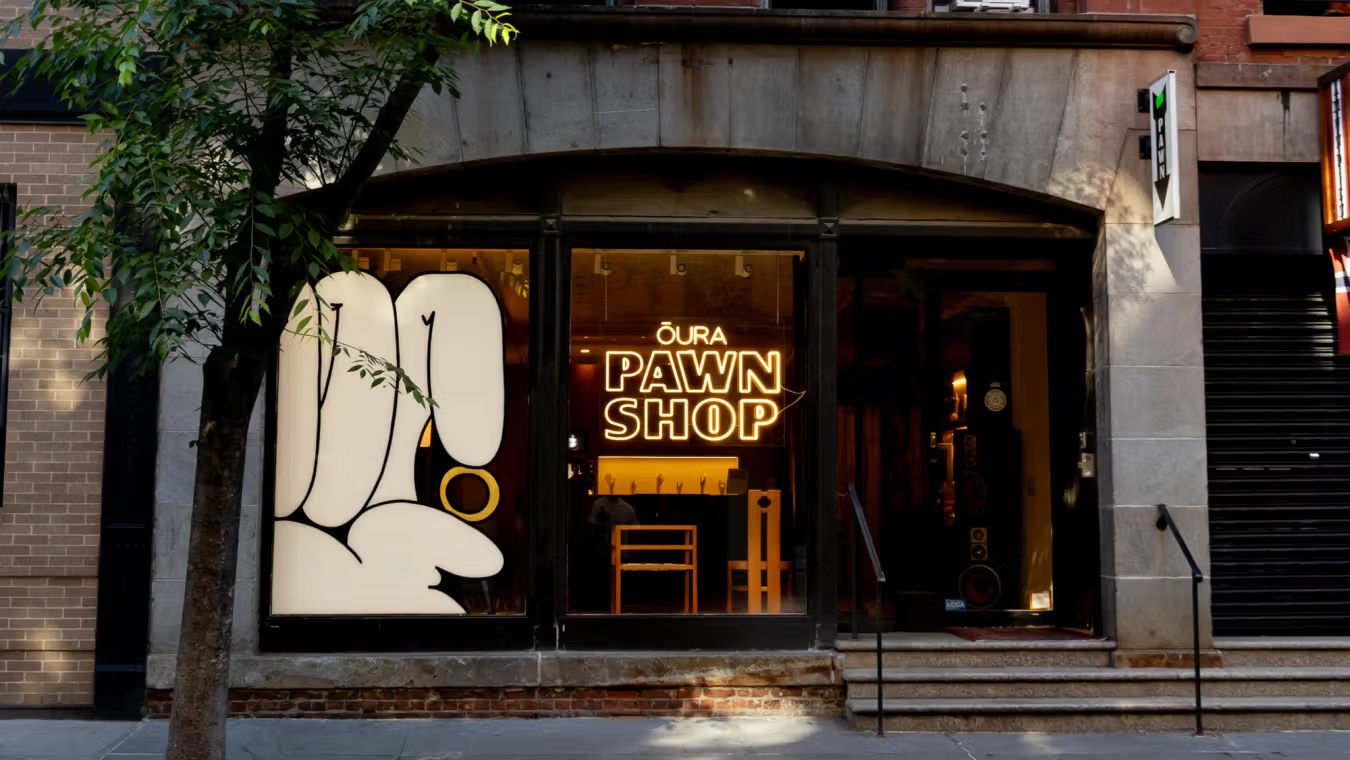
One way Steve Madden is trying to get ahead of further tariffs is by investing in its resale business. All three of Steve Madden’s core brands have offered secondhand products on dedicated sites like Steve Madden Rebooted and Dolce Vita Re: Vita since 2022. But this week, Steve Madden announced a partnership with ThredUp to offer closet-cleanout kits to customers who want to sell Steve Madden products back to the brand. The brands’ resale sites also now offer Steve Madden products sourced from ThredUp inventory.
“Resale is a big part of our sustainability strategy, but it’s also a hedge against the tariff situation,” said Jordan Somer, vp of corporate sustainability and communications at Steve Madden. “It’s notable that resale makes a certain amount of our inventory domestic. It’s not just about preparing for a circular economy, although that is also a big part of it.”
Somer declined to offer specific revenue goals for expanding the resale business, and Steve Madden lumps its resale revenue into its overall DTC revenue in its reporting. But she did say it’s already a “financial success,” and she hopes the growth of the resale business could be “exponential” in the near future.
But the challenge from tariffs remain, even after the Supreme Court shut down the majority of the Trump administration’s tariffs earlier this year. CEO Ed Rosenfeld said on the company’s earnings call Wednesday morning that gross margin will likely narrow by next year as the remaining tariffs put pressure on the business.
Gregg Meyer, Steve Madden’s chief sustainability officer, told Glossy that the last few years of economic crises has prepared the company for this moment. Even as a publicly traded company, with investors expecting to see positive results every quarter, Meyer said it’s important for a fashion business to think long term, like with Steve Madden’s investment in emerging markets including India.
“Existential moments, like Covid, tariffs and now the war in Iran, happen all the time,” Meyer said. “In the last few years, they’ve been much more frequent. You have to build flexibility into your business, don’t expect stability, and keep an eye on your long-term goals.”
News to know
- Victoria’s Secret is in the middle of a conflict with its second-largest shareholder, BBRC International, owned by billionaire Brett Blundy. Blundy had previously tried to buy Victoria’s Secret and is looking to unseat at least two members of the brand’s board this year.
- In other corporate conflict news, the embattled video game retailer Gamestop launched an unexpected bid to buy eBay this week. The seriousness of the bid was widely doubted based on the fact that eBay is four times larger than Gamestop and Gamestop CEO Ryan Cohen’s combative interview with CNBC.
- After years of growing its portfolio, LVMH is now looking to offload a few brands, including Marc Jacobs and Fenty.
Glossy’s fashion coverage
- Chanel domination and anti-Bezos backlash: 5 takeaways from the Met Gala red carpet
- ‘The Devil Wears Prada 2’ reflects a vastly changed fashion landscape
- A tale of 2 sandals: Prada’s and Chanel’s footwear buzz reflects the brands’ businesses, for worse and for better
- Prediction markets like Kalshi and Polymarket are coming for the fashion industry