This week, I checked in on how brands are leaning into smaller-scale creators, with creator networks and “community” brand trips taking the place of mega-influencer campaigns and lavish influencer trips. Additionally, Estée Lauder taps JPMorgan to help fund its Puig merger, and Ulta unveils an AI integration with Google.
Follower count is ‘more of a vanity metric’: Why small influencers can mean big business
On Wednesday, Urban Outfitters invited 200 content creators on an all-expenses paid trip to Joshua Tree. The trip, which included product giveaways and hiking excursions, was open to only an exclusive group of creators: those with under 10,000 followers.
“What’s so important is that we’re treating them as influencers. Because our communities are influencers,” Cyntia Leo, head of brand marketing, brand communications and PR at Urban Outfitters, said while speaking at Modern Retail’s Marketing Summit. “If you’re loyal to us, you talk about us, you’re excited, and we’re going to be loyal to you and treat you as one of the influencers.”
In a social media age where follower count is no longer the defining metric for a creator’s ability to reach eyeballs and drive sales, brands like Urban Outfitters are courting micro- and even nano-level influencers with the kind of paid partnerships, brand trips and ongoing relationships once reserved for mega-creators.
Tarte, known for its lavish and, at times, controversial influencer trips, has expanded its brand trips to include smaller-scale creators. That includes beauty content creator Kellie Crowther, who described herself as a “24-year-old nobody” in an unboxing of a Tarte PR package for an upcoming brand trip. With under 5,000 Instagram followers, Crowther’s ability to tell a compelling story on such a trip is more valuable than her follower count.
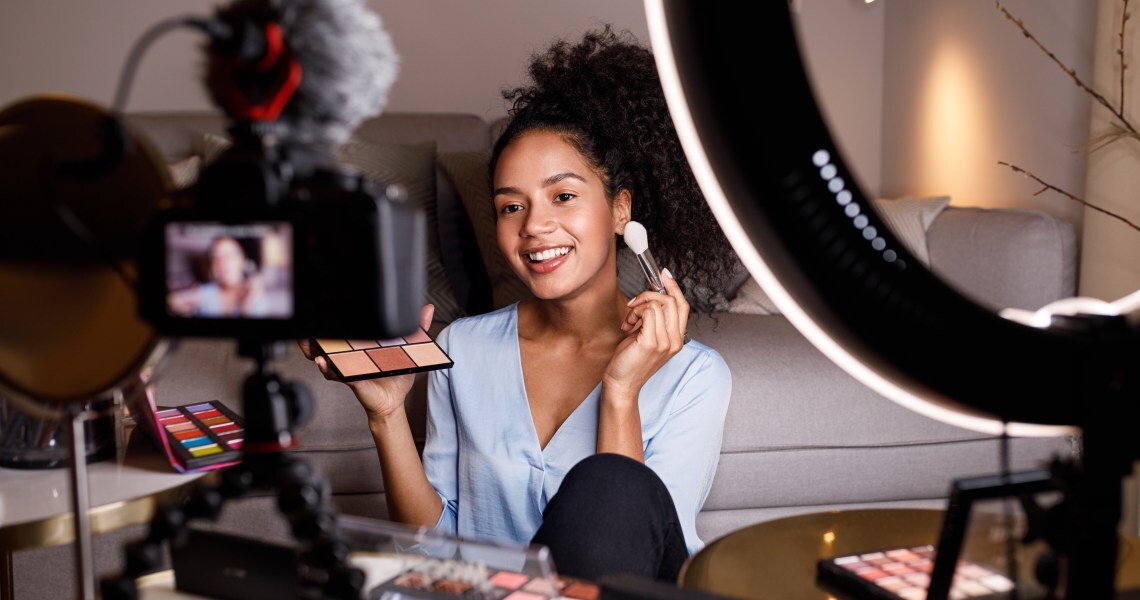
“Follower count used to be the proxy for reach, and now it’s more of a vanity metric. Content is the new targeting,” said Ashley Banks, chief client officer and partner at e-commerce agency Iced Media. “On TikTok, you can have a nano creator with 8,000 followers, or even 800 followers sometimes, who has a real point of view. [Their] video can outperform a celebrity with 8 million, because the algorithm really rewards content that holds attention, not the size of the handle behind it.”
With the rise of TikTok Shop, creators large and small can generate revenue for themselves and brands through affiliate links. But brands also need to fight for creators’ attention so they’ll continue creating compelling content around their products. Banks cited Iced Media’s recent work with CoverGirl as a way to encourage creators beyond just seeding them with product samples.
“We incentivized and engaged loyal creators. We launched newsletters, Lark groups and webinars where we’re briefing them. We invited them into events,” said Banks. “It’s building and nurturing that community of affiliates, instead of just sending a sample and hoping it works.”
Brands aren’t just including those smaller creators in their PR lists or affiliate model; they’re contracting them for sponsored posts, as well. According to creator marketing company Traackr’s 2025 Benchmark report, the rate of sponsored posts by micro creators, which it defines as those under 50,000 followers, was up 454.5% year-over-year. Sponsored posts from nano creators, those with under 5,000 followers, were up 593.2%. For mega- and VIP-level creators, sponsored posts were up 55.5% and 49.7%, respectively.
Those smaller creators have the kind of engagement that makes them worth brands’ marketing dollars: According to Traackr’s Creator Advantage 2026 Report, nano creators’ engagement rate is up 59% year over year, while VIP creators’ engagement rate is down 20%.
The fact that a smaller audience size often correlates to higher engagement is nothing new in social media, said Traackr founder and CEO Pierre-Loïc Assayag. What’s changed is that users on platforms like TikTok are now finding content on their algorithm-derived For You Page, rather than simply watching the feeds of the accounts they already follow.
“There’s been more and more of a dissociation between one’s follower count and how often content shows up on social feeds. And so it has really changed the game for brands,” said Assayag. Follower count also does not always reflect the credibility or sway an influencer possesses. “What’s not visible to the naked eye with these small creators is that they may be small overall, having just a few thousand followers, but they may be huge in a micro community.”
Shifts away from follower counts are happening across categories, but Assayag said beauty is traditionally ahead of the curve when it comes to shifts in the creator landscape. A glance at Rhode’s recent TikTok posts for its new Justin Bieber collaboration shows creators ranging from Toni Bravo, who has 1 million followers on the platform, to Royal Ballet principal dancer Francesca Hayward, who isn’t on the platform at all.
“If you’re in any other industry and want to know what creator marketing is going to be for you in two to five years, just look at beauty brands,” he said. “When you operate with a 90% gross margin, it just gives you the means to invest and over-invest into this category.”
Assayag said his team is also seeing brands increasingly take their creator marketing strategies in-house, making more direct and long-term connections with a network of creators rather than outsourcing that work to agencies that can contract big talent. Brands that have diverted spending to smaller creators, who may charge a lower fee for sponsored posts, can retain that budget for boosting those posts instead.
“Why not choose that smaller creator that will cost you less and spend all of your money on the boosting side of it?” he said. “And for the creator, it’s beneficial, as well, because they get to increase their audience as a result, because now they’re in front of millions.”
For smaller-scale creators, there is the ever-present allure of growing their audience by taking on a sponsored post from a big brand or sharing their PR packages in organic content. But smaller creators, who may lack management teams to advise them on or negotiate their rates, are also vulnerable to being underpaid relative to the value they bring to brands.
“We’ve seen TikTok Shop creators consistently undervalue themselves or not scale their rates as fast as their influence is scaling,” said Banks. “It’s a balance, because it’s a changing ecosystem.”
Rather than stake their careers on fickle algorithms or use their ample audiences to sell other brands’ products, large-scale creators like Alix Earle and Mikayla Nogueira have taken to launching their own brands. But that doesn’t mean they don’t have a part to play in the new algorithm. Banks said an endorsement from a mega creator can give a brand or product the credibility that inspires a sea of nano and micro creators to endorse it.
“The groundswell of mid-tier and nano creator content is what drives consideration and conversion,” said Banks. “But you can’t build that opt-in or that trust without the mega. So brands that are winning today layer both and then measure the full halo.”
Executive moves:
- Maesa promoted Dana Steinfeld to chief blue sky and innovation officer. Steinfeld will oversee product development across the beauty incubator’s portfolio. Steinfeld has been with Maesa since 2011, most recently as head of blue sky and svp of product development.
- Former Estée Lauder CEO Fabrizio Freda joined Ferragamo Finanziaria, the holding company of the Ferragamo family, as special strategic adviser. Freda will guide growth across the Salvatore Ferragamo Group.
- Adrianne Lee will succeed Marlo Cormier as svp and chief financial officer of Sally Beauty Holdings, Inc. Lee previously served as president and CFO at Bed Bath & Beyond.
News to know:
- The Estée Lauder Companies is reportedly seeking €5 billion ($5.9 billion) to fund its merger with Puig. The cosmetics giant has hired JPMorgan Chase & Co. to help raise funds for the takeover of the Spanish conglomerate, which owns beauty brands such as Byredo and Charlotte Tilbury.
- Ulta unveiled a partnership with Google to integrate the tech giant’s Gemini AI capabilities into Ulta’s website and app. The partnership will allow shoppers to discover Ulta’s beauty selection on Google platforms and will lead to the launch of Ulta AI, the beauty retailer’s new AI-powered shopping assistant.
- Sephora will introduce warning labels for children on anti-aging products sold in Connecticut. In cooperation with Connecticut Attorney General William Tong, the retailer will train employees on the safety of anti-aging skin-care products and require brands to disclose the safety of products for children under 13.
Stat of the week:
According to Launchmetrics, Ulta Beauty World generated $14 million in media impact value, Launchmetrics’ proprietary metric that tracks media exposure across print and digital media. That’s compared to the $5.5 million in MIV driven by Sephora’s Sephoria event in March.
In the headlines:
Forgotten no more: Generation X is driving beauty sales. It’s about Tyla. Wedding dresses now come with a legal waiver for brides on GLP-1s. L’Oréal chairman says Coty lacks business model.
Listen in:
On this week’s episode of The Glossy Beauty Podcast, Indie Lee joins co-host Sara Spruch-Feiner to explore why now was the right time to launch her diffusion line, Indie Lee Botanicals, how she approached maintaining efficacy while cutting costs, and how this diffusion brand will grow and shape her core collection’s future.
Need a Glossy recap?
The Estée Lauder Companies is investing in skin-care technology to fight sugar’s impact on skin, for new longevity products. Procter & Gamble estimates $1 billion in headwinds due to Middle East conflict. ‘We’re not looking for brand exclusivity’: How Amazon is looking to win over beauty consumers. L’Oréal Groupe CEO unpacks the impact of Middle East conflict, potential price increases. Exclusive: Noyz partners with Ella Langley to launch its first celeb-fronted scent at Stagecoach