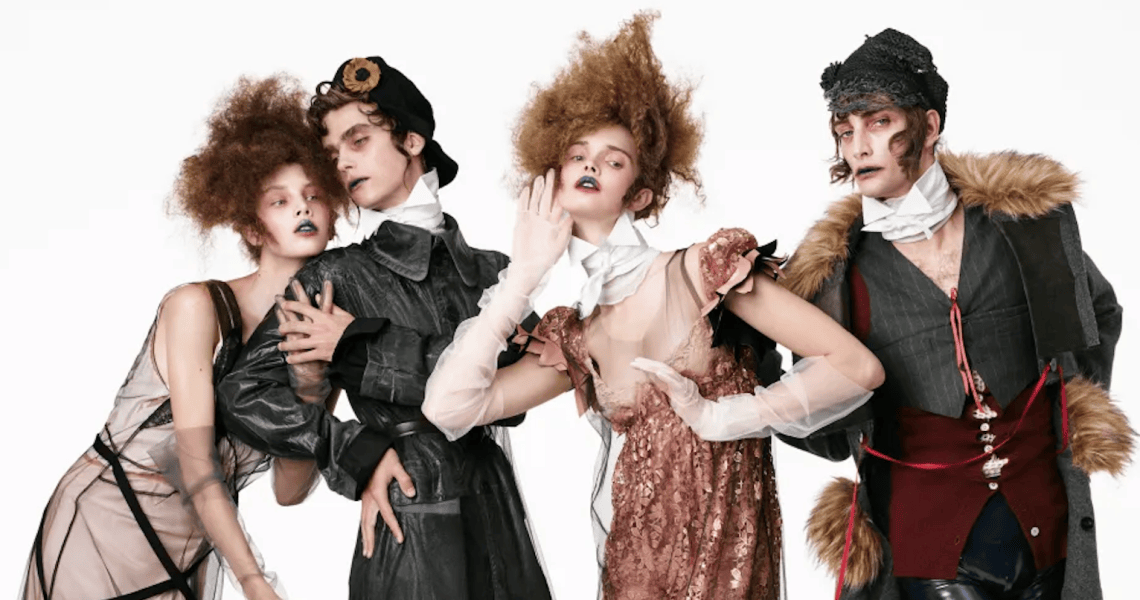
John Galliano’s first Zara collection arrived on October 1, giving shoppers a new place to buy the work of a designer synonymous with Dior and Maison Margiela. For Zara, the bigger prize is what his name can do for everything else it sells.
A new Launchmetrics report, “The Desirability Gap,” released Wednesday, puts numbers behind that ambition. Across the 50 highest-ranking mass-market fashion brands by its proprietary Media Impact Value metric, brands using premium strategies averaged twice the MIV of those that did not between January 2025 and June 2026. Those strategies included designer partnerships, creative appointments, ambassadors and appearances at major cultural events.
The question for retailers is how to make that attention outlast the collection. Zara’s two-year Galliano partnership and Gap’s ongoing investment in Zac Posen’s GapStudio offer two approaches to making high-fashion credibility part of a broader business.
“Mass market brands have borrowed from luxury for decades, so the tactics themselves aren’t new,” Alison Bringé, Launchmetrics’ chief marketing officer, told Glossy. “What’s changed is the stakes and the way we can measure them.”
Launchmetrics estimates that Zara’s March 17 Galliano announcement generated $8.3 million in MIV within 48 hours. Its AI-assisted coverage analysis found that themes of “archival authority” appeared in coverage representing 62% of that value, while “premium elevation” appeared in 54%. Individual placements can contain multiple themes.
And that affects Zara’s newfound positioning, too. Galliano’s assignment to reinterpret its archives gives the retailer a reason to talk about its own design history, a familiar luxury-house practice. The October launch now tests how that proposition translates into product.
Zara’s celebrity dressing serves a different purpose. Bad Bunny’s Super Bowl look from the brand generated $19.9 million in MIV, according to Launchmetrics’ report, with coverage emphasizing accessible prestige and the intersection of sports and fashion.
“Longevity most often comes from what happens next [from the brand],” Bringé said. “The associations that last are the ones a brand keeps reinforcing, through its partnerships, its product and the stages it chooses to show up on.”
Gap offers a more developed example of that connection. Posen joined Gap Inc. in February 2024, and GapStudio’s first full women’s collection followed in April 2025. As Glossy previously reported, a $158 retail version of Anne Hathaway’s custom GapStudio shirtdress sold out within hours, according to the brand.
“It brings brand awareness to a new generation,” Posen previously told Glossy of celebrity dressing.
Bringé said GapStudio’s premium positioning also appeared in shopping edits, sales roundups and coverage of products including its reimagined white pocket tee. In the first half of 2026, coverage representing 78% of GapStudio’s MIV carried the theme “accessible elevation.”
The wider Gap business is growing, too, in part through this designer association. Its second-quarter fiscal 2026 comparable sales increased 10%, while net sales rose 9% to $844 million. Gap Inc. attributed the brand’s performance to strong ideas and culturally relevant storytelling supporting categories including denim, fleece, and kids and baby. Those results do not isolate GapStudio’s contribution, but they show the broader commercial context for its fashion push.
Launchmetrics measures the value of media attention, while its new AI tool tracks how that coverage describes a brand. The findings show whether a brand’s message is coming through, but don’t prove that shoppers think differently about it or are buying more. For industry marketers, its usefulness is in tracking whether successive investments reinforce the intended positioning. A designer’s reputation – like Posen or Galliano – can get a retailer into the fashion conversation, but the following collections have to give it a reason to stay.
It’s a valuable warning. “A one-off capsule can generate a spike, but if the next season goes back to business as usual, the coverage forgets it quickly,” Bringé said.