As GLP-1 drugs alter customers’ bodies and shopping habits, Universal Standard is betting that fluctuating sizes make inclusive fashion more relevant, not less.
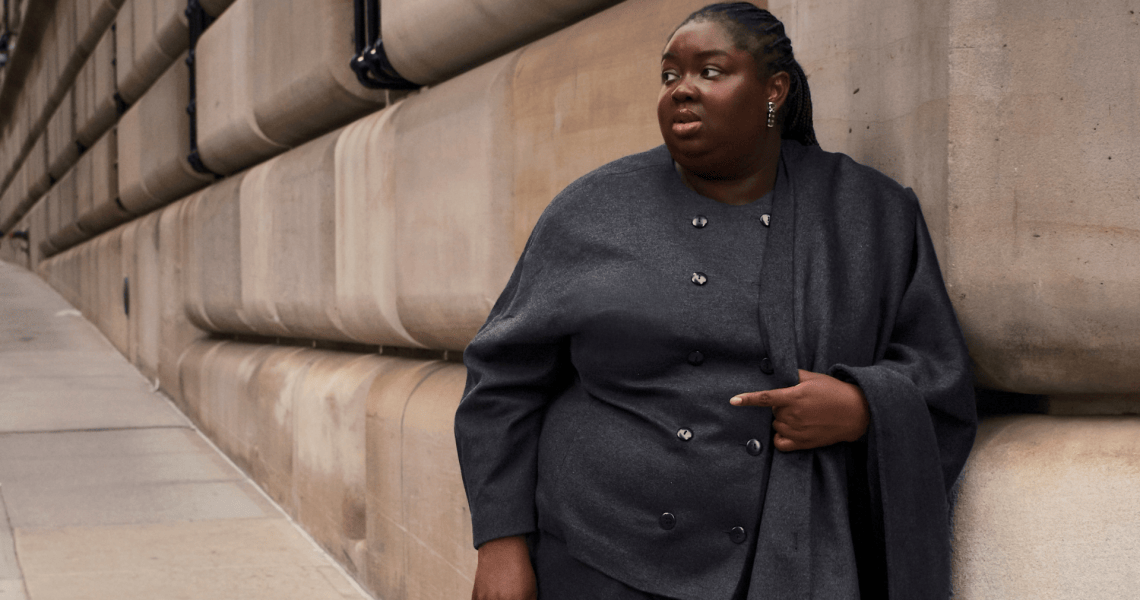
The brand launched US x Abisola, a seven-piece capsule created with London-based creative director Abisola Omole, in September. Priced from $150-$225 and spanning sizes 00-40, it includes tailoring, knitwear and separates designed to work as a wardrobe.
Nearly 60% of the collection’s first-week unit sales on Universal Standard’s U.S. DTC site occurred within its first 48 hours, according to the brand. Customers bought an average of 1.7 pieces per order, including combinations of the $225 Ponte Blazer and $165 Ponte Wrap Pant.
The $150 Soft Spun Polo Sweater accounted for around one-third of units sold, while the Wrap Pant represented approximately one in five. Nearly 90% of units were sold in size 14 or above, with sizes 18-24 accounting for 54%. Customers also purchased an average of 1.7 pieces per order, suggesting demand for coordinated looks rather than a single entry-level item. The brand did not disclose revenue, inventory allocation or overall sell-through.
Universal Standard has already built a profitable business around customers of all sizes. According to previous Glossy reporting, as of 2024, the company had generated nearly $200 million in gross sales and sold 2.5 million garments since its 2015 launch. Its repeat-customer rate increased from 70% in 2022 to 80% in 2024. It begins its design and fit process at size 18, which it labels a medium, rather than creating a straight-size garment and extending it upward. It has previously collaborated with brands including Rodarte, Erdem and Anthropologie.
The collaboration’s results arrive as retailers reconsider their size curves in response to growing GLP-1 adoption. According to PwC research drawing on Numerator data, 21% of U.S. households included a current GLP-1 user as of May 2026, up from 9% in January 2025. Seventy-three percent of GLP-1 users reported a meaningful change in clothing size.
Apparel spending among users increased 9.9% after six to eight months on the drugs. Spending on women’s jeans rose 66.1%, while jewelry increased 36.4%, swimwear 31.1% and dresses 22.1%. Department-store spending among the group rose 3.8%, while off-price spending increased 18%.
Ali Furman, consumer markets industry leader at PwC US, told Glossy that customers are not necessarily moving to more expensive or cheaper brands.
“They’re buying from the same part of the price ladder before and after starting the drug,” she said. Instead, they are buying new sizes within familiar categories and returning to products they had previously avoided, including dresses, swimwear and intimates.
The shift presents an opportunity for retailers, but it also complicates merchandising. Historical size curves may become less reliable, while customers moving through several sizes may hesitate to invest in complete wardrobes. Furman said retailers should consider alterations, better fitting-room services and associates trained to support customers experiencing significant body changes.
Universal Standard’s Fit Liberty program allows customers to exchange eligible clothing for another size within one year, even after it has been worn. “Buy for now. Buy the size that you are now and enjoy the fashion,” said Ramon Martin, Universal Standard’s chief creative officer. “If that changes, we’re here for you, too.”
Meanwhile, fashion’s visual messaging this past month has moved in the opposite direction. Model and size-inclusivity campaigner Felicity Hayward counted only 115 curve or plus-size model appearances across approximately 11,550 looks shown at New York, London, Milan and Paris for spring 2027 — around 1%.
London recorded 21 such appearances, down 56.3% from the previous season. Paris led with 43, but 16 came from size-inclusive label Ester Manas. In Milan, seven of the city’s 12 curve appearances came from Vogue World, which counted GLP-1 drugmaker Eli Lilly among its sponsors. Curve model Elise Smidt even went viral for not booking a single show for fashion week for the first time in her career.
Omole said the industry risks using GLP-1s to justify an existing retreat from inclusive sizing.
“I think there’s something to be said about this industry almost using it as a scapegoat or an excuse to double down on not being inclusive,” she said. “That’s the part I don’t like.”
The partnership began after Omole posted an Instagram birthday wish list in May 2025 that included creating a capsule with a size-inclusive brand. Universal Standard contacted her within days, and development took more than a year.
Omole traveled from London to New York for fittings, leading to more say in the design process. The wrap trousers were given two internal buttons and additional fastenings to prevent pulling. The cape’s buttonholes were separately graded to align with the blazer across every size, while several fabrics were developed specifically for the collection.
Omole also styled approximately 12 looks from the seven pieces. Her launch post received 29,726 views, 1,700 likes and 183 comments, more than twice the likes and nearly three times the comments of Universal Standard’s corresponding post. Martin said styling helped answer one of the brand’s most frequent customer questions: what to wear with an item.
During September’s Fashion Weeks, Omole wore the capsule to industry events and contrasted its 00-40 range with the collections around her. When she asked brand representatives what sizes the brands offered, they often could not answer without checking.
“We’re given this whole spiel of, ‘Things aren’t possible. Things are so expensive. Things are too technical,’” she said. “But you can build the infrastructure and make it happen [like with this collection]. You’re just choosing not to.”