In the midst of JCPenney’s turnaround efforts, the company is going all out on accessibility and affordability. Many of its recent marketing campaigns have focused on anti-elitism and catering to value-conscious and underserved customers.
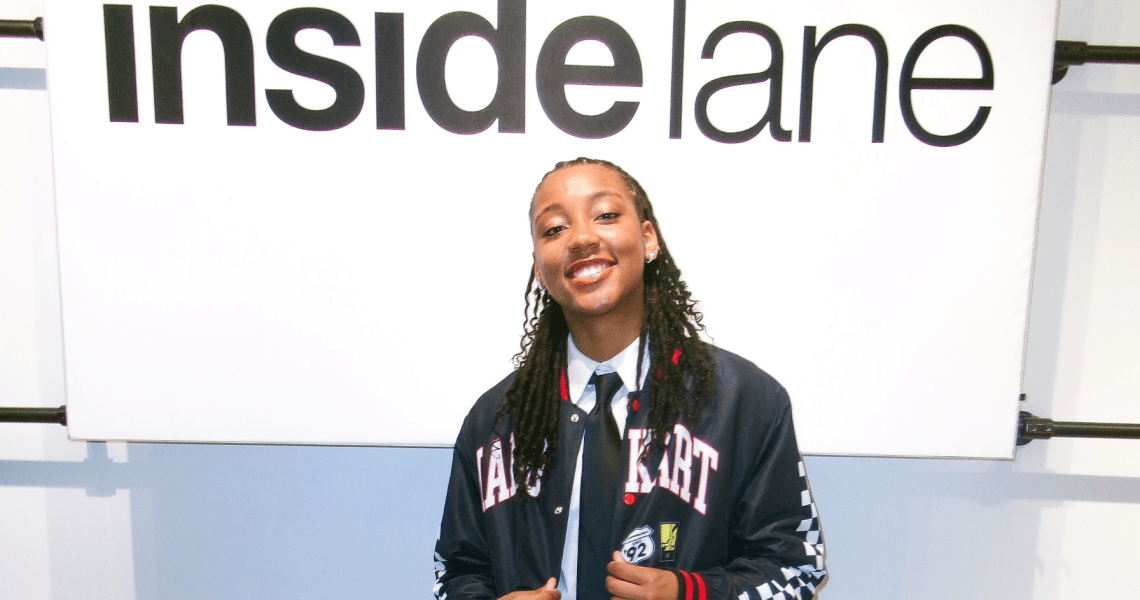
The latest iteration of that theme is in a new campaign involving women’s sports. Starting this week, JCPenney is launching Inside Lane, a new ongoing partnership with a selection of women from the WNBA and college basketball. The athletes will act as both brand ambassadors and guest curators for upcoming style edits on JCPenney’s online store and in its over 650 physical stores.
But Marisa Thalberg, the new CMO of Catalyst Brands (the combined entity of JCPenney and SPARC Group, as of January 2025), told Glossy that the athletes chosen aren’t the usual suspects. The pitch for the campaign was to work with the “underdogs” — athletes who are prominent and up-and-coming but haven’t yet reached the level of fame and brand collab overload as those like Angel Reese or Caitlin Clark.
The first group includes WNBA players Stef Dolson of the Seattle Storm and Jackie Young of the Las Vegas Aces, both of whom are previous WNBA champions. The rest are college athletes: Iowa State’s Audi Crooks, UCLA’s Gabriela Jaquez and UConn’s KK Arnold.
“There are an elite couple of athletes in this space, but there are so many others who haven’t gotten the same level of recognition, despite being incredible athletes,” Thalberg said. “They’ve been underestimated, and they deserve to be styled in the way we’re styling them.”
Thalberg said the campaign’s theme is no accident. Catalyst Brands has been on a mission to turn JCPenney around after a long, slow sales decline in recent years. In 2024, JCPenney’s revenues declined by 8-9% every quarter. Much like the athletes chosen for the campaign, Thalberg said JCPenney is underestimated.
“There has been a narrative thread to our recent campaigns around standing for everyone else, all the people who have been underestimated,” Thalberg said.
She pointed to another recent JCPenney campaign she helped conceptualize: the Paris Fashion Week show. In March, JCPenney hosted its own fashion show in Paris, Texas. The messaging around the show intentionally drew a contrast with the perceived elitism of fashion month.
“The guest list: local residents. No assigned seats, no hierarchy, no front-rowers angling for camera time,” JCPenney’s description of the show read.
In the last year, JCPenney has made other changes, including launching collections and affordable lines from supermodel Ashley Graham and designer Rebecca Minkoff, and introducing unexpected marketing campaigns like “Really Big Deals” featuring Shaquille O’Neal.
The Inside Lane campaign was built in collaboration with the women’s sports and entertainment firm Deep Blue Sports + Entertainment. Deep Blue’s founder and CEO, Laura Correnti, used similar language to Thalberg when describing the campaign, calling JCPenney’s approach “the antithesis of exclusivity.”
“The women’s sports industry and its respective fandom have been built on access and community. Its influence on fashion and style should be no different,” Correnti said.
In recent months, Vince, Levi’s and even fast-fashion brands like Zara have all raised their prices to court a higher net worth consumer. JCPenney’s unapologetic messaging about affordable, accessible fashion at a time when many companies are leaning harder on their upper-echelon customers seems to be paying off.
In its second quarter earnings last year, JCPenney posted its first quarter of profitability in years with $110 million in net income, compared to a $33 million loss in the same period the year before. In its most recent earnings, it swung back to unprofitability but made improvements in metrics like loyalty customers, which saw a 20% gain, and trip frequency, which increased by 1%. JCPenney CEO Michelle Wlazlo attributed the increase in loyalty to marketing efforts.
The last year has seen increasing levels of bifurcation in fashion, leading to what many call “the K-shaped economy.” Many fashion brands have chased after the upper part of the K, increasing prices and repositioning their products to cater to a wealthier clientele. JCPenney is betting on the lower part of the K to be its growth driver.
“I do think there’s an opportunity for us to inspire a new audience,” Thalberg said, citing younger consumers as one particular target. “We’re really trying to stand for everybody else, not just the 1%.”