This week, Ralph Lauren makes the case for spending more on the dream, Coach swaps Black Friday doorbusters for limited-edition bags, and a new Reddit report reveals what shoppers ask when they’re not sure luxury is worth the money. Plus, another creative departure at Kering, and America’s expanding luxury shopping map. Finally, luxury brands’ Christmas campaigns have started dropping. What did you think of them? Send me your favorites, and any that left you cold: zofia@glossy.co.
“8.6 is not the ceiling,” Ralph Lauren CEO Patrice Louvet told analysts on Thursday during its second-quarter earnings call, referring to the percentage of quarterly sales invested in marketing. The company is increasing spending as it heads into the holidays, using events, collectors and gifting to recruit customers while navigating a tougher European market.
“We’re in the dreams business. We’re in the storytelling — so marketing is a core element of our business,” Louvet said on the earnings call.
The company’s revenue increased 9.1% to $2.19 billion. Marketing reached 8.6% of sales, up from 7.8% a year earlier, while adjusted operating margin expanded to 15.7%. Management now expects annual marketing investment of approximately 8-8.5% of sales, versus approximately 8% previously.
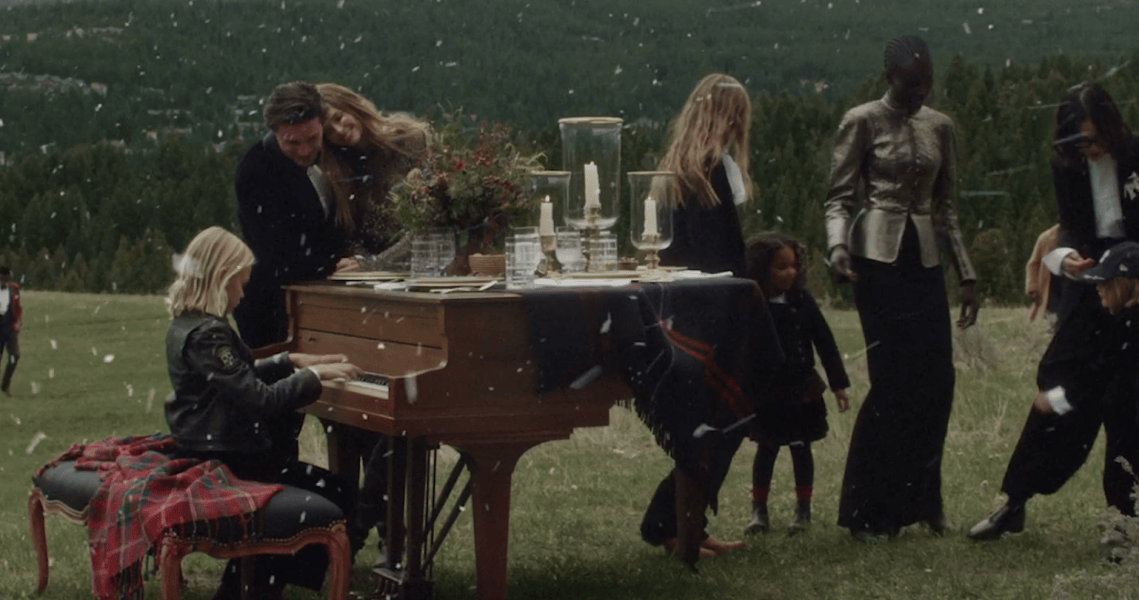
For the holidays, Ralph Lauren’s media investment is up 23% year over year, with campaigns starting earlier and in-person experiences expanding from four cities to eight, including London, Paris, Tokyo and Seoul. In London, Selfridges has unveiled a miniature New York Christmas window featuring moving ice skaters and a Ralph’s Coffee truck, alongside a full-sized coffee pop-up on Duke Street serving gingerbread lattes and hot chocolate through November 17. The pop-up also sells exclusive baubles and Polo Bear travel mugs, connecting the experience directly to gifting.
The objective includes “really making gifting an acquisition engine,” Louvet said. The company added 1.7 million customers to its direct business during the quarter.
In its note for the call, Telsey Advisory Group analysts highlighted Ralph Lauren’s ability to attract consumers “who are skewing towards younger, more affluent, less price-sensitive women.” They described its 9% increase in average selling prices as evidence of successful brand investment and its ability to sell products at full price.
Those investments increasingly include experiences built around existing fans. From October 23–25, Ralph Lauren hosted its first Polo Fest in Tokyo, marking 50 years in Japan. The event combined an exhibition of rare archival clothing, a vintage marketplace where visitors could buy pieces from international collectors and dealers, and talks exploring the brand’s cultural history. On the earnings call, Louvet said, “You’ve heard us talk about the recent Polo Fest event, which I think is a beautiful illustration of how the Ralph Lauren brand has been weaved into the culture globally,” adding that the brand is “creating timeless core products that resonate across generations — Gen Zs, but also the silver generation — and across geographies.”
Participants included vintage businesses such as Japan’s Big Apple Store, Italy’s Tartan Vintage and Canada’s F as in Frank. The speaker program featured supermodel Tyson Beckford and Lo Lifes co-founder Thirstin Howl III, connecting the brand’s advertising history with the communities that helped establish its streetwear credentials. Admission was free, with tickets distributed through Ralph Lauren’s LINE membership community.
Good Eggs agency lead and former buyer Ida Petersson, who attended, described the experience as “almost overwhelming,” with Japanese attendees arriving in their best Ralph Lauren, head to toe. “The vintage dealer section was the best,” she said. “But the exhibition was also very thoughtful and interesting.”
She particularly valued seeing ’90s Polo Sport and women’s Western pieces from the ’70s and ’80s in person. The collector community, she added, was “very eclectic,” with “so many different personalities.”
Polo Fest gave Ralph Lauren a way to bring collectors together around its older products while introducing them to its current collections. It built on Ralph Lauren’s earlier efforts to bring vintage sellers into its retail spaces. In 2019, its Re/Sourced collaboration with Depop offered more than 150 vintage pieces through its London flagship and app, accompanied by a documentary about the sellers. A 2024 pop-up at Tokyo’s Isetan Shinjuku subsequently combined vintage Polo with new Polo Sport clothing and DJ performances. The company did not disclose on the call how much this year’s event generated in sales.
Ralph Lauren is one of several houses giving shoppers cultural reasons to visit. Maison Margiela is marking its Tokyo Ebisu flagship’s 20th anniversary with “Unravelled Memory, Rewoven Future,” an installation by Tokyo-based artist Mio Suzuki, curated by Yuko Hasegawa. On view November 5–15, it reworks 59 vintage tapestries in collaboration with French institution Les Manufactures Nationales – Sèvres & Mobilier National. Louis Vuitton’s recent La Bibliothèque pop-up in Shanghai similarly brought together books, local booksellers and hands-on workshops. Across these projects, collecting, reading and craftsmanship give visitors something to participate in, while making the brand’s interests tangible beyond its latest collection.
Elsewhere, Ralph Lauren is reducing sales through off-price retailers and pulling out of lower-tier stores. Guggenheim analysts noted that these decisions, combined with some wholesale orders shipping earlier than planned, will reduce next quarter’s revenue growth by roughly one percentage point.
The holiday quarter will test that. Ralph Lauren forecast revenue growth of 3-4% at constant currencies, below Wall Street expectations of approximately 5%, according to Needham’s first post-earnings note. The analysts remained bullish but acknowledged “some signs of macro pressure,” particularly in Europe.
Europe is proving more challenging. Comparable sales fell 1%, including a 4% decline in physical stores, and Louvet said outlets were particularly affected by weaker footfall.
“Europe, with a challenged consumer backdrop, has become more promotional quarter over quarter,” CFO Justin Picicci said.
Ralph Lauren could respond by changing how often it discounts, by how much, how long offers last or which products are included. The aim is to encourage purchases without undermining the brand’s positioning.
“We have the flexibility to respond selectively where appropriate, but our strategy is not to broadly chase the macros,” Picicci said. “So we will lean in and be targeted with how we use promotions.”
Coach pulls back on bargain bags ahead of Black Friday, keeps its $200–$500 sweet spot
Coach is pulling back on its most promotional handbags while keeping its core $200–$500 price range intact, CEO and brand president Todd Kahn said on Tapestry’s November 5 earnings call.
Coach’s fiscal first-quarter revenue grew 16% at constant currency to $1.66 billion. Handbag average selling prices increased in the low double digits, and unit volumes rose in the low single digits. Within the $200–$500 range, both metrics grew, while the brand deliberately reduced handbag units sold below $200.
“Generally speaking, under $200 bags are the most promotional,” Kahn said. “So we tend to want to take it up just a little bit.”
But he pushed back on pursuing significantly higher handbag prices: “We are not going to do maybe what some other people do, which is — just because the brand is hot — to start going materially above our sweet spot.”
In a research note published before the call, Telsey Advisory Group argued that Tapestry’s quality, authenticity and value proposition remained compelling despite higher average selling prices.
For Black Friday, Coach plans to emphasize limited seasonal colorways. Kahn said last year’s doorbuster offers sold, but they were the “least engaging element” of the assortment.
“Instead of necessarily screaming price, we’re screaming limitations,” he said. “If there’s a colorway you want, you’re going to have to come and get it the first few days because it won’t be there.”
Lower-priced products will remain part of customer recruitment. Coach acquired more than 2.1 million new customers during the quarter, approximately 40% of whom were Gen Z.
“We have a lot of price points to enter the brand,” Kahn said, citing footwear, jewelry and fragrance.
Glossy exclusive from Reddit’s new fashion report: Is luxury worth the price?
Before buying a secondhand luxury bag, some shoppers are taking screenshots of Vinted, Depop and Poshmark listings to Reddit for a second opinion. They want to know whether it is genuine, but also whether it is a good buy.
“There’s also condition relative to value,” said Matt Klein, Reddit’s head of consumer insights. “In this current condition, is it worth $3,000?”
The answer can depend on who’s asking. Someone who knows how to restore leather or has a good tailor may see potential in a worn piece that another shopper would pass over.
Reddit’s first People’s Fashion Index, released November 5, quantifies that appetite for advice. Conversations about tracking down fashion generated 193 million U.S. views in the year ended September 30, up 17% year over year. Exact-piece, celebrity and archival hunts accounted for 66% of views within that theme. One Prada collector described hunting down pieces specifically from spring 1998 before moving on to another collection.
For Reddit, the report is also a pitch to fashion brands: These conversations can tell them what shoppers want, question and regret buying. It follows an August beauty report and the June 2025 launch of Reddit Insights, an AI-powered tool that helps marketers analyze discussions to better plan campaigns and understand customers.
“There is an invaluable premium on real lived experiences and human expertise,” Klein said.
That knowledge is valuable to AI companies, too, and Reddit wants control over how they access it. The company licenses content to Google and OpenAI. On October 29, CEO Steve Huffman outlined plans to test requiring logins in selected international markets to deter scraping, as AI search reduced referral traffic.
“We will continue licensing our corpus intentionally, but those commercial deals come with guardrails that protect our users and our business,” Huffman said.
Executive moves
- Balenciaga announced on November 5 that creative director Pierpaolo Piccioli is leaving after joining in July 2025 to succeed Demna; the house said it will announce its new creative direction shortly.
- A Cold Wall has appointed Joshua Bullen its first designer in residence, drawing on his experience at Stone Island, Givenchy and Kenzo. His debut collection will be presented in Paris in January for fall 2027.
- Thom Browne’s head of global communications and marketing, Matthew Foley, is stepping back from his full-time role after 15 years with the company. He will become an executive adviser to founder Thom Browne and CEO Sam Lobban while taking on independent clients across fashion, entertainment and technology.
- The RealReal has appointed former Match Group CEO Sharmistha “Shar” Dubey to its board, effective November 3, bringing experience overseeing consumer platforms including Tinder and Hinge as the resale company expands its use of AI.
News to know
- Dior’s Christmas film is facing questions from the public about the craftsmanship its marketing celebrates. Animators have challenged whether “Christian Dior’s Night in Color,” promoted as entirely hand-drawn, used generative AI. Animator Ben Wild has also alleged that its behind-the-scenes film shows artists pretending to animate. The criticism puts the campaign’s selling point under scrutiny, raising questions about how much human work went into the finished film and whether the making-of footage accurately reflects that process. Dior was contacted for comment.
- Zalando reported third-quarter revenue growth of 5.1% to €3.2 billion, with strong growth in beauty and activewear and a gradual recovery in sneaker demand. The retailer also outlined plans for AI agents to buy products from other retailers without shoppers leaving its app, starting with furniture and home accessories retailer Westwing in 2027.
- Canada Goose’s second-quarter revenue rose 5.9% to CAD $274 million, but its net loss widened to CAD $18.8 million. Sales grew 28.2% in Greater China but fell 13.9% in Europe, the Middle East and Africa, both at constant currencies. The company blamed the regional decline on weaker luxury demand, warm weather and delivery problems linked to its new logistics network.
- Luxury brands are following U.S. wealth into smaller cities and affluent suburbs, according to Savills estate agents. Its new “America’s Expanding Luxury Map” report highlights Hermès’ openings in Short Hills, New Jersey and Wilmette, Illinois, alongside growing activity in Scottsdale and Dallas’ Knox Street neighborhood. North America accounted for 27% of global luxury store openings in 2025, leading Savills’ regional rankings for the first time since tracking began in 2016.
- Bal Harbour Shops in Miami has completed a 200,000-square-foot expansion, making room for 30 additional luxury shops and restaurants opening in stages through 2027. Khaite, Boucheron and Tom Ford are among the incoming brands, while Bottega Veneta, Saint Laurent and Loro Piana are expanding or relocating. The center reported sales growth of 4% through August.
Listen in
On the latest episode of the Glossy Fashion Podcast, “Can fashion be funny? How comedians became the faces of fall,” the team discusses why brands including J.Crew, Under Armour and Vivaia are casting comedians in their campaigns, and how humor is becoming a bigger part of fashion marketing. Listen here.
Read on Glossy
How Cardi B’s hair-care brand is bringing new shoppers to Revolve. Fashion brands are embracing handmade animation for holiday as AI content fills social feeds. Why marketers remain optimistic about holiday revenue despite economic pressures.