This week, a look at the fashion brands that have embraced hand-drawn and handmade animation in the last week. Three major brands have leaned into the beloved but famously laborious art forms of traditional animation and stop-motion animation to set themselves apart from low-effort AI slop.
Recent headlines have highlighted the stark shift in the makeup of our social feeds. AI-generated content is now making up roughly 30-50% of everything on social media.
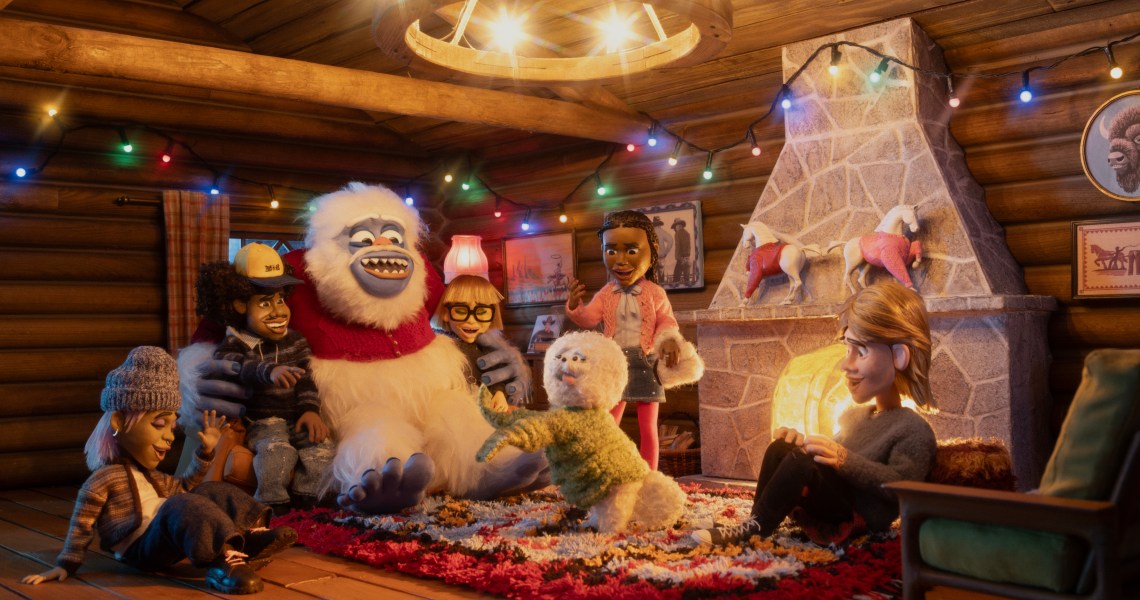
At a time when anyone can generate hours of content in minutes with the use of generative AI, it’s notable that several fashion campaigns released in the last two weeks have gone the opposite direction. “Let’s Get Fuzzy,” a new holiday campaign released by Levi’s this week, is entirely stop-motion, filmed one frame at a time with handmade models posed by a team of animators. According to a Levi’s spokesperson, the one-minute short film took around 2,000 hours to complete.
The campaign is tied to Levi’s holiday knitwear collection, and some Levi’s stores will host knitwear customization options tied to the campaign.
“Our campaigns always marry authenticity and ensuring a clear connection back to product,” said Anne Cambria, vp of global marketing at Levi’s, in an email to Glossy. “We saw an opportunity to bring the warmth and tactile nature of the product to life through a playful, handcrafted world that only Levi’s could create. ‘Let’s Get Fuzzy,’ is our first global campaign in recent memory with sweaters at the center. This was a perfect opportunity to create a tactile world that would translate across our commercial platforms and with fans globally.”
Like-minded campaigns have recently come from luxury brands like Dior and Prada. Both brands released campaigns this week featuring and highlighting traditional animation. “Drawing Prada: Animated By Hand” combines live-action footage with meticulous, hand-drawn frame-by-frame animation in the classic style. “Christian Dior’s Night in Color” is a fully animated seven-minute short film featuring a star-studded cast that includes Robert Pattinson and Rihanna.
All three of these campaigns highlight beautiful but notoriously time-consuming animation styles. Much of the animated film and television industry has moved from 2D hand-drawn styles to 3D because it’s faster and cheaper. And stop-motion is even more notoriously time-consuming, as parodied in an episode of “Parks & Recreation” where a character spends weeks on a stop-motion project, only to be dismayed at the five seconds of footage he produced.
But for these brands, the effort and the care are the point. In supplementary marketing materials, they highlight the process of making each campaign. At Dior’s permanent exhibition space in Paris, hand-drawn sketches from the campaign’s creation are on display. Prada has also consistently described its campaign as “hand-drawn” in its social posts, saying it features “hand-drawn animation and characters, realized with old-school techniques from the golden era of cartoons.”
Meanwhile, Levi’s has been posting additional behind-the-scenes footage about its campaign, including the entire process of making a model, from design to sculpting and painting.
“There’s a fascinating psychological principle at work here: Consumers use perceived effort as a heuristic for value,” said Linda Orr, founder of the brand consultancy Orr Consulting, which recently developed a campaign featuring hand-drawn illustrations for the homeware brand Magenta. “When something appears to require substantial human time, attention and craftsmanship, people can infer that the brand itself cares more about quality and detail.”
Dayna Carney, founder of the creative agency Dayna’s House, told Glossy that AI has made “everything look finished.”
“Finished is now the cheapest thing on the internet,” she said. “What people respond to is proof of attention, and hand-drawn animation is attention you can watch happen.”
The evidence is in the hostile reaction to brand campaigns with AI-generated creative content. Brands like Gucci in February and Valentino last December released campaigns featuring obviously AI-generated images, which were widely criticized for looking cheap and low-effort. These are not adjectives that luxury brands want to be associated with. Studies have shown that most consumers are uncomfortable with or skeptical of AI-generated imagery and video in creative content. “Slop” was Merriam-Webster’s 2025 word of the year.
“We’re already past the point where AI is suspected,” Carney said. “Most of what crosses a feed now is read as slop until proven otherwise, and consumers feel a little tricked by it. Consumers know the value in their attention. And they’ll want to spend it on something they know has a human touch.”
In contrast, the comments on Prada’s campaign were largely laudatory, with specific praise for using human artists.
To add credibility, brands are recruiting known masters of their craft to put these campaigns together. The Prada campaign was created with John Pomeroy, a legendary animator who worked on “Pocahontas” and “The Land Before Time.” Dior worked with Sylvain Chomet, a French animator who created Oscar-nominated films like “L’Illusionniste” and “Les Triplettes de Belleville.” Levi’s worked with the British studio Blinkink, which has created similar stop-motion and practical-effects-heavy campaigns for companies like Apple and Poshmark.
Today’s brands are increasingly and openly touting a lack of AI in their marketing as a selling point. That was a motivating factor in a recent campaign from the premium hair brand Oribe that featured mosaic art created by French mosaicist Mathilde Herrero. While Oribe did not explicitly position the collaboration as anti-AI, it did highlight Herrero’s process in campaign videos, showing her placing each individual tile in the mosaic. Diana LaMurra-Scarrone, vp of global marketing and creative at Oribe, told Glossy last week that the campaign was “another stake in the ground in support of human-made art. That feels more meaningful than ever right now.”
According to Tammy Smulders, CEO of the brand consultancy Trends & Culture, which works with fashion brands like Maison Margiela MM6 and Bottega Veneta, it’s notable that many of the campaigns spotlighting craft are holiday-themed.
“There are a lot of AI tools to create visuals, but now we’re in a place where brands are trying to distinguish themselves,” she said. “There has always been some seasonality with the use of illustrations. Brands have always liked to go more traditional in the holidays. It appeals to an inner child, a nostalgia. The idea of ‘effort-signaling’ has been happening for a bit, but the holidays are bringing out even more examples.”
News to know
- Coperni is shutting down after it failed to reach an agreement with its distributor this week. The brand had been absent from recent Paris Fashion Weeks while in conflict with distributor Tomorrow. An inability to reach an agreement means the brand has no funding and is shuttering.
- Danish jewelry brand Pandroa raised its guidance this week after a 6% growth in sales this past quarter.
- Marks & Spencer is still feeling the effects of the cyberattack it suffered last year. Its fashion, home and beauty division saw profits fall by over $100 million on a two-year basis.
Glossy’s fashion coverage
- Cardi B’s hair-care brand is bringing new shoppers to Revolve
- ‘Holiday timing is a moving target’: Nordstrom aims to cut through the noise with an unexpected campaign
- Michael Kors finds a new audience on TikTok Shop ahead of Black Friday
- Ouai launches cinematic web series as long-form content trends: ‘People are craving a new version of authenticity’