This week, a look at the skyrocketing price of gold and the long-term effects of its rise on the jewelry industry.
The last year has seen the price of gold skyrocket, thanks to steady inflation and tensions in the Middle East. In January, gold futures surpassed $4,900 for the first time in history and briefly reached $5,500. Now, many analysts are predicting that the price could top $6,000 by the end of the year.
As of this week, gold is trending down a bit, hovering just under $5,000 on hopes that the war in Iran might may be cooling off.
But that’s still an increase of 50% over the last year, which has had an immediate impact not just on the jewelry and watch brands that use gold as a raw material, but also on the industry as a whole. Gold, as a commodity, is an indicator of overall economic health, and its wild fluctuations in recent months reflect a more unpredictable market that every fashion brand is dealing with.
Nicole Wegman, founder of the jewelry brand Ring Concierge, told Glossy that rising gold prices have been felt immediately in her business. Gold now accounts for about 60% of the company’s material costs, and Ring Concierge has had to raise prices by about 10% to cover them.
“The problem is, for every 1% you increase the price, sales drop by about 1% as people are priced out,” Wegman said. “We track what our competitors are doing, and they’re all raising prices. One big competitor raised its prices 30% all at once. That is not a strategy we want to take, but you can’t get away from it.”
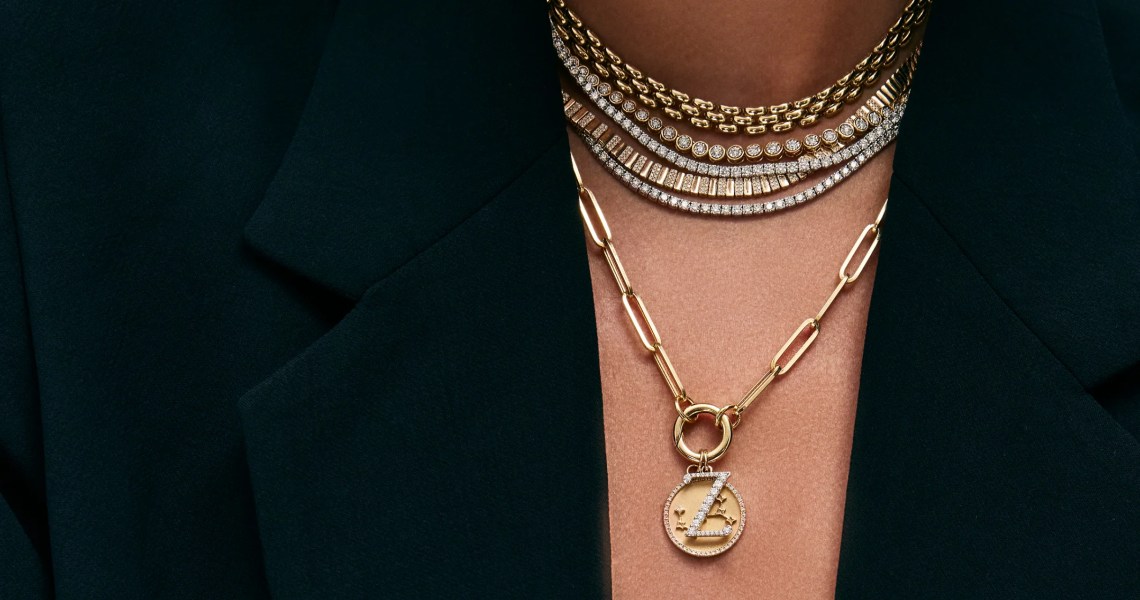
These changes are likely to have long-term knock-on effects on both what consumers can afford and what constitutes “luxury” today. For example, Wegman said Ring Concierge is already shifting its inventory away from chunky, gold-heavy jewelry — which is currently trending — and toward lighter, more diamond-heavy pieces.
“What’s crazy is that gold, by weight, is actually more expensive than melee diamonds, the small stones used in pavé,” Wegman said. “It’s hard to justify paying $3,000 for a solid gold bracelet with no stones, but that’s what it would cost if gold prices keep going up. So, looking at our entire assortment, we’re considering more diamond-heavy, gold-light designs, as well as more silver-gold two-tone pieces.”
Experts in precious metals said this shift in consumer preference based on what’s affordable is likely to continue.
“Gold’s volatility is creating some division between the fashion and gold jewelry markets,” said Joshua Glawson, content manager for the precious metal dealer Money Metals Exchange. “Rising gold spot prices are reducing consumer demand for gold jewelry. This is pushing buyers toward lighter pieces, trade-ins, or alternative metals like silver or platinum. Jewelry designers are also shifting toward mixed metals like electrum or gold-plated silver, bold and chunky statement styles, and more affordable materials like lab-grown diamonds — essentially doing anything and everything to lower the price while remaining profitable.”
Wegman said she has even started to test the idea of 10 karat gold, an alloy that contains less pure gold than the more common 16 karat gold which is standard at many premium jewelers.
“Smart brands are doing design-level mitigation,” said Jackie Swanson, managing partner at Gartner Consulting, where she consults luxury brands on, among other things, managing their supply chains. “They’re shifting toward lower-karat gold in accessible lines, incorporating more colored stones and alternative materials to reduce the gold weight per piece, and introducing vermeil and gold-filled options that let them stay brand-consistent without the full commodity exposure. Some brands are leaning into it entirely, positioning gold as a store of value and integrating the investment narrative into the pitch. That’s actually working for the high end.”
The high price of gold has also affected the watch industry, including higher prices for gold watches from coveted brands like Rolex. There have even been reports that some dealers are melting down old gold watches since they’re more valuable as raw material than as finished pieces.
As watch and jewelry brands continue to raise prices to keep up with material costs, there’s a risk of losing out on the valuable aspirational customer. Many lower-income consumers are already stretched thin in the U.S. as costs of living, groceries, gas and housing prices all go up.
“The entry-level customer is already pulling back, with accessible price points disappearing and overall sales volume contracting as shoppers become more deliberate about discretionary spending,” said Austin Goldman, co-founder and CEO of Shoplift, a retail tech company that works with brands like Meshki and Kopari.
Wegman agreed that the aspirational customer is the one taking the hardest hit from rising gold prices.
“We sell pieces from under $100 to seven-figure custom pieces for clients,” Wegman said. “We are seeing fewer units of our opening price point assortment selling, while our average order value has gone up because of price increases. Our funnel is getting squeezed because fewer new customers are starting at that opening price point and becoming repeat customers. It’s a shame.”
Stat of the week
Speaking of jewelry, the jewelry valuation app Unvault shared with Glossy data from a recent report on the jewelry industry. Here are a few key data points:
- There’s around $750 billion in gold jewelry sitting in American homes.
- 62% of jewelry owners have no insurance on their pieces.
- Only 1 in 5 jewelry purchases is ever resold.
News to know
- Authentic Brands Group is planning to open a new Barneys store at the same location as the previous Barneys flagship on Madison Avenue, which has remained vacant since the original store closed.
- The shoe company Allbirds made the bizarre announcement on Wednesday that it is pivoting away from footwear to become an AI computing infrastructure company called Newbird AI.
- After the controversy of its first ad campaign with Sydney Sweeney, American Eagle brought her back for another, tamer campaign this week.
Glossy’s fashion coverage
Hermès’ sales hit a slowdown thanks to ‘geopolitcal developments’ in the Middle East
Kering’s $3.9 billion quarter shows Gucci isn’t fixed yet
‘Not just the 1%’: How JCPenney is banking on the lower part of the K-shaped economy to fuel its turnaround
Why bridal retailers are jumping into AI shopping before the model is proven