When material innovation company BioFluff first partnered with Stella McCartney to debut its plant-based faux fur at COP28 climate conference in late 2023, the collaboration was widely regarded as a validation moment — proof that a plastic-free alternative to animal fur could meet luxury design and performance standards. What followed, through 2024 and 2025, was a steady drumbeat of fur-free commitments across fashion weeks and brands, alongside a resurgence of faux fur on the runway — particularly in outerwear and accessories — but without a clear answer to one lingering question: Could next-generation fur alternatives move beyond symbolism and virtue signaling into real retail scale?
That question is now being tested by the Chinese JNBY Group and its brands.
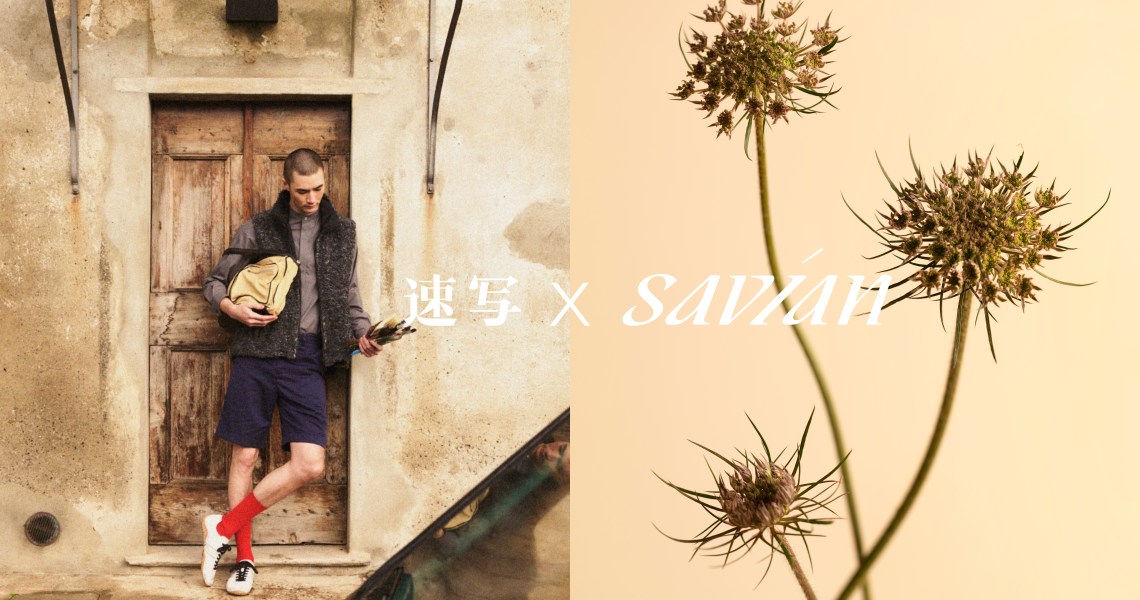
On January 15, JNBY Group unveiled its first collaboration with BioFluff, integrating the startup’s plant-based faux fur, Savian, into the spring-summer 2026 collection of its menswear label Croquis. The material is being used to create a sleeveless eco-fur vest designed for layering or standalone wear. It will be sold online and across select JNBY Group-owned physical stores in China.
Founded in 1994 and listed on the Hong Kong Stock Exchange, the JNBY Group operates more than 2,100 stores across mainland China, Hong Kong, Macau and Taiwan, with additional international presence in markets including Australia and Southeast Asia. JNBY Group controls nearly every step of its product rollout, from design to retail floor, making it unusually well-positioned to test new materials at scale. JNBY Group stores are reminiscent of Cos or Acne Studios stores, in terms of their design sensibility, and they have the scale and operational control of a vertically integrated retailer.
“Product sustainability stands as one of the four core dimensions of JNBY Group’s sustainability strategy,” said Stella Zheng, gm of corporate public relations at JNBY Group. “We were among the first fashion brands in China to establish a target for the proportion of sustainable materials used, aiming for them to account for no less than 30% of the total weight of raw materials annually. This goal was achieved in the 2024-2025 fiscal year.”
JNBY Group has been integrating sustainability into its design and production for years, establishing fabric reuse and upcycling initiatives. In March 2024, the company launched RE;RE;RE;LAB — a limited-edition sustainable brand that gives new life to fabric samples and accessories as part of its broader efforts to reduce waste and rethink material use.
The timing of the BioFluff collaboration lands amid a broader industry shift. Over the past two years, major fashion weeks, including New York, London and Copenhagen, have formalized moves away from animal fur, while brands ranging from Coach to Max Mara have publicly exited real fur. Faux fur, once treated as a compromise to the real thing, has re-emerged as a design statement, but one still dominated by petroleum-based synthetics, which are cheaper to produce.
Plant-based alternatives like Savian sit at the intersection of that trend and the mounting pressure to address plastics. Savian is a fully plant-based faux fur made from natural fibers like flax, developed as an alternative to animal and synthetic fur.
For Croquis, the decision to introduce Savian was tied closely to its creative direction. “Constant exploration, experimentation and the pursuit of new perspectives have long defined the brand’s creative approach,” said Mengling Zheng, senior design director at Croquis. The fall collection draws inspiration from plants and natural forms, making a bio-based fur feel natural to the narrative, rather than just an added sustainability layer.
From BioFluff’s perspective, the collaboration represents a shift from endorsement of faux fur alternatives to execution, especially in retail. Brands including Stella McCartney, the U.K.-based outerwear brand Shrimps and mass retailers like H&M have sold faux-fur products in physical stores globally, though the vast majority have relied on synthetic or recycled fibers rather than fully plant-based materials.
“This is not only our first menswear collaboration, but also our largest-scale collaboration to date,” said Roni Gamzon, co-founder and chief commercial officer at BioFluff. “What mattered most was putting the material directly in front of customers so they could experience it for themselves. The speed and scale at which JNBY operates is genuinely impressive.”
The move to use BioFluff comes as JNBY Group continues to grow at a steady clip. In the six months ended December 31, 2024 — the last reported financial results from the group — the Hong Kong–listed group reported revenue of RMB 3.16 billion ($440 million), up 5% year over year. Croquis, which accounts for just over 12% of group sales and operates more than 300 stores, generated RMB 388 million ($53 million) in revenue during the period, making it a meaningful but manageable platform for testing new materials at scale. In the first half of JNBY Group’s fiscal 2025, roughly 81% of JNBY Group’s RMB 3.16 billion in revenue came from offline retail, with online channels accounting for the remaining 19%. Digital sales grew nearly 12% year over year.