Nest New York is bringing its layerable fragrances to the U.K., as prestige and mass beauty brands alike lean into the commercial scent-wardrobe opportunity.
The New York-based fragrance brand, founded in 2008 by Laura Slatkin, is expanding its U.K. presence this month through e-tailer Cult Beauty, department stores Harrods and Selfridges, and specialty retailer John Bell & Croyden. Cult Beauty and Harrods carry Nest’s fine fragrances, while Selfridges and John Bell & Croyden sell its home fragrance products. At Selfridges, the brand is selling both online and in-store, while John Bell & Croyden is launching Nest in-store only.
The move comes as fragrance layering, long popular in the Middle East, is becoming a more mainstream part of the beauty conversation in the U.S. and the U.K. Rather than centering their routines around one signature scent, shoppers are increasingly mixing perfume oils, eau de parfums, body mists and scented body products to create more personalized combinations.
Mass brands are already responding. Bath & Body Works recently expanded its “Blend Bar,” a single-note fragrance-layering concept, to all 1,900 of its stores and its e-commerce site after testing it in 500 stores, as reported by Glossy. The concept includes body creams and travel-sized fine fragrance mists in scents like pistachio and strawberry, with in-store merchandising that suggests combinations while encouraging shoppers to build their own.
At Nest, fine fragrance has grown from 15% to 30% of the company’s revenue over the past three years, according to the brand, while home fragrance has continued to grow in absolute terms. By 2028, Nest’s goal is for fine fragrance to represent 50% of total revenue.
Nest is now majority-owned by an investor group led by North Castle Partners, a private equity firm focused on consumer, health and wellness brands, which acquired its stake in 2022. Slatkin and Eurazeo, the European investment group that previously held a majority stake in Nest, retained minority positions following the deal. The 2022 Eurazeo deal valued Nest at approximately $200 million. The company declined to disclose annual revenue.
“Listening to our customers, we have learned they don’t experience scent in a singular way,” said Edgar Huber, CEO of NEST New York. “They layer formats and scents together, they adjust it by mood and occasion, and they want flexibility.”
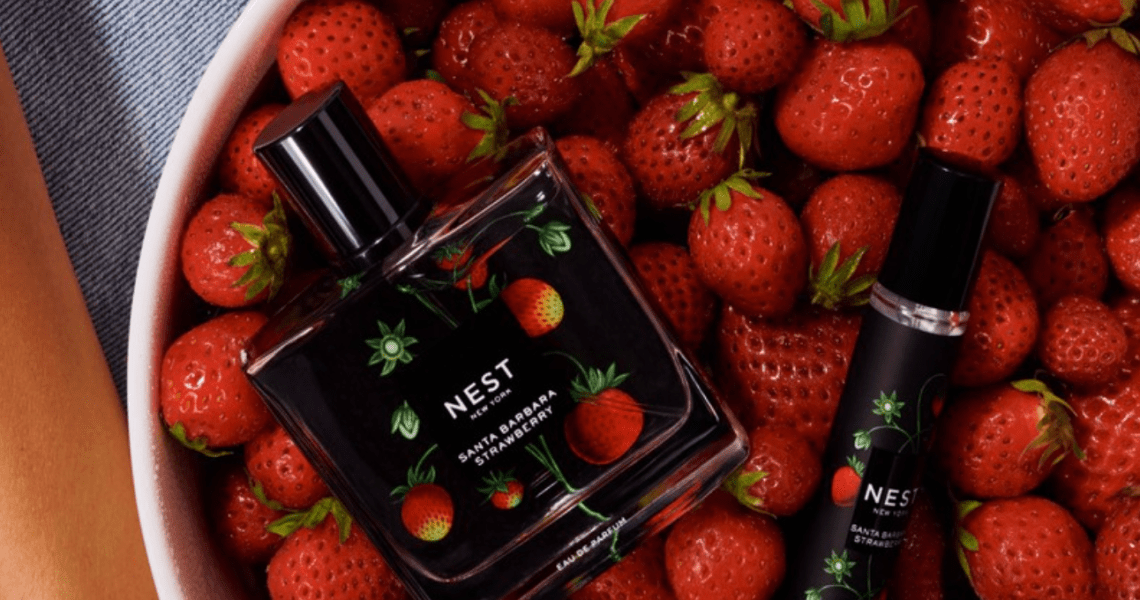
The brand’s multi-format strategy is built around hero scent franchises including Madagascar Vanilla, Santa Barbara Strawberry, Lychee Rose and Balinese Coconut. In 2025, Nest expanded those fragrances across perfume oils, eau de parfums and body mists, giving shoppers multiple entry points into the same scent family.
At Cult Beauty, Nest’s core fragrance pricing ranges from £39 for body mist to £102 for perfume oil, while eau de parfum is at £82. In the U.S., its body mists are priced at $48, eau de parfums at $98 and perfume oils at $100.
“The layering strategy emerged from watching that behavior closely,” Huber said. “A body mist is often the entry point [to the brand] because it’s accessible, it’s sensory, it’s low commitment — it is typically their final step in a fragrance layering routine. More sophisticated fine fragrance customers use the perfume oil as the foundation of their daily scent ritual, the first step in layering, which creates depth and helps make the perfumes more long-lasting throughout the day.”
The business case for layering is clear. According to Nest, multi-format fragrance shoppers generate $404 in lifetime value over a rolling 24-month period, compared to $200 for a single-format eau de parfum shopper. The company said the difference is driven by repeat purchases, shorter repurchase cycles and lower churn, rather than simply larger one-off baskets.
“When we laid out that journey and made it easy for them to move through it, the customer lifetime value more than doubled,” Huber said. “That’s a 102% premium, and it’s not because we’re pushing product; it’s because we built a system that mirrors how the consumer actually wants to experience fragrance.”
Cult Beauty is already giving Nest an early read on U.K. demand. At the retailer, Nest’s top scents, including Madagascar Vanilla, Crème de Clementine and Indigo eau de parfums, are selling out month after month. In early June, Nest will add Santa Barbara Strawberry eau de parfum to the retailer’s assortment, building on the scent’s existing perfume oil format.
To support the launch, Nest is working with Cult Beauty on a paid and organic creator campaign timed to Wimbledon, which starts on June 29, though it is not an official Wimbledon partnership. The campaign connects Madagascar Vanilla perfume oil and Santa Barbara Strawberry eau de parfum to the tournament’s strawberries-and-cream tradition and will include in-person events and marketing at the event.
Today’s consumers are not just buying one bottle and staying loyal to it. They are building routines, testing formats and treating fragrance more like makeup or skin care: something to be layered, refreshed and adjusted by mood.
Bath & Body Works is approaching this change through accessible travel-size mists and body creams. Sol de Janeiro has added solid perfumes to extend its body-splash franchise. Snif has leaned into playful bundles, including scent combinations built around gourmand concepts. Nest’s approach is more prestige, but the aim is similar: to make buying across formats feel intuitive.
“The 12-month goal is to establish Nest as a credible and distinctive lifestyle fragrance brand in the U.K. — not as an American brand launching in Britain, but as a brand that belongs in the conversation alongside the houses that U.K. consumers already love,” Huber said.
For Nest, the U.K. expansion is also a test of how far a brand built first in home fragrance can stretch into personal fragrance without losing its original identity. The company is using fine fragrance to widen the customer relationship, without walking away from what it is best known for: candles and diffusers.
“Success is a customer who thinks of Nest the way they think of their favorite wardrobe staples: as something they build on over time, not something you buy once,” Huber said. “The multi-format model is really a loyalty model.”