In July, Korean skin-care brand Innisfree partnered with comedian and “Saturday Night Live” star Tommy Brennan on a series of man-on-the-street-style interviews to promote its Green Tea Sunscreen Serum. The benefits of the sunscreen took second fiddle to Brennan’s playful questions with New Yorkers, and that was largely the idea, according to the brand.
“With Gen Z, in particular, traditional product-focused advertising is really not enough anymore,” said Jamie Lee, head of brand marketing at Innisfree U.S. “Entertainment is 100% the way to capture an audience.”
Advertising has long existed alongside entertainment, either in the form of TV ad breaks or product placement. But as today’s consumers are up to their eyeballs in entertaining content just a scroll and a click away, many of today’s beauty brands are asking if entertainment and advertising can be one and the same.
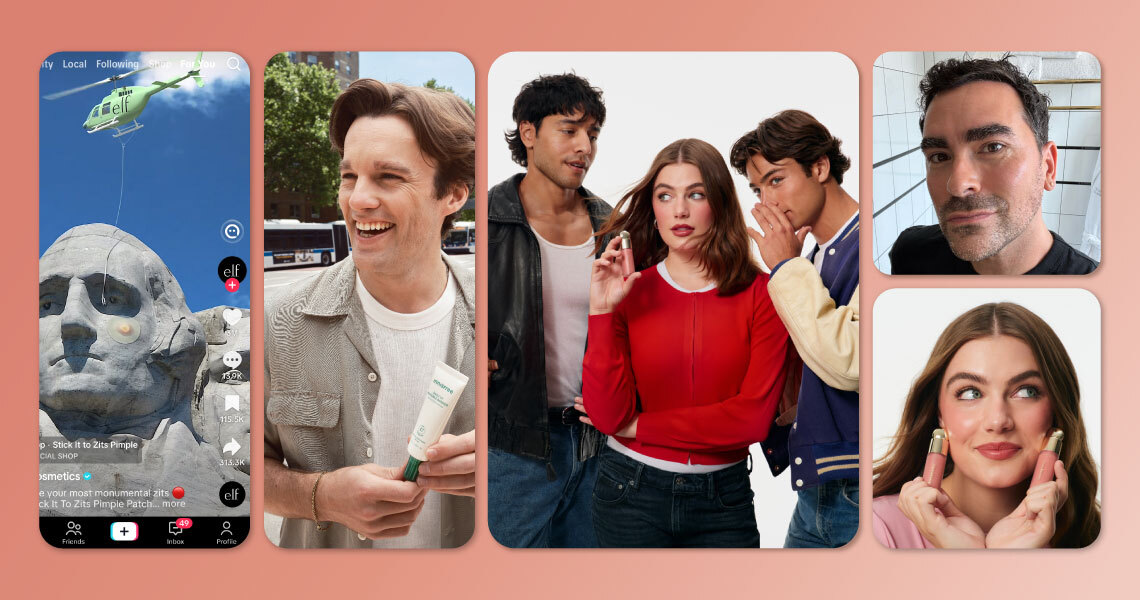
That can look like Innisfree’s series of short comedic clips with Brennan, but it can also take the shape of long-form content, like E.l.f. Cosmetics’ nearly 10-minute true crime mockumentary starring Phoebe Dynevor, released in March; or it can play on consumers’ emotional attachment to their favorite characters, like Rare Beauty’s July blush campaign with Ella Bright that mimics a scene from her hit show “Off Campus.” It may also borrow from classic beauty vlogger genres, like Merit’s candid “Get Ready With Me”-style partnerships with Jemima Kirke and Dan Levy.
“Consumer expectations are changing, and so are the platforms. The algorithms are rewarding content that keeps people watching, and that serialized, episodic content is becoming more prioritized,” said Emily Larsen, social strategy director at social-first creative agency Movers + Shakers, which worked on E.l.f.’s true crime spoof. “So social platforms are evolving into entertainment platforms, and the audiences are expecting brands to show up with content that’s worth watching.”
That shift has been especially conducive to the beauty world, where a long line of beauty influencers have trained consumers to expect their product recommendations and entertainment to come from the same source. But rather than waiting for outside influencers to create that content, beauty brands are looking to create it themselves.
“It’s the level of integration [that has evolved], and I feel like that comes from the creator marketing world,” said John Mathieu, vp and creative director at creator marketing agency Pearpop. “We’ve warmed the audience up even more now so that they’re OK with product integration, as long as it’s done well.”
An ad as entertainment being done well can often mean letting go of control over a brand voice or narrative and letting the talent lead the way, said Mathieu. In collaborating on the Innisfree campaign, Tommy Brennan said the key was making the spots work as well on his own feed as they would on Innisfree’s pages.
“In terms of choosing what [partnerships] to do, it has to be the ones where people will still kind of be like, ‘This is an ad, but it’s entertaining, and it makes sense. It’s Tommy still,’” he said. “It is an overused term, but you don’t want to feel like you’re selling out.”
Brands are not only thinking of themselves and their owned channels as entertainment-content engines, but they’re also looking to insert their products into traditional entertainment. Netflix’s “Emily in Paris,” which debuted in 2020 and centered on American Emily Cooper’s work at a marketing agency in Paris, set a new standard for product-placement-as-storyline with episodes built around brands like Vestiaire Collective and Rimowa.
L’Oréal Group, which topped $50 billion in annual sales in 2025, has tapped into a new wave of hit shows; L’Oréal-owned brands CeraVe and Maybelline have appeared throughout recent seasons of “Love Island,” and products from the L’Oréal Paris line appeared in the “Legally Blonde” prequel “Elle.”
Such spots can be costly, but brands can still be part of a consumer’s viewing experience through social-led campaigns even if they don’t have the spending power to make it into official product placement.
“Most audiences are watching these shows anyway with a second screen,” said Larsen. “Brands shouldn’t feel discouraged if they’re not able to secure that product placement in the show itself, because oftentimes that phone is in [consumers’] hands anyway as they’re watching those shows.”
Audiences have become more open to advertising and branded content showing up across their screens, but there is still a point of saturation. Season two of Netflix’s “Nobody Wants This” faced backlash from viewers for its heavy use of product placement following the success of its debut season. “After a long day, it’s nice to put on some sweats, pour yourself a glass of wine, turn on the TV and cozy up to an advertisement for Estée Lauder Advanced Night Repair Serum Synchronized Multi-Recovery Complex,” The Guardian’s Alaina Demopolous wrote in a critique of the show’s “sponcon slop.”
Overstaying your welcome is a recipe for product placement to sour a viewer’s relationship to the brand, Mathieu said. “Then you become annoying. Because then you interrupt the thing people came there for, and you just can’t do that.”
Those obvious product placements didn’t totally deter viewers — a third season of “Nobody Wants This” is already underway. But while brands have by and large successfully infiltrated TikTok and Instagram feeds and TV shows with ads that fit seamlessly into users’ feeds, Mathieu said there is still one major social platform where consumers are more resistant to ads.
“I want to get more into the Substack universe or written content, because those audiences are obviously so engaged,” said Mathieu. “I’m not sure audiences are open to seeing an ad there yet.”