This is an episode of the Glossy Fashion Podcast, which features candid conversations about how today’s trends are shaping the future of the fashion industry. More from the series →
Subscribe: Apple Podcasts • Spotify
British billionaire Mike Ashley has spent decades building a retail empire by acquiring companies at moments of distress. Now, the Frasers Group founder is making his biggest move yet into luxury by acquiring British department store Harvey Nichols.
On this week’s Glossy Podcast, international fashion reporter Zofia Zwieglinska joins senior fashion reporter Danny Parisi to explain who Ashley is, why the Harvey Nichols deal matters and how Frasers is gaining influence across the fashion industry.
Ashley built Sports Direct from a single store into the foundation of a multibillion-pound retail group. His supporters view him as an astute dealmaker who waits until businesses are struggling before buying them at a significant discount. But his aggressive and often unpredictable approach has also made brands wary.
That reputation was reinforced by Frasers’ 2023 acquisition of Matches. Frasers shut down the luxury e-tailer less than three months later, leaving brands owed money and, in some cases, unable to retrieve their inventory. The experience is now shaping the industry’s response to Harvey Nichols.
“Because of what happened with Matches, there is concern around what is worth keeping [with Harvey Nichols],” Zwieglinska said. “There might be brands too that are less keen to be associated with Frasers, considering how brands were affected [with Matches].”
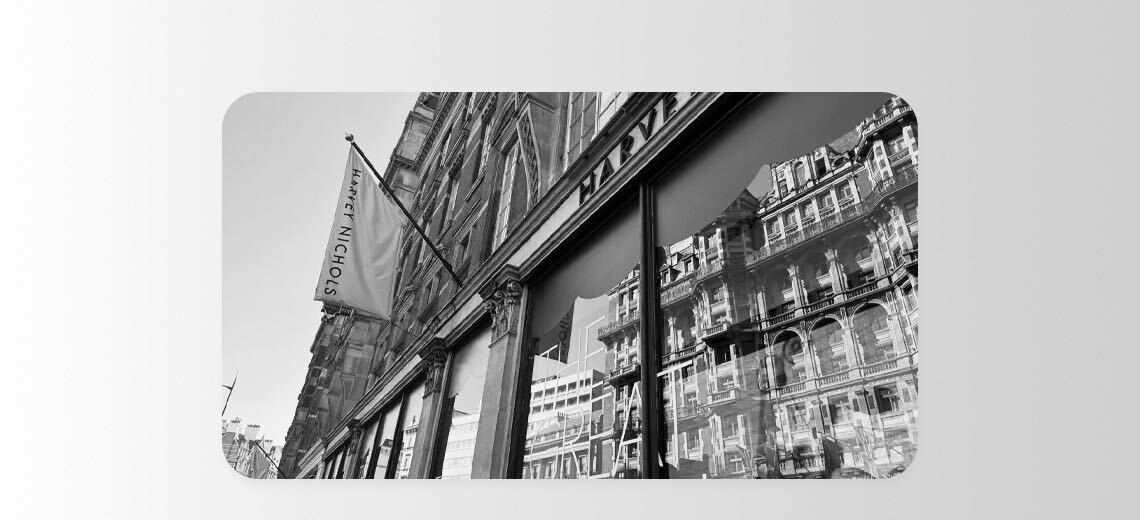
Founded in 1831, Harvey Nichols remains one of Britain’s best-known department stores, but it has struggled to compete with nearby Harrods and Selfridges. The retailer reached its cultural peak in the 1990s, when creative director Mary Portas helped establish its irreverent advertising and influential window displays. Its appearances in the British sitcom “Absolutely Fabulous” gave it a place in London culture comparable to Barneys New York in “Sex and the City.”
In recent years, however, the retailer has lost some of that identity. Its turnaround has also been complicated by the challenging British luxury market, including the end of tax-free shopping for international visitors.
Harvey Nichols is only one part of Ashley’s expanding portfolio. Frasers owns luxury retailer Flannels and stakes in companies including Hugo Boss, Mulberry, Burberry and Puma. It also controls shopping centers, retail parks and outlets.
That gives Frasers a particularly unusual position. The group can act as a brand’s shareholder, wholesale customer and retail competitor, while also owning the property where its products are sold. Through its wider operations, it can provide logistics and consumer credit services, as well.
“Frasers is buying up different parts of the fashion supply chain and the customer journey,” Zwieglinska said. “You’re talking about essentially owning every part of the customer experience.”
For American fashion executives, the closest comparison may be Authentic Brands Group, which also acquires distressed fashion businesses. But Authentic generally licenses brands to outside operators, while Ashley has historically pursued greater operational control. Frasers’ move into luxury has also been notably faster and more aggressive.
The question is whether the company can translate its success in value-driven sports retail into luxury, where relationships with brands and customers are especially important. Reviving Harvey Nichols will require far more than the initial acquisition price, potentially including extensive investment in its stores, assortment and identity.
Whatever happens next, Frasers is becoming increasingly difficult for the global fashion industry to ignore.
“In the next year or two, we will definitely be hearing more about Frasers Group,” Parisi said. “It doesn’t seem to be slowing down.”