This is an episode of the Glossy Fashion Podcast, which features candid conversations about how today’s trends are shaping the future of the fashion industry. More from the series →
Subscribe: Apple Podcasts • Spotify
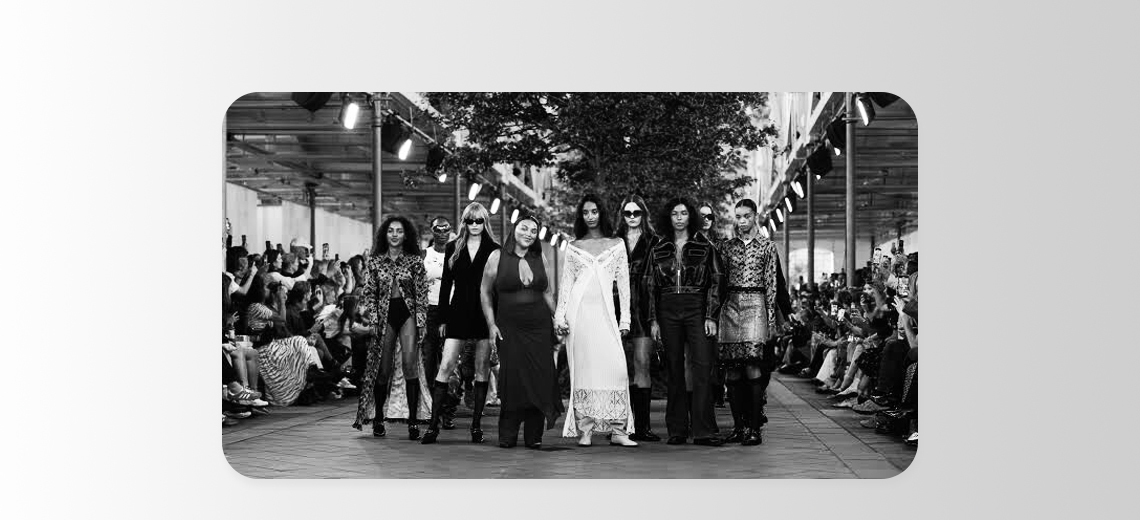
Copenhagen Fashion Week is celebrating its 20th anniversary this week, marking two decades in which it has grown from a regional trade event into what is often described as fashion’s unofficial fifth city.
Running from August 3-7, the spring 2027 edition includes 34 shows and presentations spanning established Scandinavian labels, emerging designers and international guests, including New York-based Collina Strada and Lagos Fashion Week guest Iamisigo.
But the anniversary arrives at a complicated point. Copenhagen has become highly effective at launching brands internationally. The problem is that many of its greatest success stories eventually move on.
Ganni and Cecilie Bahnsen now show in Paris, while Heliot Emil has also shifted its runway focus there. Saks Potts and (Di)vision, two labels that helped define Copenhagen’s recent creative identity, have closed. Ganni remains connected to the city this season through a collaboration with emerging designer Stem, but it no longer anchors the schedule with the major shows that once helped define the week.
For this week’s Glossy Fashion Podcast, fashion editor and broadcaster Natalie Salmon joined international fashion reporter Zofia Zwieglinska to discuss how Copenhagen became so influential, why its street style has mattered and whether it can produce another brand with Ganni’s global reach.
Salmon began her career at Harper’s Bazaar in the U.K. before joining the launch team of Vogue Scandinavia, where she served as digital editor while living in Stockholm. She later became editor-in-chief of Hello! Fashion and now runs fashion and technology platform The Modems.
Having worked across the Nordic fashion industry, Salmon watched Copenhagen pull ahead of neighboring weeks in Stockholm and Oslo.
“Copenhagen has really managed to cultivate a sort of cult following,” she said. “A lot of [major editors] will prioritize it even over London now.”
Part of that success came from establishing a clear visual identity. Copenhagen street style moved perceptions of Scandinavian fashion beyond quiet minimalism and toward color, print and playful layering. Unlike the more manufactured outfits seen outside some fashion weeks, it also appeared connected to everyday life.
“There are bikes, there’s weather,” Salmon said. “It feels like a real wardrobe rather than just dressing for the ’gram.”
Brands including Ganni, Cecilie Bahnsen, Stine Goya, Rotate and Saks Potts turned that wider Scandi aesthetic into recognizable commercial identities. No company became more closely associated with Copenhagen’s international rise than Ganni.
Under Ditte and Nicolaj Reffstrup, Ganni used the week to build a colorful, community-led universe around the “Ganni Girl.” Its shows often operated more like cultural events, incorporating music, unusual settings and experimental materials.
Material innovation also became central to Ganni’s business proposition. In 2023, Glossy reported that the brand was working with biotech startup Rubi Labs to test cellulose made by capturing carbon dioxide. The pilot formed part of Ganni’s Fabrics of the Future program, which tested materials including Mylo mycelium leather and Circulose made from discarded textiles.
At the time, the company was targeting a 50% reduction in its carbon footprint by 2027 and wanted innovative materials to account for 10% of its material use by 2025. Rather than investing directly in startups, Ganni tested whether its materials could meet requirements around performance, price and manufacturing scale before entering purchasing agreements.
That combination of experimentation, accessible pricing and global ambition helped distinguish Ganni from traditional luxury companies. The brand expanded through wholesale and stores in markets including the U.S., China and Australia, while North American sales increased 53% in 2022.
More recently, however, Ganni has tried to elevate its positioning. It moved its runway to Paris in 2024 under former CEO Laura du Rusquec, who joined from Balenciaga and outlined plans to more than double the business over five years. “Paris is the stamp of authority in terms of the luxury editors [and] the luxury press,” Salmon said.
Du Rusquec left Ganni in April 2026 after two years, reportedly to pursue other opportunities, and has since joined Kylie Jenner’s Khy as CEO. Hans Hoegstedt, a retail executive and former CEO of design company Tom Dixon, is currently leading Ganni on an interim basis.
The departure leaves Ganni at a strategic inflection point. Its move upmarket expanded its footprint and brought it closer to the luxury establishment, but also prompted questions about whether higher prices and a more polished identity were distancing the company from the accessible, community-driven positioning that created its following.
Ganni’s evolution raises a related problem for Copenhagen. If the week develops brands until they are ready for Paris, does losing them represent success, or does it eventually weaken Copenhagen’s schedule?
This season, Ganni is supporting Stem designer Sarah Brunnhuber through a collection using Ganni deadstock and Stem’s zero-waste weaving techniques. The project suggests one possible model, with established alumni directing resources and visibility toward younger designers.
That emerging-talent role remains central to Copenhagen’s appeal. Unlike Paris and Milan, where conglomerate-owned houses dominate, Copenhagen is associated with independent brands and genuine discovery.
“The big capitals are run by heritage houses [and] conglomerates,” Salmon said. “Copenhagen is completely different in that it’s all built on that community.”
Its wider influence also extends beyond individual labels. Sustainability requirements announced in 2020 became mandatory for brands joining the official schedule in 2023, turning environmental and social standards into a condition of access rather than a voluntary marketing claim. The framework has since influenced other organizations, including Berlin Fashion Week and the British Fashion Council’s Newgen program.
For Salmon, Copenhagen could strengthen its next chapter by working more closely with neighboring Nordic fashion weeks and positioning itself as the central international platform for the region.
Over its first 20 years, Copenhagen created a playbook for transforming a regional fashion scene into a global cultural export. Its next challenge is to build an ecosystem in which the next Ganni does not need to leave Copenhagen behind to become successful, while Ganni itself works out whether its future lies in further elevation or a return to the qualities that first made it matter.