In this week’s Luxury Briefing, I take a deep dive into the most significant group of earnings in recent months, from LVMH, Kering, Hermés, Prada Group, Brunello Cucinelli and EssilorLuxottica – with analyst takes from Bernstein’s Luca Solca. It seems that as brands are adjusting to slow growth, they’re trying to meet customers at all price points, not always successfully. Also, how Frasers is buying up and buying into more of the U.K. luxury space, and what Arnault said on X in reply to the Le Monde investigation. For tips or comments, email me at zofia@glossy.co.
Luxury’s biggest groups finally produced some better numbers this week. But whether they’ll amount to a recovery is another question.
LVMH reported €38.6 billion, or approximately $44.5 billion, in first-half revenue, up 2% organically. Second-quarter growth accelerated to 3%, while fashion and leather goods returned to positive territory, up 1%, after seven consecutive quarters of decline. Kering generated €7.2 billion, or approximately $8.3 billion, in first-half revenue, down 3% on a reported basis, but returned to 2% comparable growth in the second quarter. Gucci’s decline narrowed to 2%, from 8% in the previous quarter. Hermès remained in its own category, with revenue up 6% at constant exchange rates to €8.2 billion, or approximately $9.4 billion, and an operating margin of 41.1%.
There was enough improvement for executives to sound relieved. LVMH CFO Cécile Cabanis called the first half a “very solid set of results” that confirmed “the strength and resilience of our model.” Kering CEO Luca de Meo said the group had turned “strategy into action and action into results,” returning to growth despite closing 84 net stores in six months. At Hermès, Axel Dumas delivered the considerably calmer assessment that “our clients have turned up once again.”
But the results have not convinced Luca Solca, senior luxury analyst at Bernstein, that a broader market recovery has arrived. Instead, he argues that the week makes most sense through a less glamorous lens: value for money.
That helps explain why jewelry is thriving while handbag-led businesses are only beginning to stabilize. LVMH’s watches and jewelry division grew 11% in the second quarter, compared to 1% for fashion and leather goods. Kering’s jewelry business grew 18%, while its fashion division was flat. Richemont’s jewelry maisons have been expanding considerably faster still.
Solca said entry-price jewelry now gives middle-class consumers a “huge value-for-money advantage” relative to handbags. A bracelet or pendant made with precious metals and stones can appear increasingly rational beside a leather bag whose price has risen steeply since 2019. LVMH said Tiffany’s HardWear and Knot collections delivered “exceptional growth,” while Bulgari recorded broad-based demand across jewelry, high jewelry and watches.
Resale is reinforcing the same calculation. Vinted, which generated $1.28 billion in revenue last year, is now pushing into the U.S., betting that American shoppers will increasingly treat secondhand as a mainstream channel rather than a niche sustainability habit.
The RealReal will offer another test when it reports second-quarter results on August 6. Analysts expect approximately $187.8 million in revenue and a loss of $0.02 per share. That follows a first quarter in which revenue rose 19%, gross merchandise value increased 24%, and active buyers grew 10%.
The contrast with primary luxury is difficult to miss. While the biggest groups celebrate a return to low-single-digit growth, resale platforms are benefiting from customers who still want recognizable luxury products but are less willing to pay for them new. The alternative to an overpriced handbag may not be a cheaper new handbag. It may be the same bag, several seasons old, at a price that feels defensible.
For products with credible scarcity and retained value, resale can strengthen the original proposition. Rolex and its retail partners have been growing their presence in certified pre-owned watches, using authentication and guarantees to participate directly in secondary-market demand. For fashion houses, however, resale can expose the gap between what a brand charges and what the market believes an item is worth.
The same value lens helps explain Gucci’s nascent improvement. Kering is doing something luxury companies generally dislike admitting is necessary: meeting customers where they are.
Asked about affordability on the earnings call, de Meo acknowledged that the group had, in certain categories, gone too far on pricing. Adjustments had produced an effect on volumes that was not linear but “exponential,” he said. Gucci has reduced select prices and is positioning new collections more competitively, while maintaining spending on marketing at around 9% of revenue.
Solca described the approach as taking care of a large audience of “luxury orphans,” consumers still interested in designer goods but pushed aside by the industry’s post-pandemic elevation campaign.
The caveat is that Gucci may have found customers before finding desirability. “I am not convinced yet that Gucci is rebuilding desirability,” Solca said. “I don’t get that from the field. This is yet to come.”
For now, the improvement is being supported by pricing, easier comparisons and aggressive housekeeping. Alongside its store closures, Kering reduced operating expenses by 3% at constant exchange rates, while first-half operating profit beat expectations by 6%. Gucci grew 9% in North America but remained negative in Europe, Japan and Asia-Pacific. The business is healthier. It is not yet hot.
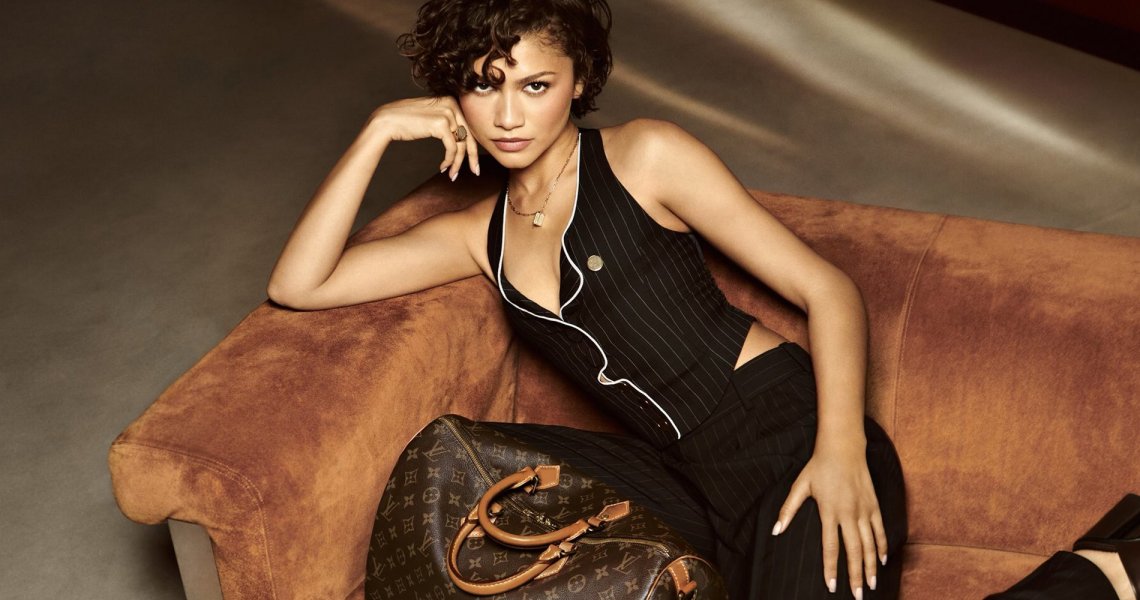
LVMH has been more reluctant to retreat from the post-Covid pricing surge. The company implemented moderate, low-single-digit price increases in fashion and leather goods during the first half, while volume and mix remained broadly flat. Management acknowledged the need to continue serving aspirational customers, pointing to newer, comparatively more affordable Louis Vuitton products such as the Multi Pochette, while simultaneously expanding its assortment of highly priced products, many of which have waiting lists.
Hermès is the inconvenient exception to the idea that luxury prices simply became too high. Dumas acknowledged some pressure among mid-tier customers, though that was offset by continued spending from the wealthiest clients. Yet Hermès has no intention of making a Gucci-style correction. Its customers continue to believe the products justify the prices, which is why Solca still considers the company the industry’s yardstick.
Luxury’s winners are creating their own demand
Luxury demand remains weak, but Prada, Brunello Cucinelli and EssilorLuxottica showed this week that the strongest companies are not waiting for a broad market recovery, and rather giving customers a specific reason to spend.
For its part, Prada Group achieved improved performance via stronger spending from top clients, thanks to a more favorable product mix, rather than heavier price increases. Prada Group’s first-half revenue reached $3.5 billion, up 5% organically, while the Prada brand accelerated to 6.3% growth in the second quarter, reported on July 30. CEO Andrea Guerra said the company’s “biggest opportunity” remains with top spenders. “They are healthy, they are wealthy, and we need to gain our fair share,” he said. Growth came more from product mix than price increases, with volumes also slightly positive. Bernstein analyst Luca Solca said the result better supports Prada’s ambition to compete in the luxury sector’s “mega-brand premier league.”
Brunello Cucinelli, reporting on the same day, offered a similar lesson from the very top of the market. The brand achieved sustained full-price demand from high-end customers across regions, supported by its controlled distribution and limited exposure to aspirational consumers. First-half revenue rose 13.3% at constant currencies to $864 million, with retail up 19.3% and the Americas up 20.6%. The company said growth reflected both new customers and higher spending by existing clients, and raised its 2026 growth forecast to 10–11%. Chairman Brunello Cucinelli said the brand was experiencing “exceptionally favorable momentum,” supported by demand for products that feel genuinely exclusive.
EssilorLuxottica is creating demand differently. The company is focused on strong optical demand combined with accelerating smart-glasses sales, which are expanding the company beyond traditional eyewear. Smart-glasses sales nearly doubled in the second quarter for the company, as stated in its earnings report from July 28, helping group revenue rise 8.7% at constant currencies. CEO Francesco Milleri said AI eyewear would eventually span “luxury, mid and lower price points,” with Meta targeting younger, more technology-led shoppers and additional premium launches planned. Solca said improving average prices, prescription attachment and production efficiency meant product mix should “continue to play in EssilorLuxottica’s favor.”
News to know
- Frasers Group has built a 4.1% stake in Burberry while continuing its pursuit of Hugo Boss, which rejected the retailer’s €1.7 billion, or approximately $1.96 billion, takeover offer as too low. Frasers is reportedly considering installing CEO Michael Murray at the helm of Hugo Boss if a deal succeeds. The moves extend Frasers’ push into luxury, where it already owns Flannels and holds major positions in Mulberry and Hugo Boss.
- Bernard Arnault publicly hit back at Le Monde following its six-part investigation into his political relationships and media interests, and LVMH’s unresolved succession. In a sarcastic open letter, Arnault mocked the newspaper’s observations about his family and dismissed suggestions of an emerging “Italian opera” among his five children. The response denied a family rift, but did not clarify who will eventually succeed the 77-year-old LVMH chairman and CEO.
- L’Oréal expects to introduce its first Gucci beauty products as early as 2028, after taking control of the license from Coty in mid-2027. CEO Nicolas Hieronymus said the group has significant ambitions for the business; L’Oréal reportedly believes it can more than triple the business over time.
Listen in
On this week’s Glossy Podcast, Danny Parisi speaks with PwC global retail lead Kelly Pedersen about why the traditional shopping calendar is stretching out, how longer sales periods affect consumer spending, and why AI is quickly becoming a key discovery and price-checking tool. Listen here.
Read on Glossy
Inside the sketchy world of resale sourcing. How brands are showing up at Lollapalooza. How Rolex’s Certified Pre-Owned platform is broadening the wider secondhand market.