This is an episode of the Glossy Fashion Podcast, which features candid conversations about how today’s trends are shaping the future of the fashion industry. More from the series →
Subscribe: Apple Podcasts • Spotify
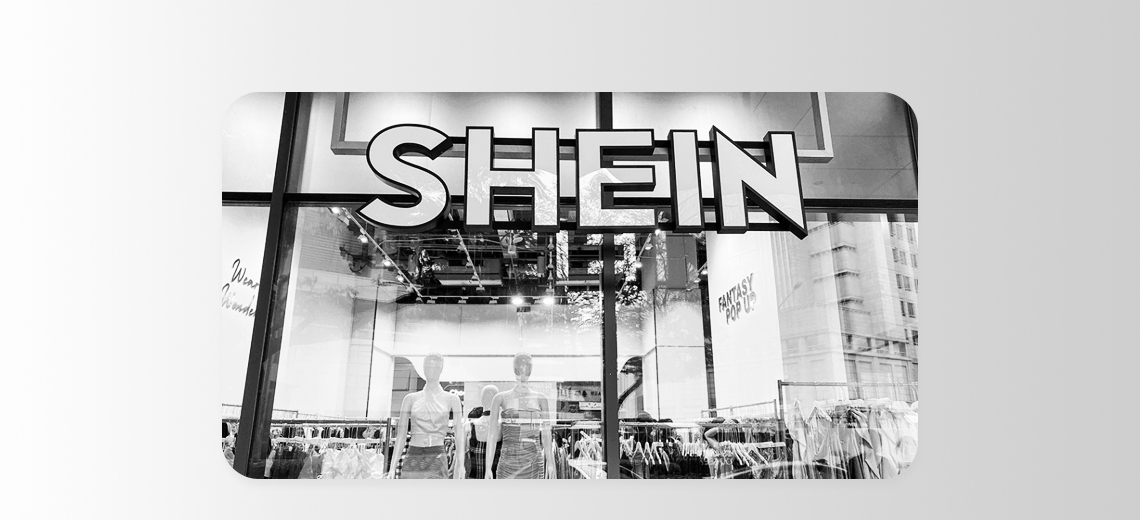
Earlier this week, Glossy wrote about Everlane’s reported sale to Shein, a deal that will put one of the defining sustainability-adjacent DTC brands of the 2010s inside the world’s most scrutinized ultra-fast-fashion machine.
The headline was a shock to many, as the two companies represent almost opposite ends of the modern fashion conversation. Everlane has built its identity around “radical transparency,” elevated basics and factory disclosure since its 2010 founding by Michael Preysman and Jesse Farmer. On the other hand, Shein, founded in 2008, has become known for rock-bottom prices, rapid production, and ongoing criticism from fair labor and sustainability advocates. It is also known for its $66 billion valuation in 2023, when it was reported that the company had started to chase an IPO.
On this week’s Glossy Fashion Podcast, Jasmine Malik Chua, climate and labor editor at Sourcing Journal, joined the conversation to talk through what the deal says about brand values, investor pressure and the future of sustainability-led fashion.
Chua has reported extensively on Shein and Temu, forced labor, textile waste, garment worker protections, sustainability regulation, and climate risk. Her first reaction to the Everlane news, she said, was visceral.
“I think I just screamed inside for like two hours,” Chua said.
The reported deal follows a difficult period for Everlane, which had been carrying significant debt and not been profitable for some time. But for Chua, the story points to a fundamental tension between slow-fashion values from brands like Everlane and the kind of fast-growth that venture-backed brands are expected to deliver.
“Due diligence is a cost,” Chua said on the podcast. “Doing the right thing doesn’t come cheap.”
As VCs demand more from the brands they invest in, consumers expect to pay less — in Everlane’s case, that’s because of competitors like Uniqlo and Quince, for example.
Everlane was never purely a sustainability brand — Preysman often framed it around transparency, rather than sustainability. And the company built real credentials on both fronts, Chua said, with factory disclosure and a 52% reduction in absolute carbon emissions.
The question now is whether those values will survive under Shein’s ownership.
Chua said Shein may be interested in Everlane because of its reputation, its supply chain and its position as “almost the antithesis” of what Shein represents. The numbers for Shein’s own impact are not pretty. According to Reuters, citing Shein’s own 2024 sustainability report, the company’s transport emissions rose 13.7% in 2024 to 8.52 million metric tons of CO2e, more than three times the transport emissions reported by Zara owner Inditex. According to NielsenIQ, Shein launched 315,000 new items in 2022, compared with 6,850 for Zara and 4,400 for H&M. And according to Italy’s competition authority, AGCM, Shein’s sustainability messaging has also faced regulatory challenge: In 2025, the watchdog fined the company €1 million ($1.17 million) for misleading and omissive environmental claims. Shein says it is investing in logistics changes, renewable electricity and supplier solar capacity, but those efforts sit against a model built on low prices, rapid product testing and constant newness.
Everlane has disclosed supplier information, while Shein has faced criticism for not publicly listing even its first-tier suppliers. First-tier factories, Chua explained, are the cut-and-sew facilities that have direct relationships with brands, making disclosure there a baseline expectation.
Shein has been trying to improve its image, including releasing sustainability reports, making sustainability executive hires and giving the Or Foundation three years of funding for its textile-waste work in Ghana, amounting to $15 million, announced in June 2022. Chua said Shein’s funding has been meaningful for the organization’s cleanup and research work, even as the company’s broader scale and rising emissions remain difficult to square with sustainability claims.
But for Everlane, the risk is that the same brand equity Shein may be buying becomes harder to defend once the acquisition is complete. It would not be a stretch to say that the brand’s ethos will disappear under its new ownership.
“Is Everlane going to influence Shein to do more of what the sustainability movement wants it to do?” Chua said on the podcast. “Or is Shein going to work its own pressures on Everlane?”