This week for the Luxury Briefing, I tuned in to Kering’s Capital Markets Day, where CEO Luca de Meo laid out a detailed plan to reset each of the house’s brands, from Gucci’s product overhaul to McQueen’s store cuts. Also, ShopMy is betting on text-a-human styling, and Kendra Scott is shaking up its executive team. Plus, news to know. For tips or comments, email me at zofia@glossy.co.
Kering’s reset under Luca de Meo is specific: fewer products, fewer stores and a much tighter definition of what each brand is supposed to do.
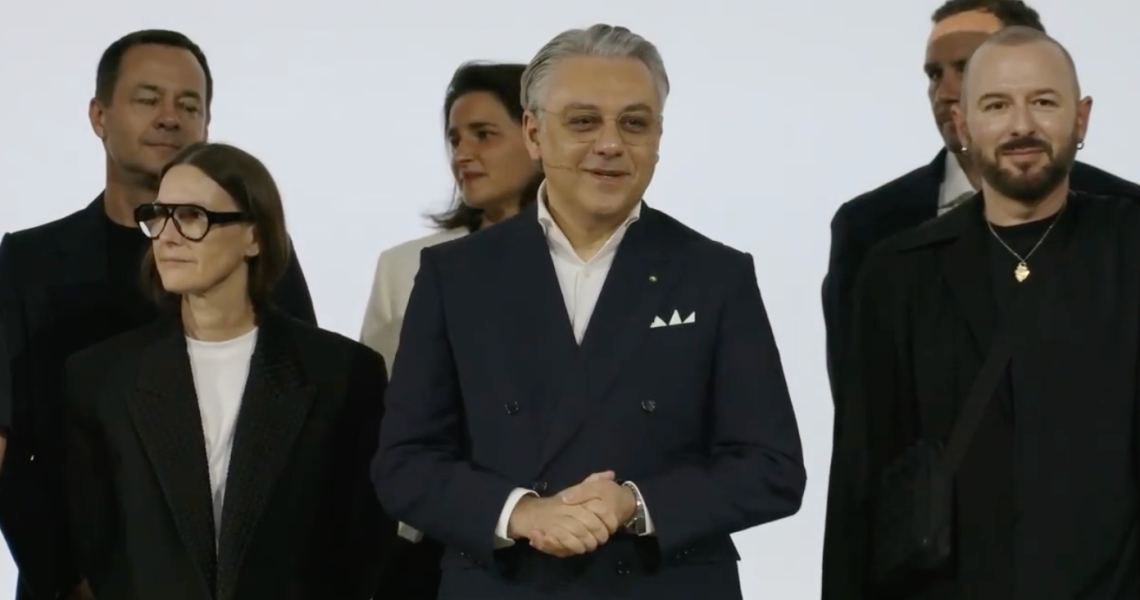
“We have completed a transparent, brutal and shared diagnostic,” Kering CEO Luca de Meo said at the group’s Capital Markets Day. The issues he described included overexpansion, uneven product assortment and a loss of clarity in positioning. “We sometimes diluted our identity by trying to give everything for everyone,” he added.
The reset also reflects a change in Kering’s target customer. The group had become too dependent on aspirational shoppers and VIC customers; now, the focus is shifting back to its core base. “Core clients are the backbone of the business,” de Meo said, describing them as steady and resilient across cycles. Growth, he added, will come from “the quality and stability of the client base.”
The pressure is most obvious at Gucci, which still accounts for more than 40% of group sales. The brand remains “the second most well-known luxury brand in the world” and still sits in the top five for desirability, according to De Meo. But it has slipped from its peak.
The plan for Gucci is to start by stripping things back. The brand’s SKU count is down around 20%, and the assortment will be reorganized into clearer tiers, with more emphasis on core categories and repeatable products. Kering wants icon handbags to reach about 20% of leather goods sales by 2030, up from roughly 10% today.
Creatively, the direction is just as focused. “Our priority is to make Gucci unmistakable again,” de Meo said. As such, the brand is tightening its visual codes and reducing the number of narratives pushed each season. “In one second, you must know it is Gucci.”
The brand’s equity remains intact, particularly in the U.S., where de Meo pointed to a telling consumer shorthand: “People say ‘I feel Gucci’ to mean they feel good, attractive, optimistic.” He also pushed back on flattening the brand’s personality. “Gucci is not vanilla ice cream. It is spicy, sometimes bitter, sometimes super sweet,” he said.
Gucci is also where Kering is testing new ways of working. The group said it has shortened development timelines in recent cycles by six weeks and is using the brand as a first rollout point for AI-driven clienteling and demand forecasting before scaling those tools across the portfolio.
Saint Laurent, meanwhile, is moving in a different direction, with far fewer structural changes. “Saint Laurent does not need to redefine what it is,” de Meo said. The focus is on scaling what already works. Leather goods, tailoring and menswear are being expanded, while the brand continues to grow its presence in Asia. Internally, the target is to increase the weight of icon products and build out menswear as a larger share of the business.
For its part, Bottega Veneta is being pushed beyond leather goods into ready-to-wear, jewelry and home, with a focus on not loosening control over volumes or distribution. The brand is also said to remain centered on craftsmanship and discretion. As de Meo put it more broadly, the aim is to “build them to their full potential, but never beyond.”
Balenciaga, meanwhile, is being rebalanced. Kering wants the brand to rely less heavily on menswear and cultural momentum, and to build out women’s and leather goods as more stable revenue drivers. At the same time, it remains important for attracting younger customers, part of a wider effort to rebuild a more consistent client base.
“Client intimacy is not about doing more for everyone,” de Meo said. “It is about doing this for the right clients, consistently, at scale.”
Alexander McQueen is undergoing a more structural reset. De Meo said the brand had become too reliant on a narrow product base, particularly sneakers, while its positioning had lost clarity. The response is a refocus on women’s ready-to-wear, tailoring and eveningwear, alongside a reduction in collections and a sharp cut to its retail network. By the end of 2026, McQueen is expected to operate with roughly 50% fewer stores than at the end of 2025, as the brand leans more heavily on Kering’s shared infrastructure.
And there will be a similar store tightening across the brands. Kering is planning a significant reduction in its retail footprint, with at least 100 net closures in 2026, followed by another 100 stores cut across 2027 and 2028. By 2030, the group expects to operate with at least 250 fewer stores overall, with roughly half of those reductions coming from Gucci.
Beyond the brands, the plan is operational. Kering is restructuring its supplier base, which currently includes around 4,200 direct partners, with about a quarter accounting for the 98% of purchases. The group is shifting toward a smaller pool of long-term “preferred suppliers,” including closer partnerships with industrial players, like luxury production hub HModa, to reduce complexity and gain greater control over production.
Technology is being embedded into that system. Kering is rolling out AI-based forecasting and real-time inventory tools that adjust product allocation across stores, alongside what it calls “augmented twins” — digital models of the business used to simulate decisions across product, retail and supply chain. Early pilots are already showing results: Media tests at Boucheron in the U.S. have delivered 30–50% improvements in ROI, while Gucci stores using new AI-driven clienteling tools are generating nearly double the value, with roughly 2x higher outreach sales per store.
The group is also looking outward. De Meo announced a minority investment in Chinese luxury brand Icicle, describing it as “the most recognized Chinese luxury brand today,” with plans to support its expansion into Europe and the U.S. The investment is also about learning: Kering pointed to Icicle’s manufacturing and logistics ecosystem as an area it wants to better understand, particularly in China.
Across all of this, the throughline is discipline in product, distribution and operations. “Luxury is a perception. Excellence is a discipline,” de Meo said.
ShopMy’s answer to AI shopping: just text a human
ShopMy is bringing a more high-touch approach to its platform. On Wednesday, the company launched Noir, a concierge-style service that connects its highest-spending users with human curators. The setup mirrors the personal shopping programs typically reserved for VIC clients, but expands it across a network of creators and brands.
The move builds on ShopMy’s growing base of more than 350,000 shopper accounts — the company opened the consumer shopper opportunity with Circles last year. Circles is ShopMy’s feature that lets users create shopper accounts and follow groups of creators, giving the platform visibility into their preferences, purchases and discovery habits.
With Noir, users can submit prompts tied to specific needs, from black-tie events to seasonal wardrobe updates. Curators respond with tailored product edits, including notes on fit, brand and styling. “If I’m looking for a dress, I can text and be connected with someone, and they can pull recommendations together and send it back,” Lopinsky said. “You want someone who gets you and knows you.” There are options for more feedback, too.
In testing, many of those requests were tied to specific occasions, particularly weddings and galas, pointing to a gap between what shoppers are actively looking for and the broader content circulating on social platforms. Lopinsky said those higher-stakes purchases benefit most from human input. “That’s when people make their investment, because they have the context from an expert,” she said.
At launch, the service is free but limited to top-tier users, and it runs on ShopMy’s affiliate model. Over time, the company plans to introduce more brand involvement through gifting and direct partnerships with curators. It is also exploring in-person formats. “We could see a future where we have a space, and people can come in,” Lopinsky said.
Executive Moves
- Kendra Scott has appointed Adrienne Gernand as chief business officer, effective April 27, tasking the former Gap Inc. executive with scaling global expansion and category growth as the brand positions itself as an attainable luxury house.
News to know
- With roughly $10 billion in revenue, QVC Group is preparing a bankruptcy filing after years of losses, declining linear TV viewership and slow adaptation to social commerce. This is despite recent efforts to pivot through a partnership with TikTok and streaming-led shopping formats.
- Japanese “it” brand Issey Miyake will open a 13,000-square-foot Madison Avenue flagship on May 8 in New York’s New York Life Building, marking a strategic U.S. retail expansion with exclusive product drops and an in-store gallery concept.
- In the Hudson’s Bay Company–linked Saks Global bankruptcy, angry creditors and a board committee are seeking information from former CEO Richard Baker over the $2.7 billion Neiman Marcus Group acquisition that contributed to the company’s debt load and collapse.
- Tory Burch is refinancing with a $700 million term loan and $300 million credit facility to fund a potential buyout of longtime investor General Atlantic, consolidating ownership as it targets renewed growth and international expansion.
- Is Barneys coming back? Authentic Brands Group is exploring a potential revival of Barneys New York on Madison Avenue, but the plan remains preliminary, with no confirmed lease, operator or timeline in place.
Listen in
In the latest episode, international reporter Zofia Zwieglinska, editor-in-chief Jill Manoff and The Cut fashion writer Danya Issawi unpack how Coachella, Stagecoach and Glastonbury Festival are shaping fashion and brand strategy this season. From the rise of “new-era boho” and multi-outfit planning to thrifted differentiation and activations from brands like Gap, the conversation tracks how festival style is becoming more personal and more strategic. Listen here.
Read on Glossy
Gold prices are still rising and squeezing the jewelry market. Hermès sales are not immune to the luxury slowdown. In Kering’s earnings, Gucci still has work to do.