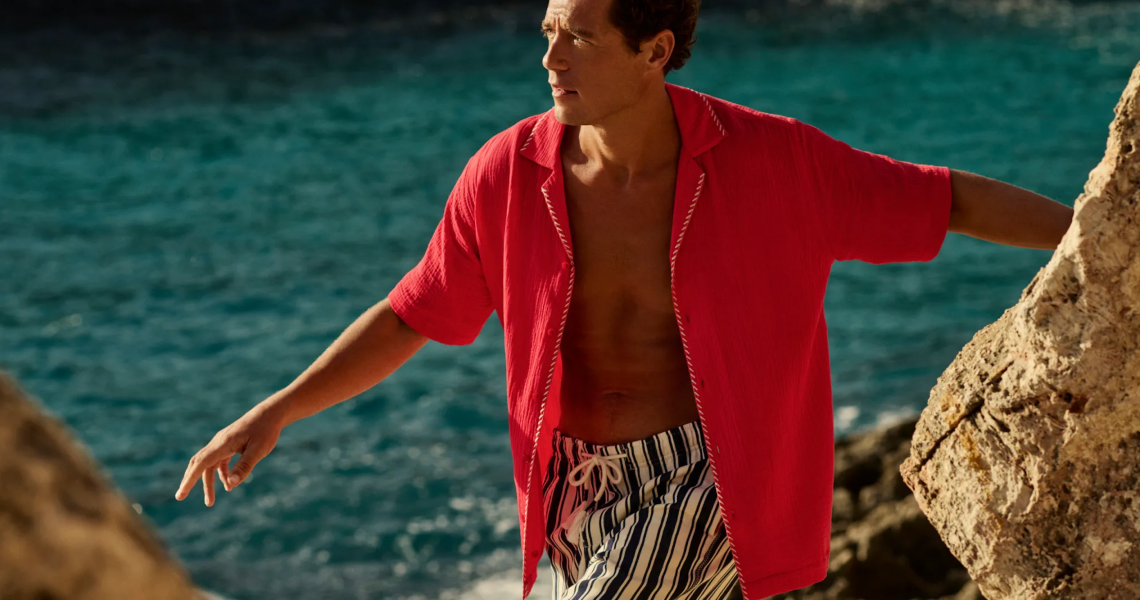
For this week’s Luxury Briefing, I spoke to Trevor Hardy, CMO at Chanel-owned Orlebar Brown, about how the brand is strategizing around the luxury travel circuit. Also, an update on Saks, insights into Brunello Cucinelli’s earnings, and new executive moves at Tiffany & Co. and Fear of God. For comments or tips, email me at zofia@glossy.co.
Luxury stocks jumped this week after a fragile ceasefire in Iran reopened the Strait of Hormuz and eased pressure on global oil markets. After the ceasefire was announced, shares in LVMH, Kering and Hermès rose more than 8% in early trading on Wednesday, as investors responded to a best-case scenario that had looked increasingly uncertain just days earlier.
The rally follows a volatile stretch that pushed oil prices higher and dented consumer confidence. A gallon of gas in the U.S. climbed to $4.16 from $3.45 last month, adding pressure to discretionary spending and raising the cost of travel. Even with the ceasefire in place, it is expected to take months for energy markets to fully stabilize.
For luxury, the reopening of the Strait of Hormuz primarily removes a short-term risk to global shipping, energy supply and travel costs, all of which directly affect tourism flows and discretionary spending. Lower fuel volatility is expected to support international travel heading into the summer season, even if demand takes time to fully recover.
Recovery is decidedly not visible in the Middle East. In its earnings on March 20, Zegna said traffic in the region had declined in recent weeks, with “less energy” in stores and fewer customers, even as the company continued to outperform peers and keep locations open.
In the weeks leading up to the ceasefire, Achim Berg, founder of the FashionSights think tank and a former McKinsey senior partner, described the impact as immediate and material. Luxury was seeing declines in both traffic and conversion, with hotel occupancy in some cases down by 80-90% and retail revenues falling by 40-70%, according to his conversations in the region.
“The safe haven and tourist value proposition that the region has built is clearly under severe pressure,” Berg said, adding that if instability continues, “capital is fluid and will find its way,” with wealthy consumers likely to spend less time in the region.
The Middle East has accounted for roughly 5–10% of global luxury sales in recent years and has been one of the sector’s few consistent growth regions, making any sustained slowdown particularly significant.
Even as demand weakens in the region, brands continue to execute long-term retail strategies planned well before the conflict. The Chanel-owned brand Orlebar Brown is opening stores in Ibiza, Mallorca and Abu Dhabi this spring, while expanding its presence across hotels and beach clubs tied to the luxury summer travel circuit.
The openings reflect the brand’s focus on where its customers typically spend time across the year, rather than a response to recent events. Luxury’s annual travel circuit runs from the Gulf in winter to the Mediterranean in summer, as affluent consumers rotate through destinations like Dubai, Ibiza, Capri and St. Tropez.
“We have a big web business; about 40% of our direct sales are online. But we find where there’s a growing customer density, or where our customers travel to, and look at opening stores,” said CMO Trevor Hardy. “We have a long gestation period to find the best locations, but it is really about catering to the customer base we have and where they spend their time.”
For Orlebar Brown, Abu Dhabi represents part of its existing Gulf footprint, while Ibiza and Mallorca align with its summer business in European resort markets. “It’s part of a strategy to be where our customers are, and not just to physically be there with product, but to also be in their world, in their community and [involved] in the way they spend their time,” Hardy said.
That geographic approach has been paired with a shift in the brand’s product strategy.
“Today, our business is only about 25% swim-shorts-related; we have a much faster-growing business in ready-to-wear,” Hardy said. “We are still in the leisure and holiday space, but we’re much more focused on shirts and trousers, knitwear and other categories that customers want when they travel.”
That change has also affected the brand’s production, with Europe now at the center. Ready-to-wear is largely made in Italy and swimwear in Portugal, plus the brand is investing in higher-grade materials such as linen, silk and merino. The brand has focused on fabric, construction and finishing details to justify higher price points, positioning the product closer to traditional luxury competitors.
“Most brands have had a downward pressure on price because of increasing costs, and we have done the opposite,” Hardy said. “We have upgraded the level of sourcing and production so that we can improve quality and increase prices accordingly, which has helped elevate perception of the product.”
At the same time, Orlebar Brown is looking to expand its audience. Next month, the brand is launching a capsule tied to the new “James Bond” video game, 007 First Light, in which a younger Bond will be wearing Orlebar Brown classics in-game.
Hardy said the designs were created to “hark back to the origins of Bond, but bring it up to date for a much younger Bond,” reflecting a broader push to introduce the brand to a new generation of consumers.The move pairs the brand’s push upmarket with an effort to reach consumers earlier in life.
The ceasefire may be expected to steady markets, but the past month has shown how quickly both demand and growth regions can change.
Saks secures $500 million exit financing, but questions remain
Saks Global is advancing through Chapter 11 with financing secured and court proceedings underway, but key details of its future model remain unclear. The company has entered a Restructuring Support Agreement with senior secured bondholders, unlocking $500 million in exit financing and paving the way for a creditor-led ownership structure. According to a statement from Saks, this marks “a critical milestone” and “a significant and expected step toward its expected emergence this summer,” adding that it remains “on track to meet all of its case milestones.” The company also said “sales and inventory results continue to outperform our internal plans,” and that it has “sufficient liquidity to effectively operate throughout the restructuring process.”
The legal process is progressing in parallel. A hearing took place on April 2, followed by a motion hearing on April 7 to establish procedural orders, with another scheduled for April 10 to reset those orders and advance next steps, including evidentiary filings.
While Saks says it is “committed to building a stronger, more focused company” and acknowledges “the challenges our brand partners have experienced,” uncertainty remains around vendor repayments, future payment terms and assortment strategy, leaving brands without clarity on what partnering with a post-bankruptcy Saks will look like.
According to retail analyst Neil Saunders, “Saks needs some of the smaller brands to present a coherent and compelling assortment. But they will only do that if they can trust that they will get paid.” He added that the retailer “may not be able to win back all of the brands that they lost.”
And as Bernstein luxury analyst Luca Solca put it, Saks must act as a curator to stay relevant, warning that without new and emerging brands, it risks becoming “a retail space broker, not a retailer.”
Earnings: Brunello Cucinelli is still on top
Brunello Cucinelli reported first-quarter revenue of €369.1 million (about $400 million), up 8.1% at current exchange rates and 14% at constant currency. Retail drove growth up 20.1%, and wholesale rose 4.3%. On its April 9 trading call, executives said the quarter came in “slightly exceeding our expectations,” marking “further acceleration compared with the second half of 2025.”
On the call, leadership spotlighted consistency and brand strength. Brunello Cucinelli said the company is “enjoying the finest moment in our history,” reiterating expectations for around 10% growth in both 2026 and 2027. He also pointed to a 2026 documentary about the brand and its founder as a visibility driver, saying it will “fuel interest, curiosity and allure around our Maison.”
At the same time, executives flagged two areas that will shape its next phase. Its AI-powered e-commerce platform Callimacus has “already proven its ability to greatly increase client interaction,” according to comments from Brunello Cucinelli, with users spending “over 10 minutes on the website” and viewing “20% more products.” And in wholesale, the brand has struck a notably steady tone on U.S. partners, with co-CEO Luca Lisandroni saying Saks has been “back to full operations since the end of January,” with “extremely punctual payments.”
Executive moves
- Stefano Gabbana has stepped down as chairman of Dolce & Gabbana as the company explores governance changes and potential stake options to support its next phase of growth.
- Tiffany & Co. has promoted Nathalie Verdeille to senior vice president and chief artistic officer, expanding her remit to oversee all product categories — including home, accessories and watches — as the brand continues to build creative and commercial momentum under her direction.
- Bastien Daguzan has exited Fear of God less than two years after becoming CEO, as the brand eliminates the role from its organizational structure.
News to know
- Selfridges is launching 40 Duke, a 25,000-square-foot, membership-driven retail and hospitality concept within its London flagship that integrates personal shopping, dining and cultural programming. It marks the company’s most significant capital investment in a decade.
- On April 16, Zendaya and On are launching a co-created apparel and footwear collection, developed with stylist Law Roach, as part of an expanded creative partnership spanning design, campaign and product.
Listen in
On this week’s episode of the Glossy Podcast, international reporter Zofia Zwieglinska is joined by senior beauty reporter Emily Jensen to unpack Macy’s latest earnings and what they signal for the future of department stores amid the Saks bankruptcy. On March 18, Macy’s reported $7.6 billion in fourth-quarter revenue and $21.8 billion for full-year 2025, both coming in ahead of expectations. Listen here.
Read on Glossy
What is going on with Converse? Outdoor brand Cotopaxi enters FP Movement. AI-powered ads are helping Aritzia boost online sales.