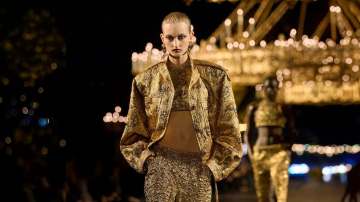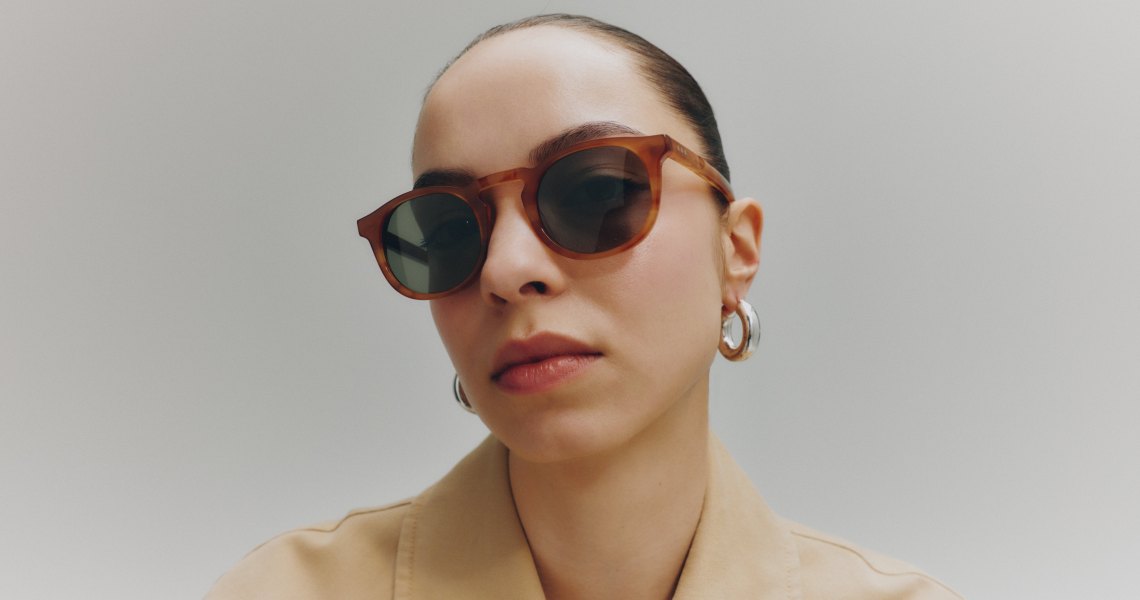
This week, we take a look at why so many brands are expanding into eyewear. TL,DR: It’s cheap, profitable and good for branding.
This week, the 8-year-old Canadian luggage brand Monos announced a surprising expansion: It will start selling eyewear.
Monos’ new collection, called Mira, after the Spanish word for “look,” is the company’s debut eyewear collection, designed in-house and composed of six different models. The idea is that sunglasses are a travel necessity and a natural addition to the brand’s luggage and hospitality focus.
Monos isn’t alone in expanding into eyewear. The last few weeks have seen a plethora of new eyewear launches. Some of them are full category expansions. For example, Wrangler, the denim brand, launched its first eyewear collection last week, priced at $25-$30. Others are collaborations, such as one between streetwear brand No Problemo and eyewear company Le Specs, which launched last week — styles are priced at around $140.
At a time when consumers’ wallets are tight, sunglasses and other eyewear are often a more affordable entry point to a brand’s world. The cost, both to produce and to purchase, is relatively low, making it a lower barrier for entry for consumers and a lower commitment for the brands.
“Eyewear is appealing because it gives consumers a more accessible way into a brand,” said Mor Margalit, director of merchandising at eyewear retailer GlassesUSA.com. “A shopper may love a fashion brand but not be ready or able to buy the clothing, especially if the price point is high. Sunglasses can offer that same sense of connection to the brand at a more approachable price.”
Monos CEO Victor Tam told Glossy that eyewear has been on the brand’s roadmap for a while. It wasn’t about following a trend, but instead about waiting for the right moment. Monos’s annual revenue has recently surpassed $150 million, and in the last year, it has opened its first retail stores in the U.S. Sunglasses will help fill out its six stores across Canada and the U.S. Plus, customers can walk into the store and walk out with something less expensive than the $300 bags the brand carries.
“We wanted to have a bigger retail footprint before we got into categories that were more high-touch,” Tam said. “It’s less about sitting around and trying to think of what category to do next. Sunglasses connect to travel, and they’re how you see the places you travel to. We wanted to offer something else for people who discover us to get to know the brand.”
It helps that sunglasses themselves are quite profitable, with gross margins regularly sitting at 60-70%. That holds true even for more premium glasses, like those by Monos, which use Italian Mazzucchelli cellulose acetate and Zeiss lenses. Each pair is priced at $150, which Tam said was meant to sit in the whitespace for customers who don’t want to spend hundreds of dollars on glasses they may lose, but want something nicer than a cheap dollar-store pair.
“Eyewear is a category most fashion brands eventually run the numbers on because the math is unusually friendly,” said Jackie Swanson, managing partner at Gartner Consulting. “The other appeal is brand projection. A logo on someone’s face is the highest-visibility piece of branded inventory a fashion company can sell, and it photographs well for social. For brands competing for cultural relevance, eyewear is one of the few categories where the product itself does the marketing.”
While Monos is producing its sunglasses in-house, thanks to one of its designers having a background in eyewear design from a previous role, many brands simply partner with a licensed eyewear manufacturer like EssilorLuxottica. Wrangler, for example, is working with FGX International, an eyewear manufacturer that makes glasses for brands like Dockers and Chaps, as well as entertainment companies like Disney.
“Wrangler has always been dedicated to outfitting our consumers for every aspect of their daily lives, so making eyewear a natural extension of our brand,” said Douglas Parker, senior director of licensing at Wrangler’s parent company Kontoor Brands, Inc, in a press release. “We chose to partner with FGX International because of their unparalleled expertise and proven track record in delivering high-quality, accessible accessories.”
Eyewear’s ability to avoid the slowdown affecting other luxury and fashion categories is also notable. In Kering’s last earnings report, in which it noted a 5% decline in sales, eyewear revenue was up 7%. And both Ray-Ban’s and Meta’s smartglasses revenue has tripled over the last year. Data from The Vision Council found that eyewear revenue in the U.S. grew by 4.4% to nearly $70 billion last year, up from a 2.7% increase in 2024.
“The move into sunglasses is all about the intersection of brand equity and economics,” said Eoin Comerford, former CEO of the outdoor retailer Moosejaw and current founder and principal of Outsize Consulting. “Sunglasses are relatively inexpensive to produce: mass-produced injection molded frames and lenses with a small amount of assembly. Most of the value in sunglasses is in the brand on the temple, not the materials or even the optics. If you have a brand that has demand and a certain aesthetic, you can command very high margins.”
News to know
- After last week’s surprise announcement that the infamous fast fashion company Shein is acquiring the sustainability-focused Everlane, Everlane founder Michael Preysman has since been teasing a new brand, Still Radical, with no private equity or venture capital involvement. As of this writing, over 50,000 people have signed up for a waitlist on Still Radical’s website.
- Tod’s CEO John Galantic announced his departure from the luxury brand this week, less than two years after starting in the role. No replacement has yet been named to the role.
- As Kering looks to revivify its flagship brand, Gucci announced this week a new partnership with the F1 team Renault Alpine for the 2027 season.