On February 11 in NYC, join Glossy for AI Marketing Strategies, a one-day event where industry leaders will dive deep into marketers’ experiences with and emerging best practices for integrating AI tools into the key layers of the marketing process.
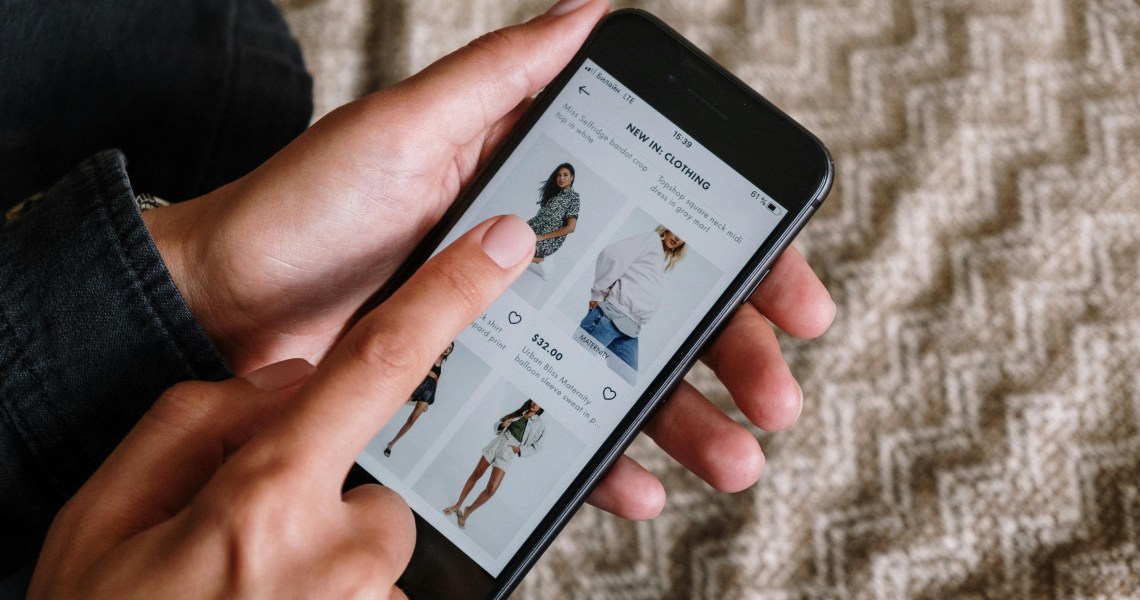
When social media platforms like YouTube and Instagram took off over a decade ago, they opened an entirely new channel of discovering and, ultimately, shopping for beauty and fashion products. By the 2020s, TikTok had accelerated and, to some, flattened a rapid-fire trend cycle. Now, artificial intelligence is changing shopping and consumption habits once again.
Though still in its nascency, AI and agentic-powered shopping has already proved to be a successful, if divisive, discovery point: According to data from NielsenIQ, consumers conduct over 1 billion beauty-related searches per week on ChatGPT, and nearly 49% of Gen Z and 37% of millennials use generative AI weekly for search or shopping.
“The discovery pattern is what changed the most [with AI]. It used to be you would do a search, for example, for certain items you might have seen in an advertisement. You might have explored the retailer’s brand site,” said Irina Mazur, chief commercial and marketing officer at AI beauty platform Revieve. “That is shifting. More consumers are starting their journey with platforms like ChatGPT or Gemini.”
Platforms like Amazon, Google and OpenAI have created more ways to shop with AI in 2025, making the path from discovery to purchase even more frictionless. But with so many more avenues available to tell consumers exactly what to buy, what happens to personal style in the age of AI?
“I’m in conversation with someone at least once a day over [AI],” said Mac Rose, a stylist based between New York City and Copenhagen.
For some consumers, AI’s hyper-personalized format offers a convenient conduit to discovering new products tailored to their needs. For others, its inhuman hand can’t replicate a more intangible factor like taste. Rose’s clientele falls firmly in the latter camp, she said, in part due to concerns such as AI’s environmental impact but also for more philosophical reasons around the value of style.
“I think the main driving force of people rejecting [AI] is the integrity that they want within their style,” said Rose. “If people saw getting dressed for what it is, which is a hobby, a creative hobby, it’s very clear that AI styling can’t really fulfill that artistic expression.”
Still, many consumers and, subsequently, investors see the value in AI-based shopping. Alta, the AI-powered fashion styling platform founded in 2023, raised more than $11 million in seed funding in 2025 led by Menlo Ventures and Aglaé Ventures. Its backers include LVMH and stylist Meredith Koop, who is best known for dressing Michelle Obama.
For its Gemini AI platform, Google has rolled out new shopping features throughout 2025, such as price comparisons and virtual try-ons. In October, Amazon launched its AI-powered “Help Me Decide” feature to give users recommendations on similar products based on their shopping history.
The growing dominance of AI is also leading brands to rethink how they’re reaching consumers, ensuring their products show up not only in the hands of influencers but also in chat results. According to NielsenIQ, 75% of beauty discovery now happens outside of brand-controlled environments.
“My end state outcome of this is that we’re going to pretty soon have two parallel internets,” said Nikita Walia, strategy director at brand and venture studio Unnamed. “One is what we already know to be true, which is beautifully merchandised brands — that is your traditional top-of-funnel. And then there’s this parallel universe internet that is rich with all of this data and copy, and all of the things that are going to feed the beast of AI.”
Traditional marketing has typically gone for as large of an audience as possible, attempting to climb to the front page of Google searches or reach large-scale creators, Walia said. But the rise of AI may put more emphasis on deep personalization than mass reach — particularly as users develop more trust in their AI platforms of choice.
“I trust ChatGPT and its recommendations because I’ve been using it. I was an early adopter. It knows so much about me. At first, I was just using it for work-related tasks, but now I use it for everything,” said Alexa Lombardo, strategic partnerships and community engagement lead at Unnamed. “It actually has more of a psychographic understanding of me and my life. The more you use it, that’s what the trust is based on.”
Consumers are not just looking to be influenced by the creators or platforms with the biggest reach — they’re also collecting information from countless small corners of influencers, Lombardo added. Even “pico” creators, those with fewer than 1,000 followers, can now be influencers, as well.
“[Consumers] are asking not just the people who have millions of followers, who have established themselves as a brand. They’re asking the girl who’s sitting in the car and just stream-of-consciousness talking, ‘What are you wearing on your lips?’ And that, I think, is a conscientious decision,” said Lombardo.
While influence is trickling down from larger-scale creators to smaller creators, Rose is skeptical that AI-powered recommendations will filter consumers to shop from any company but the largest companies able to break through the noise.
“[AI] can only point you in the direction of something simple enough to be able to point thousands of people in the same direction. And that direction isn’t going to be towards small businesses,” she said.
Even with — or perhaps because of — the rise of AI-powered shopping, shoppers have shown a predilection for hunting for secondhand fashion. According to shopping data from Placer, foot traffic at thrift stores was up 12.2% over Black Friday. For Gen Z consumers, vintage and thrifted fashion can offer a path to individual style in a sea of mass consumption.
But even as the latest “it” bag recommendations or new jean shapes proliferate across AI and brands learn to get their products recommended by the ChatGPTs of the world, the original trend still has to start somewhere. And that place is likely still to remain human.
“As brand people and marketers, we target the kind of customer that sets the trend. That person who goes out and makes their own decision is the one you want to reach as an early cohort,” said Walia. “Not to sound like Miranda Priestly [talking about the] cerulean sweater, but there’s that halo from these first cultural and aesthetic movers.”