It doesn’t take a fashion insider to choose a Bottega bag. Increasingly, it’s also not the bag fashion insiders are choosing.
Rising costs for luxury bags, along with consumers’ logo fatigue and boredom with the sameness of conglomerate-owned luxury brands, are opening the floodgates for a new wave of younger brands with lower, though still upscale, price points.
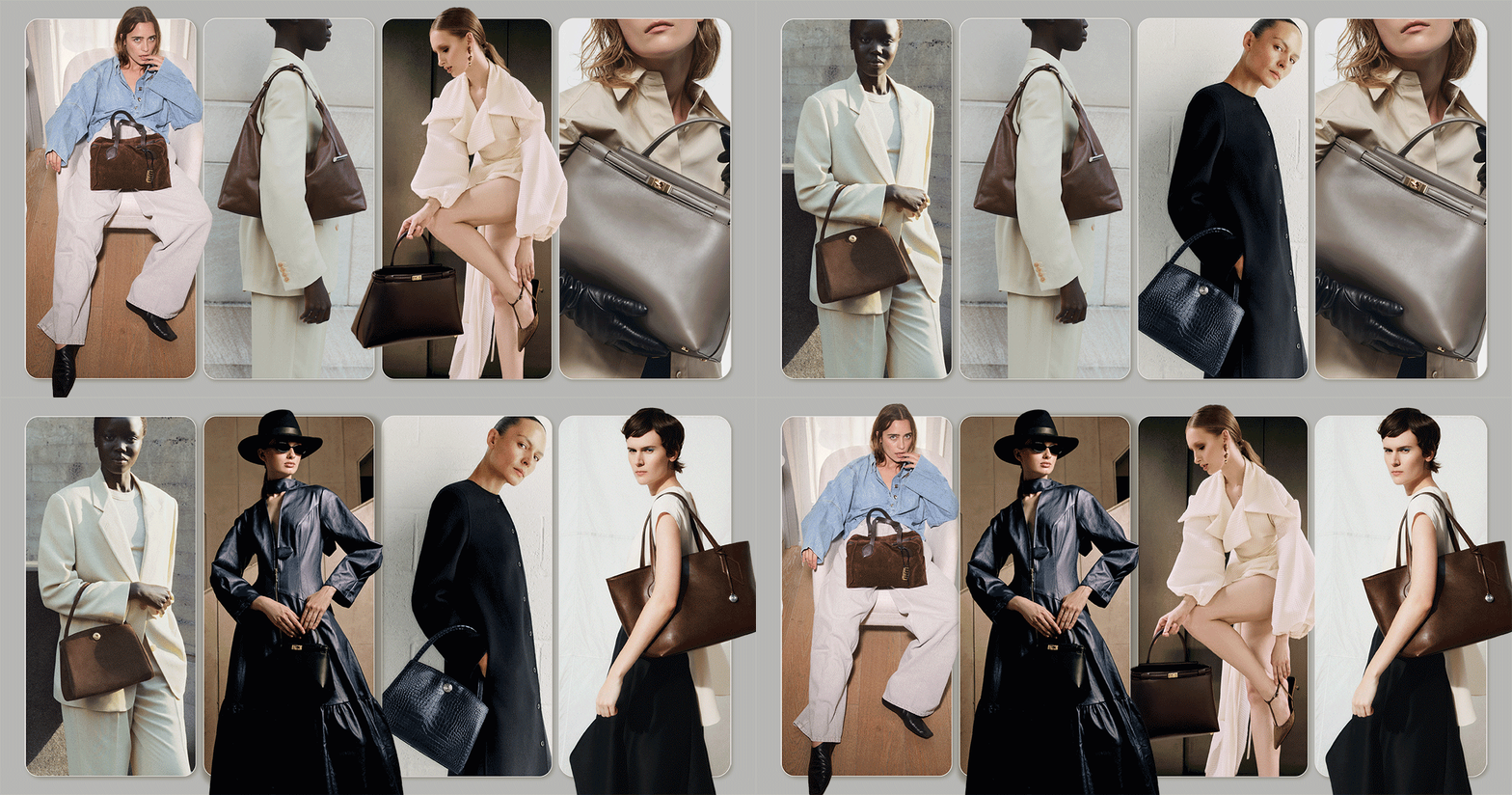
This backdrop has given rise to brands like Parker Thatch, Liffner, Savette, Manu Atelier, Demellier and Polène, among others, as well as bags from current “cool girl” fashion brands like Khaite and Toteme. These brands have also been boosted by the endorsements of fashion’s current authorities: influencers and Substackers.
This month, Janessa Leoné, which launched as a hat brand in 2013, formally introduced what its namesake founder expects to be a brand-defining handbag silhouette, The Leoné. The Leoné, which ranges from $897-$1,297, depending on size, launched direct-to-consumer and on Moda Operandi, where it has sold out three times — two colorways sold out in 48 hours. Earlier this month, Glossy reported that, thanks to the Leoné bag, the brand is projecting triple-digit growth for 2026.
Liffner bags, sold at Net-a-Porter, Shopbop and Saks Fifth Avenue, typically range from about $395-$745, while Parker Thatch bags are priced $428-$1,200 — the brand is primarily sold DTC but also sells at a handful of specialty boutiques.
In contrast, certain styles in the iconic Bottega Andiamo family run for around $5,100, The Row’s Marlo bag runs for $3,400-$5,800, and Louis Vuitton’s Speedy bag, a popular choice in 2025, costs $1,730-$5,000.
LVMH reported an 8% year-over-year decline in sales of clothing and leather goods for the first half of 2025 — notably, this segment accounts for nearly half of LVMH’s revenue. For its part, Kering reported year-over-year sales declines of 26% at Gucci and 11% at Saint Laurent in the first half of the year, though this was not specific to leather goods.
Increasingly, the bags that signal cool come from brands beyond traditional luxury. “It feels like you’re more of an insider [to use a bag from a smaller, niche brand]” said Marlien Rentmeester, the influencer behind the Substack Le Catch. Rentmeester has collaborated with Parker Thatch and Clare V. in the past. On her ShopMy, she has recently featured bags from nontraditional luxury brands, including Liffner and Parker Thatch, alongside Tory Burch and Madewell. “Brands in this new school of luxury are an ‘if you know, you know’ kind of situation, and that, I think, is status in itself.” Plus, she said. “We’ve been saturated with logos and ubiquity and uniformity — everybody having the same bags. It’s boring and not stylish, or maybe it just doesn’t really convey personality or originality.”
For some people, the shift toward more affordable styles means they can now afford an “it” bag, whereas previously it wasn’t possible. For others, it simply means they can buy more bags. According to Rentmeester, “You could now get three really cool bags for the price of one [from a luxury conglomerate brand].” Plus, she said, styling — not logos — is today’s true currency. “How you’re pairing high and low, or how you’re using a pop of color to break up an all-black outfit — that has more importance, or currency, nowadays than a logo-ridden bag.”
Leoné echoed the sentiment: “People don’t just want to blend in with the crowd; it’s almost a signal of cachet to be the one who finds something new, to have something that people don’t have.”
For her part, Leoné said she designed her brand’s new bags with her target customer — who is much like herself — in mind. For example, the larger Leoné bag is functional for a working woman — it fits a laptop. “People are trying to find identity through what they wear,” she said, noting that current luxury prices sometimes feel like “a prank,” especially as “people see that they can get the same quality from younger brands.” The Leoné bag, she said, is made by the same factories producing for the heritage brands. However, the company is not spending a fortune on marketing, as a conglomerate-owned brand would, allowing it to sell its bags for less, she said. To drum up excitement, Leoné gifted the bags to select influencers and tastemakers, including Courtney Grow, Kerry Pieri, Coco Schiffer, Chloë Sevigny and Dani Michele.
“The value is there because we are making the highest-quality handbag you can make,” Leoné said. “Our price point is $1,300. It’s still a luxury price point, but it doesn’t have that inflation for brand that [legacy brands] have.”
Liffner, formerly Little Liffner, was founded in 2012 by Paulina Liffner von Sydow. She was ahead of the current moment in that she was inspired to create bags that went against the grain of “it” bag culture. “I really wanted to make something for a person who’s comfortable enough in their own skin and style [that they don’t have] to carry around something with a label to prove they have taste,” Liffner von Sydow said. Her logo-less bucket bags and Pillow Pouch bags are bestsellers.
At Parker Thatch, which first launched in 2001 and introduced bags in 2009, co-founder Irene Chen has been contemplating what luxury truly means. “Perhaps it used to be, ‘Oh, I’m rich, so I wear Celine,'” she said. But she believes today’s shopper is more thoughtful about the brands they support, paying attention to the stories behind them, for example, as she does in her own shopping. She added that Parker Thatch’s small-batch, U.S.-crafted products are a significant part of its story.
“There are, and always will be, the people who want the brand for the logo,” said Chen’s co-founder, and husband, Matthew Grenby. “But we’re finding that people who choose to buy a bag because it’s beautiful or well-made are getting a little bit disillusioned. They feel the quality [of luxury brands] is going down, while the price is going up, and they feel like they’re being kind of taken advantage of.”
In 2025, a wave of viral TikTok videos claiming that some luxury handbags were actually made in China and merely re-labeled in Europe drew mainstream attention and coverage on NPR. It sparked debate about global supply chains, luxury pricing and the meaning of “made in,” and provided a window of opportunity for younger bag brands to move in.
People want something that “has value and is designed well,” Leoné said. “Bags will always be status. It’s something that you carry on your hand, … and you’re saying something.” And, for many, that message has changed.