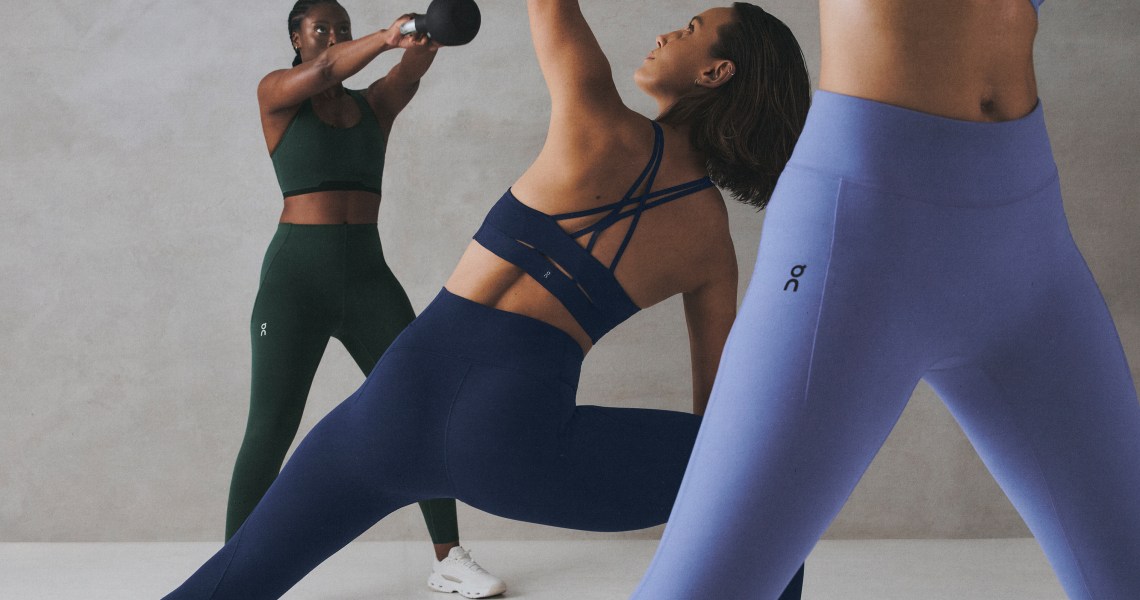
As Lululemon worked to contain fallout from its second, January 2026 see-through leggings controversy, On moved into the category with a $120 pair of SenseTec tights. The product boasted the brand’s biggest material innovation for 2026.
In January, Lululemon paused online sales of its newly launched, $108 Get Low leggings in North America after widespread complaints that the fabric was not squat-proof. Videos demonstrating the transparency issues quickly circulated on social media. Founder Chip Wilson publicly criticized the company’s product execution and board oversight, according to Bloomberg, extending the controversy beyond a routine product pull. Lululemon faced the same issue in 2024, when its “Breezethrough” leggings also proved see-through.
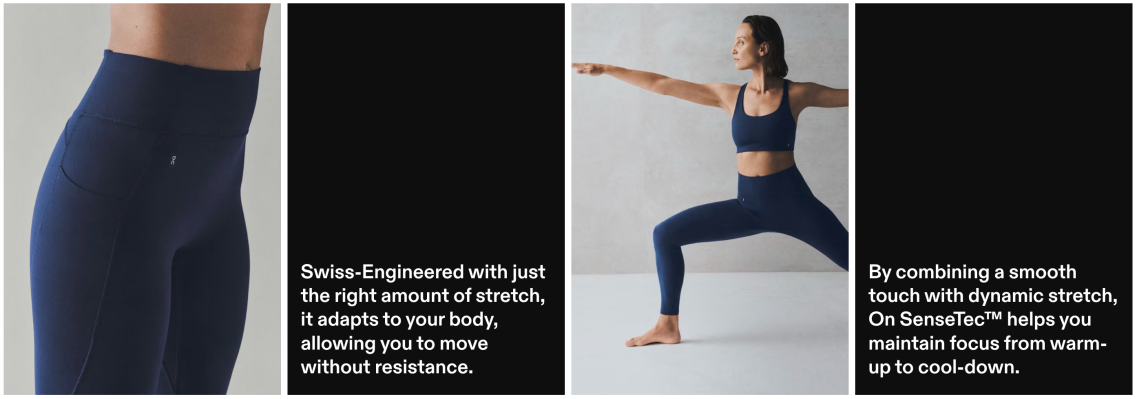
For On, which built its reputation in performance footwear, the moment offered an opportunity in one of activewear’s most competitive segments. The company’s new Studio Tights, made from a proprietary SenseTec fabric composed of 71% recycled polyamide and 29% elastane, were three years in development and subjected to global wear testing across sizes and movement types.
“We started with the problems,” Annaleigh Hockaday, On’s global senior director of product, told Glossy. “[Leggings’] fit can be really bad. The material can feel really bad. The material may not be very durable. And there are transparency issues in this space, as well.”
On’s team prioritized durability, opacity and long-term performance when developing its leggings. “We put this tight on hundreds of women, and then we got them to engage in a Pilates or a yoga class so that we could monitor how it performed in real time,” Hockaday said. The test was carried out globally across a wide size range, and the style was worn by On’s female corporate team before final sign-off.
The idea of softness, often the headline marketing claim in leggings, was approached cautiously. “When you actually create a softness or a peachiness on a fabric, what you’re actually doing is breaking the surface,” said Hockaday. “As soon as you do that, you’re compromising the stability and the durability.” Lululemon, meanwhile, markets its Align leggings as “buttery-soft,” with a “naked sensation” feel.
Opacity testing involved lab-based stretch machines, squat simulations and in-studio movement trials. “It was a three-fold [process] to ensure that, in every scenario, we have considered what that opacity could look like,” Hockaday said. On is detailing the elements of its testing process on its digital channels and through press outreach.
Emma Smith, head of brand and apparel at On, said leggings are a core building block as the brand expands its apparel footprint. Apparel is a priority growth driver for the brand as it pushes to become a head-to-toe premium sportswear brand, she said.
“As our assortment grows, it’s important that we offer consumers greater variety and choice, and it’s critical that we get the foundations right,” Smith said. “For many women, leggings are an everyday activewear staple.”
Smith said the category is crowded but still leaves room for differentiation at the premium end.
But credibility in apparel, she added, cannot be assumed simply because On built its reputation in footwear. “Credibility needs to be earned,” she said. “While we are hugely proud and confident in what we made, we also need to build credibility and trust through athletes and consumers.”
Overall, On intends for the SenseTec Studio Tights to serve as both volume drivers and brand builders. “By driving volume, after establishing trust, we will increase product visibility and generate broader discussion,” Smith said.
On Lululemon’s December 11 earnings call for the third quarter of 2025, CEO Calvin McDonald emphasized that the company remained the “No. 1 women’s active apparel brand in the United States,” and specifically noted that the company will “see innovation in our bottom legging business” as part of its 2026 product push. Revenue for the women’s segment grew 6% year over year in the third quarter. The company reported quarterly revenue of $2.6 billion.
“There is an immediate small hit as some consumers abandon the brand,” said Neil Saunders, analyst at management consulting company GlobalData, referring to the impact of controversies like Lululemon’s quality issue. “However, in the scheme of things, this is not large. The more serious [brand] erosion comes after repeated failures and disappointments, but that takes time to build.”
Lululemon temporarily pulled the leggings out of its channels after the backlash, but later advised customers to change their purchase habits rather than updating the style’s construction, which shook consumer confidence.
“There is an opportunity for competitors to take share,” Saunders said. “But how much each grabs is a function of their visibility in the market and how good a job they do of communicating the point of difference.”
He added that the consumer mindset itself is evolving. “Today’s consumers are very value-conscious, even at the premium ends of the market,” he said. “They are scrutinizing things like quality, fit and functionality like never before. Brands that say they’re premium need to deliver on these things, otherwise they run the risk of alienating customers.”