In this week’s Luxury Briefing, a look at why outerwear and not reinvention is powering Burberry’s recovery. Plus, Revolve’s bet on physical retail, a Bottega Veneta exec moves to Moncler, Kering’s new C-suite appointment and the latest news to know. For tips or comments, email me at zofia@glossy.co. And if you are in Abu Dhabi for Shoptalk Luxe next week, say hi! I will be on the ground covering the big conversations in stories and social posts.
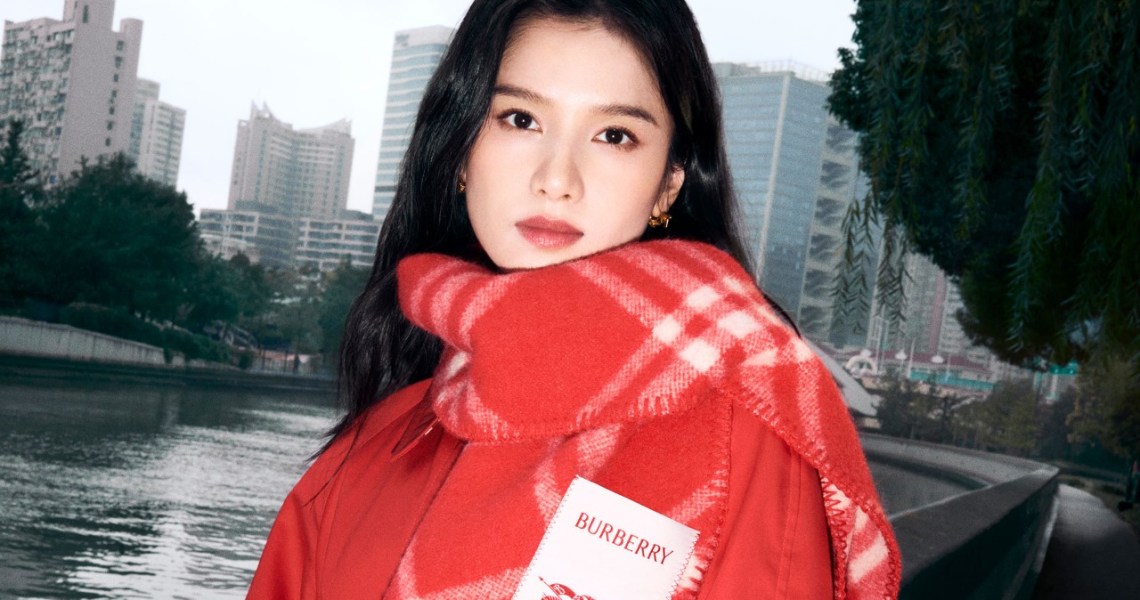
After several years of repositioning under the Burberry Forward framework, Burberry’s latest quarterly results point to a recovery built less on reinvention and more on reasserting its strongest category authority. In the fiscal third quarter, as reported on January 21, outerwear was a core engine of momentum, following a period in which Burberry focused on scarves as both a commercial entry point and a driver of store productivity.
For the quarter, Burberry reported 3% comparable retail sales growth, a slight improvement from its second quarter when it reported 2% growth. On the call, CFO Kate Ferry said the result reflected “a higher quality of sales across all channels and regions” as the company returned to “a shorter, shallower and more discreet markdown period versus last year.” In-store traffic remained challenging, she added, but conversion and average unit retail improved, supported by stronger full-price selling.
Burberry Forward is the brand’s internal brand and operating framework introduced by CEO Josh Schulman. It aims to realign creative direction, merchandising and go-to-market execution after several years of disruption. That has included sharpening category authority, particularly in trench coats and heritage outerwear, with clearer carryover styles, tighter buy depths and closer runway-to-retail alignment. Marketing has shifted toward more explicit heritage and hero-product storytelling, such as the October 2025 “It’s Always Burberry Weather” campaign starring Olivia Colman and the 2025 Christmas campaign, which focused heavily on outerwear, scarves and seasonal dressing. Commercially, the group has shortened markdown periods and reduced promotional intensity.
“Our hero categories continued to outperform, with scarves and outerwear both up double digits, and this momentum is now extending into handbags and ready-to-wear,” Ferry said. She also pointed to “a significant improvement in sell-through” driven by positive customer response to the spring 2026 collection.
Scarves have offered consistent sales for the business. Burberry has rolled out 190 global scarf bars — these are dedicated in-store fixtures offering focused assortments, personalization and gifting services designed to drive traffic, conversion and repeat visits. It plans to open 200 more by the end of the year. Ferry said these continue to outperform and drive retail productivity. That has allowed the brand to rely less on entry-price promotions and instead support full-price selling across the floor, creating the conditions for outerwear to lead again. Half of all scarf purchases in the quarter were personalized, she said, noting a growing appetite for heritage products with an element of individuality.
“Outerwear and scarves continued to outperform globally; both are heritage products and have performed better than other categories,” said Luca Solca, a luxury goods analyst at equity research firm Bernstein.
According to CEO Josh Schulman, “Our customers are responding to our timeless British luxury expression and the synchronicity between our runway looks and commercial core.” He added that this has enabled Burberry “to reach a broad luxury audience.” He also noted that outerwear strength is no longer confined to traditional demographics, with double-digit growth among Gen-Z customers in Greater China and Asia Pacific, which has been widely reported.
An LTK representative said the most-shopped Burberry products on the affiliate shopping platform in the fourth quarter of 2025 skewed heavily toward heritage outerwear, including the mid-length Camden Heritage car coat, the long Kensington Heritage trench coat and the Waterloo Heritage trench coat. A cotton polo shirt and the medium check Bowling bag also ranked among the top products.
The LTK representative added that the platform saw an uptick in average daily consumer searches for Burberry in November and December. Average daily clicks on Burberry products have risen steadily since June of last year and reached a peak in the fourth quarter. In Q4, average daily clicks increased 48% compared to the previous quarter. The lift points to the brand’s recent marketing investments, keeping the brand top of mind during peak cold-weather shopping.
Burberry acknowledged on the earnings call that it may have underbought some key outerwear styles. But that can be healthy, analysts told Glossy.
“We were low on stock in some key classifications,” Schulman said, citing cashmere Kensington trench coats that sold faster than expected and were difficult to find in stores late in the season. Knitwear, particularly cashmere pieces tied closely to outerwear styling, also exceeded expectations after being more prominently featured in campaigns.
Dana Telsey said Burberry’s third-quarter sales were “higher quality,” as the brand “relied less on promotions than last year,” while average unit retail rose even as traffic remained under pressure. She called the momentum in handbags and ready-to-wear encouraging but still early.
Pricing discipline remains central to the strategy. Ferry said full-price sales accelerated during the quarter, offsetting reduced markdown activity, and that the return to private sales for top clients, staff and select partners “resulted in a margin improvement overall as anticipated.” Burberry expects adjusted operating profit for the full year to be in line with consensus, while continuing to improve the quality of earnings.
“Sell-through of the recent full-price [fall-winter] collection — the first done under the Burberry Forward framework — is substantially higher than a year before,” said Solca. “Burberry has started to return to growth after two years of negative comps, demonstrating not only a right to play as a luxury brand, but also the right to win.”
As Schulman put it on the call, “all the signals are certainly looking very positive for our longer-term success.”
As department stores lose traffic, Revolve bets on a different kind of luxury store
Revolve’s new permanent store at The Grove is a deliberate bet on physical retail at a moment when the multi-brand model is under strain. The 8,450-square-foot, two-level flagship, which opened on January 13, follows the company’s first permanent store in Aspen, Colorado, which launched in 2024 and helped validate demand for a physical expression of the brand.
The timing is notable. Weeks earlier, Saks Global filed for Chapter 11 bankruptcy protection.
Revolve does not operate a traditional department store, but the comparison becomes sharper on the second floor. FWRD occupies the upper level as a distinct luxury environment, carrying many of the same designer brands found at Saks and Neiman Marcus, including Saint Laurent, Bottega Veneta and Prada. The difference lies in positioning. Where department stores compete on breadth, FWRD is built around tight curation and editorial framing.
“The Aspen store confirmed there’s real demand for a physical expression of the Revolve brand when it’s done thoughtfully,” CEO Michael Mente told Glossy. “The Grove helps clarify what physical retail means for Revolve. It sets a clear benchmark for how a store can show up as a brand expression.” In practice, the brand expression comes through in restraint. The assortment is edited rather than expansive, the layout encourages discovery over browsing fatigue, and Revolve and FWRD are treated as distinct but connected worlds, much as they are on the platform.
He added, “We’re thoughtfully testing select markets, learning from each location and refining our approach over time.” And he described stores as “a strategic extension of our digital presence, not a shift away from it.”
The testing extends to FWRD Renew, the store’s pre-owned luxury handbag offering, which is being introduced IRL at The Grove for the first time. “Circularity is not an add-on, but a core pillar of modern luxury,” Mente said.
Executive Moves
- Bartolomeo Rongone will exit his role as CEO of Bottega Veneta on March 31 to become CEO of Moncler on April 1. Remo Ruffini remains Moncler’s executive chairman, and Roberto Eggs steps down as chief business and global market officer effective March 1, while staying on Moncler’s board.
- Upmarket sneaker brand Salomon has appointed Heikki Salonen as its first creative director, tasking him with overseeing product design and brand creative direction across soft goods. This follows his 12-year tenure as creative head of MM6 Maison Margiela.
- Ralph Lauren appointed Cesar Conde, chairman of the NBCUniversal News Group, to its board effective immediately. It’s a move that echoes Gap’s recent hire of Pam Kaufman from Paramount Global as chief entertainment officer, as fashion groups increasingly tap media executives to strengthen storytelling and cultural reach.
- Daniele Zito has been appointed chief commercial officer of Kering, effective immediately. The move is part of a leadership buildout under CEO Luca de Meo ahead of the group’s strategic plan announcement this spring.
News to know
- A week before the event, it was annouced that Giambattista Valli will not stage a show on the opening day of Paris Couture Week as usual. Parent company Artémis confirmed it is reviewing the brand’s long-term structure amid market sources saying it has explored a potential sale led by Rothschild & Co.
- Shares in iVision Tech jumped nearly 28% on Thursday after Emmanuel Macron wore aviator sunglasses identified as the brand’s Henry Jullien Pacific S 01 model during an indoor speech at the World Economic Forum, adding about €3.5 million (roughly $4.1 million) to the group’s market capitalization.
- Asset management firm GoldenTree is providing about $200 million in court-approved debtor-in-possession financing to Saks Global, effectively acting as a senior lender to fund operations like inventory and payroll while the luxury retailer restructures under Chapter 11.
- Amazon is beginning to see the impact of tariffs on the prices of products on its platform as pre-tariff inventory runs out, CEO Andy Jassy said at the World Economic Forum.
- Brunello Cucinelli has launched an AI-powered e-commerce platform, developed by its Solomei AI research unit and branded “Callimachus.” It’s live in Italy, the U.S. and the U.K., and will roll out to additional markets in the coming months, the company confirmed.
Listen in
On the Glossy Podcast, Danny Parisi and Zofia Zwieglinska discuss Saks Global’s bankruptcy. The retailer owes hundreds of millions to vendors, including Chanel and Kering, and Amazon leaders claim their company’s investment linked to Saks’s acquisition of Neiman Marcus is now worthless. The podcast breaks down the company’s current state and its impact on luxury retail. Listen here.
Read on Glossy
Coach’s CEO on building the brand around gen Z. 1 year on with Tanya Taylor’s Delphine brand. Creators are building TikTok Shop infrastructure to handle brand deals. Aerie launched a “remixed vintage” collaboration with Emily + Merrit.