For this week’s Luxury Briefing, I spoke with Vanessa Friedman, fashion director and chief fashion critic of The New York Times, about the cancellation of the John Galliano exhibit at the Met, with a timeline of how his rehabilitation came about before the announcement. Also, Thom Browne still has a way to go at Zegna, and executive moves at Bang & Olufsen and Kering. For tips or comments, email me at zofia@glossy.co.
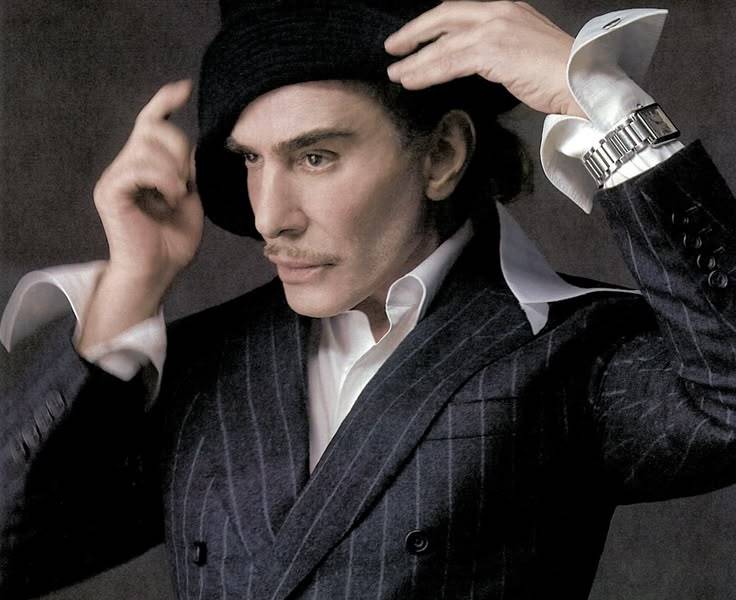
One month after announcing “John Galliano: Horizons,” the Metropolitan Museum of Art canceled what would have been only its third solo Costume Institute exhibition devoted to a living designer.
The decision reversal won’t likely halt Galliano’s return to fashion. His reputation has survived a criminal conviction, after which he worked his way back to the industry’s highest level and secured his next commercial act with Zara. Instead, it exposed the boundary between allowing a designer to work again and granting him a rare institutional honor.
To go back to the beginning, Galliano’s downfall followed several encounters at La Perle café in Paris. In October 2010, English teacher Fatiha Oummedour accused him of directing racist and antisemitic insults at her. A separate confrontation took place on February 24, 2011, involving Géraldine Bloch, then head of exhibitions at Paris’s Institut du Monde Arabe, and her boyfriend Philippe Virgitti, a receptionist. Bloch accused Galliano of antisemitic abuse, while Virgitti said the designer used an anti-Asian slur and threatened him.
Dior suspended Galliano on February 25, 2011. Galliano had been working at the French house as artistic director. Galliano denied the accusations and filed a defamation complaint. Four days later, British newspaper The Sun published footage from another encounter at La Perle in which Galliano declared his affection for Hitler and said those he was addressing would have been “gassed.” Dior dismissed him on March 1, 2011. He entered addiction treatment and was removed from his namesake label that April. In September, a French court found him guilty of making public insults based on race, religion or ethnicity and imposed suspended fines.
His rehabilitation was gradual, but actively facilitated. Galliano met repeatedly with Abraham Foxman, then national director of the Jewish civil rights organization Anti-Defamation League, studied with a rabbi and visited Auschwitz. In 2013, Foxman said he had demonstrated “true contrition.” Oscar de la Renta gave Galliano a temporary studio residency that year, before Renzo Rosso appointed him creative director of Maison Martin Margiela in October 2014. Anna Wintour publicly endorsed the appointment by wearing his first Margiela design to the British Fashion Awards in December 2014.
From 2015 to 2022, Galliano blended Margiela’s deconstruction with his own theatricality. By 2019, the brand’s revenue had doubled under him, according to parent company OTB. Galliano’s January 2024 Artisanal collection became a critical and viral sensation. But Kevin Macdonald’s documentary “High & Low: John Galliano,” released that March, complicated the redemption narrative. “It was a disgusting thing, foul thing that I did,” Galliano said in the film. Virgitti disputed the completeness of his contrition, saying Galliano had never apologized to him personally.
After leaving Margiela in December 2024, Galliano resurfaced through Zara. British Vogue first reported the two-year agreement in March 2026, and Glossy covered it as part of Zara’s move upmarket. “I’ve been curating some of Zara’s recent archives,” Galliano told Vogue. “The idea is that I will re-author them.”
The New York Times first reported the planned Met retrospective in July 2026. Dana Thomas, Galliano’s biographer, raised one of the first prominent public objections in an August guest essay for The New York Times. Opposition widened to donors, Jewish leaders and officials including New York City Council Speaker Julie Menin, whose mother and grandmother survived the Holocaust. The planned May 3, 2027 opening also coincided with Yom HaShoah, its Holocaust remembrance day.
“There’s the fashion world as it exists within the fashion bubble,” Vanessa Friedman, fashion director and chief fashion critic of The New York Times, told Glossy, speaking about Galliano’s comeback to fashion. “That is one echo chamber. This is a museum that exists in a very large and complex and multifaceted city. It’s a different constituency, and their responsibilities are different.”
Friedman rejected the idea that canceling the show erased Galliano. “Nobody involved is saying that the Met should not collect Galliano,” she said. “There is just a really big difference between having a second chance and being given a singular and historic honor by an institution. Mel Gibson is making movies. He’s not getting a lifetime achievement award at the Oscars.”
Not everyone agrees that a retrospective would necessarily have amounted to absolution. Denise Green, director of the Cornell Fashion + Textile Collection, argued that museums regularly confront the work of morally compromised cultural figures. “A curator’s job is to contextualize those histories rigorously, not to act as though exhibiting someone amounts to canonizing them,” she said.
The decision exposed how authority had become concentrated around Wintour and Costume Institute curator Andrew Bolton. “They really worked in lockstep,” Friedman said. Their record of blockbuster exhibitions and fundraising gave the Costume Institute considerable freedom within the Met, creating what she called an environment of “benign negligence.”
That power is already evolving. In February 2026, Friedman described the appointment of Jeff Bezos and Lauren Sánchez Bezos as honorary Met Gala chairs as an expression of “a new gilded age.” But Galliano’s withdrawal exposed the limits of Wintour’s influence and raised questions about who will eventually replace her. “There is no other Anna,” Friedman said. “I hope that whoever takes it next sees the opportunity to reconceive it. Change is actually best made from a position of strength, not crisis.”
Zegna’s Thom Browne problem
The most revealing part of Zegna’s September 3 earnings update was not centered on the namesake brand, which continues to perform well. Instead, it was on Thom Browne, which seems to be falling off the map. Zegna Group reported H1 revenue of €987.3 million, or about $1.15 billion, but Thom Browne moved in the other direction. The brand posted a negative adjusted EBIT of about $9.3 million, compared to a positive $4.6 million a year earlier. Zegna is continuing to move the brand away from wholesale and toward a more retail-led model. Bernstein analyst Luca Solca summed up the split bluntly: “Zegna and Tom Ford beat expectations, Thom Browne lags.” The post-earnings note said Thom Browne “missed expectations considerably,” with its adjusted EBIT margin landing at -6.8%, compared to consensus of 2.4%.
Management at Zegna said the transformation is “taking longer than initially anticipated,” with the brand still reducing and upgrading its wholesale network while reshaping its leadership team under CEO Sam Lobban. The comments were unusually blunt for a luxury earnings call.
CEO Gianluca Tagliabue said Thom Browne had been “very well versed in a wholesale-driven model” and compared the retail shift to changing teenage habits: “At a certain point, you need to change habits, patterns.” He added that Zegna “probably needed to change the team almost entirely” to bring in retail capabilities. Thom Browne still has heat, with management citing the successful Asics collaboration in February as proof of consumer appeal, but Tagliabue said desirability is “not enough on its own.” The next step is less glamorous: tighter open-to-buy, sharper assortment planning and more “preppy Americana” codes to “welcome more people into the brand.”
Executive moves
- Former Alexander McQueen CEO Gianfilippo Testa has been named CEO of Bang & Olufsen. The Danish audio specialist cited his luxury-sector experience across McQueen, Gucci, Fendi and Tag Heuer as valuable as it positions the brand at the intersection of technology, design and craftsmanship.
- Kering named former Coach chief merchandising officer Marilyne Trebus as chief product officer, reporting to chief client officer Carlo Mocci. It is part of Luca de Meo’s group-level “centers of excellence” push to strengthen merchandising, pricing, integrated business planning and product development across its houses.
- Men’s retailer Huckberry has appointed former The North Face global president Todd Spaletto to its board and as SVP of strategy, as it pushes further into stores and wholesale.
News to know
- LVMH has completed its roughly $925 million sale of Marc Jacobs to G-III and WHP Global, which now own the brand equally. G-III, the apparel group behind DKNY and Donna Karan, will operate its stores, e-commerce and wholesale business, with plans to revive Marc by Marc Jacobs and grow annual sales from around $360 million to $1 billion.
- European luxury stocks slid again, with LVMH reaching its lowest share price since 2020 and the sector index down 19% this year, after Bank of America data suggested luxury demand weakened by around 3 percentage points in Q3.
- Brazilian fashion group Azzas 2154, owner of nearly 30 brands, will split into two listed companies just two years after the merger of Arezzo&Co and Grupo Soma. The reversal follows disputes over governance and strategy, although both businesses will retain stakes in crown jewel Farm Rio.
- Watches of Switzerland said strong U.S. demand and an improving U.K. market sustained its growth during the 17 weeks to August 30. Luxury jewelry, pre-owned watches and e-commerce all contributed, allowing the Rolex retailer to reiterate its full-year guidance despite the wider luxury slowdown.
- And journalist and activist Gloria Steinem has died at 92. The co-founder of Ms. magazine helped turn feminism into a national political movement, using her reporting and advocacy to advance workplace equality, reproductive rights and the Equal Rights Amendment.
Listen in
Glossy’s senior fashion reporter Danny Parisi and editor-in-chief Jill Manoff unpack Vogue’s first September issue under Chloe Malle, digging into what it reveals about the changing role of print fashion magazines. Listen here.
Read on Glossy
The Canada-U.S. trade war is creating a ‘less integrated North American fashion market’. What comes after fashion’s DTC era? And as Off-White creative director Ib Kamara exits, we ask whether the brand has lost its way.