The Glossy 50 honors the year’s biggest changemakers across fashion and beauty. More from the series →
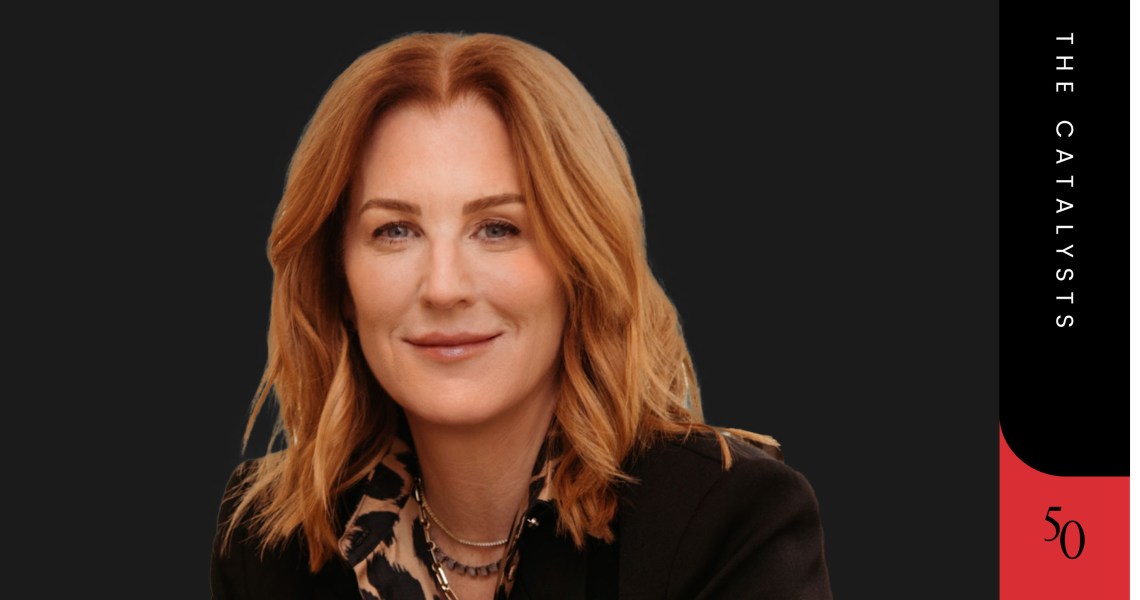
In 2025, Hillary Super brought sexy back.
A modern version of sexy, that is — where female athletes sport bombshell hair, and baby bumps pair with angel wings.
The odds were working against her, to say the least. When Super joined Victoria’s Secret as CEO in September 2024, the company was struggling to redefine itself and regain its footing after becoming known for narrow, outdated beauty ideals and scandal-plagued leadership. Super joined the company from Rihanna’s Savage X Fenty, where she served as chief executive, and previously held the global CEO role at URBN’s Anthropologie Group.
“I thought, ‘This is the biggest transformation opportunity in the industry,’ and I knew I would always regret it if I didn’t say yes and accept the challenge,” Super said. “I wanted to do the transformation and bring these two iconic, immediately recognizable brands [Victoria’s Secret and Pink] into their next chapter.”
In March, Super introduced the “Path to Potential” plan, centered on right-tracking the company through four focus areas: recommitting to the Pink brand; reasserting the company’s authority in bras; growing the beauty, sport and swim lifestyle businesses; and refreshing the company’s go-to-market approach, from production lead times to branding strategies.
The following month, she revealed a rebuilt leadership team, with three new presidents, of Victoria’s Secret, Pink and beauty, and a new svp and executive creative director, fashion designer Adam Selman.
“I hired and curated, from internal and external, a world-class leadership that was necessary to execute the Path to Potential [plan] and carry the brands to their next era,” Super said. “Being a leader and best-in-class in your function were the first [requirements]. But I was also [looking for leaders] who understand the brands, are kind and collaborative, and are complementary to my [leadership] style. And I matched candidates to the challenges ahead.”
Like the new appointments, a risky decision to reintroduce the Victoria’s Secret Fashion Show, in October, supported Super’s Path to Potential goals — and managed to stifle critics. While the 2024 iteration — the first in five years — was slammed for lacking glamour and fantasy, leaning too heavily on nostalgia, and lacking true inclusivity, for example, Super’s catwalk struck a chord.
“We were serious [before], and I don’t think sexiness should be serious. We heard the customer who was telling us, ‘Bring back bombshell hair,’” Super laughed. “The show was a huge success by all accounts. We wanted to be unavoidable and to convert that into new customers. And the emotional connection we created with all different types of audiences was particularly special and distinct.”
Since the show, which has been streamed more than 61 million times and earned 51 billion media impressions, Victoria’s Secret has gained nearly 9 million followers across its social accounts.
And that buzz translated to immediate business success: The show drove a more than 60% year-over-year lift in traffic to the brand’s website and converted over 15% more new customers. And, fueled by “The Tzuyu Effect” TikTok trend, pointing to the influence of a band member, the show’s music performance by Twice led to the sellout of Pink’s Wear Everywhere push-up bra.
Super said carving out a Pink Halftime Show during this year’s fashion show helped define what each brand stands for. “VS is sexy, glamorous and luxurious; Pink is bold, irreverent and happy. We were able to show that they complement each other, yet they’re distinct brands.”
The show’s impact was also evident in Victoria’s Secret’s latest earnings, reported on December 5 for the period ended November 1. The company’s net sales increased 9% year over year to $1.47 billion, and the company raised its full-year net sales guidance to $6.45 billion to $6.48 billion. Among other highlights: The intimates business returned to growth, with Victoria’s Secret gaining more than a point of U.S. bra market share; Pink saw double-digit growth, with a LoveShackFancy collaboration bringing in nearly 15% new or reactivated customers; beauty saw low single-digit gains, supported by launches tied to the runway, as well as core fragrances; and international sales increased by 34%.
“I see the brand growing globally and continuing to double down on being the sexiest brand in the world and the No. 1 intimates brand globally, … while making women feel celebrated and like the best versions of themselves,” Super said. “Today’s Angel is multi-faceted: soft and vulnerable one day, strong and powerful the next.”