The Glossy 50 honors the year’s biggest changemakers across fashion and beauty. More from the series →
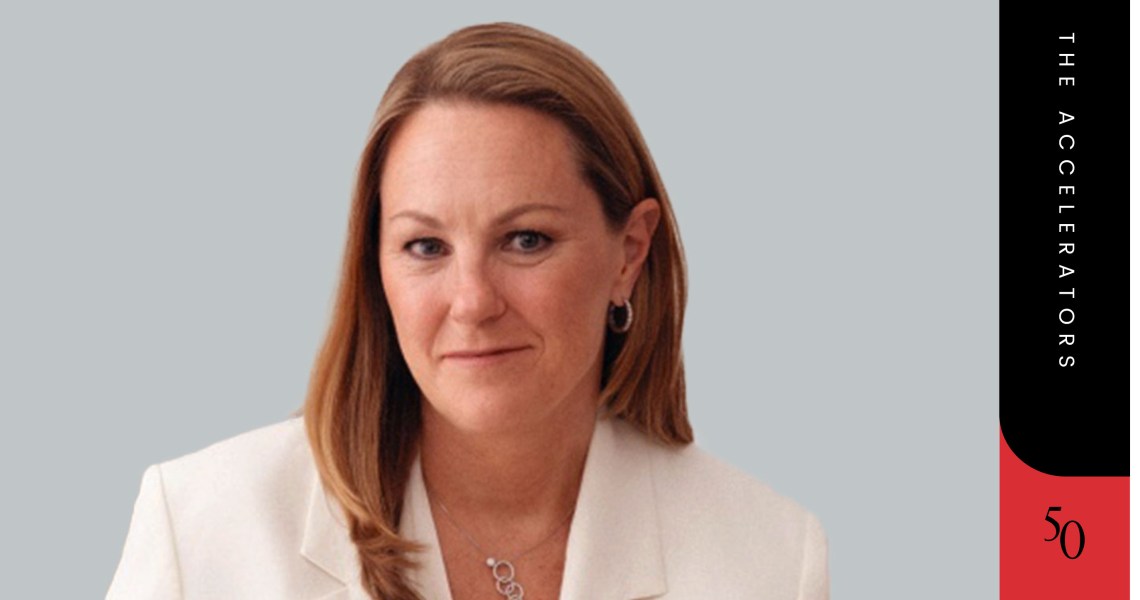
Inside H&M Group’s Stockholm headquarters, Ellen Svanström is leading one of the most ambitious retail-tech transformations in fashion, yet she approaches it with the steady, low-key calm of someone unfazed by scale. As chief digital information officer, she oversees the systems, data foundations and digital innovation powering the group’s global brand portfolio. Her mandate is vast, yet sharply defined: to build the digital infrastructure H&M needs for the next decade, not the last one.
“My responsibility is everything related to tech within the H&M Group,” said Svanström, who joined H&M Group in 2016. “Digital transformation and innovation are at the top of my agenda.” What began as years of groundwork is now entering a broader implementation phase, with several initiatives moving from focused testing into wider deployment.
The catalyst traces back to the pandemic, when restrictions temporarily shut up to 80% of H&M’s stores and global traffic dropped sharply across its nearly 4,000 locations. The crisis exposed the fragility of traditional retail — H&M’s full-year sales fell 18% — but also underscored the strength of the digital backbone Svanström’s teams had been developing. “As we lost traffic to our stores, shifting the focus and the effort into the online business was an important learning,” she said. That shift has led to a prioritization of unifying the company’s physical and digital experiences.
Today, H&M pilot stores operate with a level of intelligence more commonly associated with e-commerce. Sensors track real-time footfall and product engagement; dashboards surface stock and staffing needs; and store teams receive data-led recommendations on product placement, customer flow optimization and localized assortment adjustments. The goal is not to replicate e-commerce, but to give physical store teams the same clarity and responsiveness as teams focused on digital.
For customers, the pilot stores deliver more accurate product availability, easier discovery and improved delivery options. For staff, they provide stronger tools and more empowered decision-making. For the company, they signal a new approach to global retail operations that blends efficiency with agility. As Svanström put it, “One plus one equals three.” In other words, by combining the strengths of physical stores and digital channels, H&M can create more value than either channel could deliver on its own.
Svanström’s philosophy extends beyond operations to creativity, and she’s applying AI to both. As she sees it, AI-driven efficiency isn’t just a business requirement; it also frees people from repetitive tasks, giving them more time and energy to focus on creative work.
That mindset drove the launch of StyleGen, H&M’s internal AI design toolkit, in the fall of 2025. The tool allows designers to initiate concepts via text prompt, sketch upload or external references. “Introducing new AI tools to a creative team isn’t automatically successful,” Svanström said. “It takes time, trust and the right approach to make them truly useful.” But StyleGen, she said, has already “opened a lot of new thoughts and behaviors.”
Also this year, in July, H&M launched its first digital-twin images as part of a broader exploration into how generative AI can enhance creativity, storytelling and fashion presentation, while also offering new time efficiencies and production cost savings. The company works directly with models and their agencies to create digital twins that can be used in campaigns and content across markets, providing a flexible, scalable way to produce imagery. Importantly, the models retain rights to their virtual likenesses. “What we do needs to be trustworthy and transparent,” Svanström said, adding that regulations “help you become better and can enable more innovation.”
Svanström’s remit also spans the increasingly critical areas of cybersecurity, data governance and regulatory readiness. As fashion becomes more digitized, the threats mount. Retailers including Harrods and Marks & Spencer were heavily impacted this year. “You need to continue to build and strengthen the [dataset] foundation,” she said. “The requirements and the pressures [on brands] only grow.”
Looking forward, Svanström is preparing H&M for a retail landscape shaped by chat-based discovery, predictive systems and interconnected touchpoints. In addition, she expects local relevance, experiential retail and community engagement to become increasingly important for brands.
“In order to enable self-expression [for customers in the fashion industry], you need to be relevant for that customer,” Svanström said, in reference to how the brand shows up.
Still, she sees the brand’s owned environments — its app, its membership ecosystem and its physical stores — as its long-term anchors. “Your own brand destination is going to be your brand hub,” she said.
Recent earnings have shown the importance of technology to H&M’s performance. The company’s “upgraded online store rollout” has been “very well received, contributing to a profitable growth in the quarter,” CEO Daniel Erver told investors in September. Search, imagery and size-recommendation enhancements helped drive stronger conversion, while better demand planning and lower return rates boosted profitability behind the scenes. But Erver owed “a clear majority” of the gross margin improvement to supply-chain work, including more precise, data-led buying.