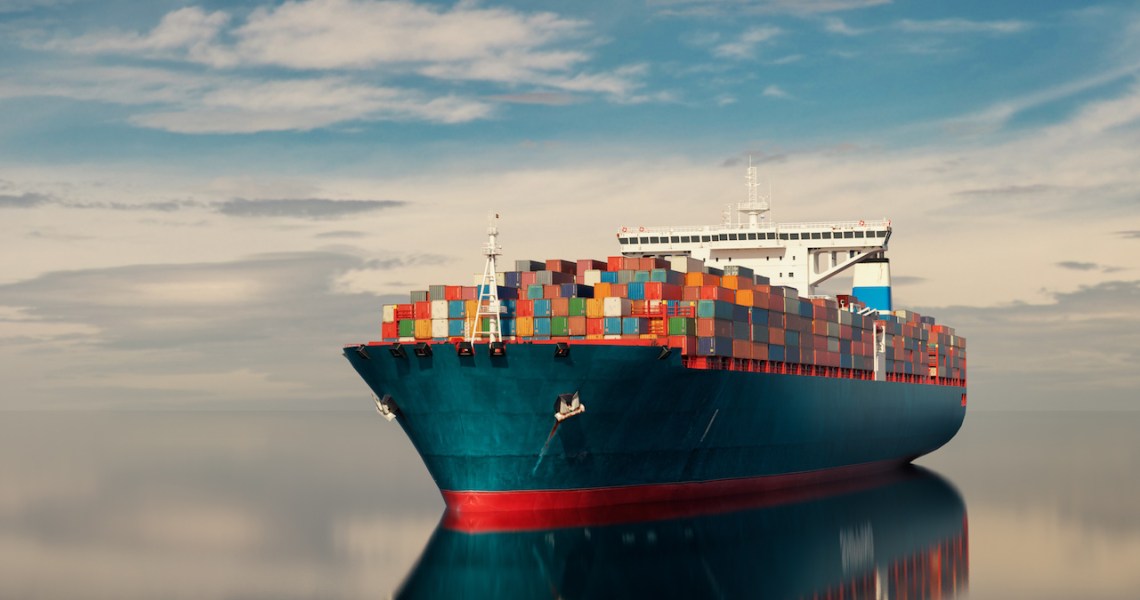
In the past two weeks, confusion has been rippling through the international shipping world. The status of the Strait of Hormuz, the waterway currently controlled by the Iranian government and a key chokepoint in the war between the U.S. and Iran, has become increasingly muddled.
The U.S. government has continued to alternately insist that the war is over or on pause, while Iran has disputed that. Meanwhile, the status of shipping through the strait has changed rapidly. As of Friday, no commercial vessels had passed through the strait for three full days, according to data from S&P Global Intelligence. For importers, information on what is legal and safe when it comes to traversing the waterway is growing murkier by the day, but the long-term impact on fashion is getting clearer.
While much of the concern about the Strait of Hormuz has been focused on the lack of oil being shipped through it, that’s not the only cargo being delayed. Apparel and textile hubs like India and Bangladesh produce clothing for global brands like Tommy Hilfiger, Gap, Zara and H&M. Those companies rely on the Strait of Hormuz to ship products out from their manufacturers to valuable markets like the E.U. and the rest of the Middle East. According to the Business and Human Rights Centre, global textile production costs are likely to increase by 10-15% as delays continue. The United Nations Conference on Trade and Development expects shipping costs alone to increase 30-50% in the near future.
On Friday, news broke that Iran has laid out a new set of rules for vessels moving through the strait, including an application to be submitted to Iran’s Persian Gulf Strait Authority along with new tolls. Prior to the war, travel through the strait was free. Meanwhile, the U.S. has threatened to sanction companies that submit to Iran’s authority over the strait, leaving many shipping companies stuck between the two powers and reducing shipping volume in the strait by up to 97%.
Fashion is particularly challenged because of its seasonal nature, according to Jon Bahl, CEO of the commerce operations tech company Linnworks.
“Geopolitical disruptions in key trade regions inevitably create ripple effects across global supply chains, particularly for sectors such as fashion that rely heavily on international sourcing and tightly managed inventory cycles,” he said.
For example, apparel products coming out of India would need to reroute around the Cape of Good Hope in order to avoid the Strait of Hormuz. But that can add up to a month of extra travel time. In fashion, a month can be the difference between having seasonal products when they’re needed and needing to mark down prices to liquidate out-of-season items.
“From an inventory management perspective, the primary risk retailers face is uncertainty around lead times,” Bahl said. “When shipping routes, manufacturing hubs or transportation networks become unstable, retailers can experience delays that disrupt replenishment schedules and create stock imbalances across sales channels.”
Ryan Zagata, the founder of Brooklyn Bicycle Company, imports bicycles to the U.S. on the same cargo ships from India and Bangladesh that primarily ship apparel. Zagata said that the increased costs of shipping lag behind the news cycle.
“Carriers don’t immediately raise rates when the strait wobbles, but they do add risk surcharges — war risk insurance is the line item to watch — reroute through longer lanes and impose blank sailings to manage capacity,” he said.
He pointed to shipping disruptions in the Red Sea in 2024, when Houthis attacked commercial vessels as part of an ongoing conflict with Israel, as a relevant recent example of how impacts may be felt. At the time, many brands that imported from the region didn’t get hit with the increased costs of rerouted shipping until 60 days later and were often unprepared for much higher prices. Zagata outlined three mitigation strategies he’s implementing.
“First, get itemized landed-cost reporting from your forwarder by SKU, not by container, including bunker, peak season and risk surcharges,” he said. “Second, lock in committed allocation contracts on critical lanes for the next 90 days, even if rates are above current spot. Third, model your runway in weeks of inventory by SKU, not in dollars.”
Amrita Bhasin, a supply chain and fashion expert and co-founder and CEO of supply chain tech company Sotira, said air freight may be a better option for fashion brands right now, especially for the most time-sensitive products.
“Air freight options are continuing to expand and may be more expensive but faster than shipping,” she said. “Depending on the brand, pricing, and margin room, this could be a strong option for brands to invest in now to ensure that they can meet the needs of consumers and retain consumer interest.”