In March, Dutch fragrance brand Fugazzi released its Cloudh Nine perfume, an airy, woodsy scent by perfumer Jordi Fernandez. The perfume is built around classic perfume ingredients that casual fragrance consumers will recognize, like tonka bean and guaiac wood. But it’s another, newer ingredient that may capture the eyes, and noses, of the most devoted fragheads: Akigalawood.
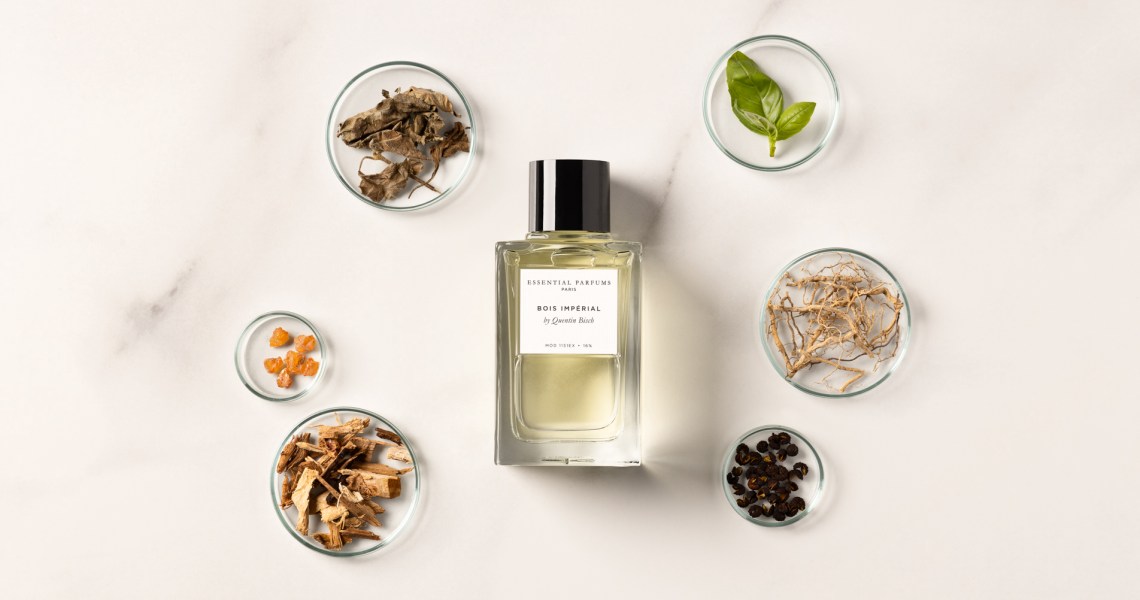
Devoted fragrance fans will likely already be familiar with the name, and smell, of Akigalawood. The ingredient appears in many niche brand’s top-selling perfumes, including Essential Parfums’ Bois Impérial, Amouage’s Guidance and Ex Nihilo’s Blue Talisman. Its reach expands from masculine, leathery scents like Marc-Antoine Barrois’ Ganymede to fruity florals, like BDK Parfums’ Impadia, and has inspired TikTokers and Redditors to debate its usage in much of the niche perfume world.
That’s good news for Givaudan, the Swiss fragrance giant that developed Akigalawood and retains exclusive rights to the ingredient, known as a captive in the industry.
“[Captives] are kind of tools to compete. You do get the competitive edge with them,” said Givaudan perfumer Christine Hassan. She described Akigalawood, derived from patchouli using biotechnology, as having a spicy, but clean and fresh woody aroma.
“Akigalawood is such an amazing material. What’s beautiful about it too is you can play it in all realms. It’s a very universal scent. It’s not typically masculine or typically feminine. You can really play with it across the palette,” said Hassan. “It’s one of those ingredients that kind of hits every note. Kind of like ketchup, where it hits every part of your tongue at once.”
Companies like Givaudan and its competitors may spend millions of dollars on the research and development of new scent molecules or captives. But much of that investment will never hit the market. Pierre Arnoux, global fragrance ingredients marketing manager of synthetics at Givaudan, estimates the company may work on some 2,000 molecules a year, only one or two of which will make it to its perfumers’ palettes.
Akigalawood, which Arnoux describes as having the longevity of a synthetic molecule while retaining the complexity of its natural origins, is one of the few to not only make it to the market, but to also reach public attention.
“One of the key things is to develop new signatures for perfumers, to bring them new tools. It’s like bringing new colors to a painter, or bringing new fabrics to a fashion designer,” said Arnoux. “When we develop these ingredients, they need to justify their place. That’s why we only keep the best candidate to enter the palette.”
To make the cut, new captives need to meet safety and regulatory requirements, meet the needs of perfumers in fine fragrance or commercial applications, and be cost e-ffective enough to produce at scale. Akigalawood, an upcycled molecule created from leftover materials from the extraction of patchouli essential oil, hits not only the demand for clean, woodsy scents, but also for more sustainable ingredients.
“The interesting thing with a material like [Akigalawood] is that it is based on biotech development, so they’re not using any harsh chemicals to make it,” said Virginia Bonofiglio, chair of cosmetics and fragrance marketing at the Fashion Institute of Technology. “It’s very sustainable, and that makes it even more attractive as we are moving into this era where fragrance companies need to really take a very strong position on sustainable production of materials.”
It’s a chicken-or-the-egg argument of whether scientific innovation drives trends or consumer demand drives scientific innovation, Bonofiglio said. Past innovations to shape fragrance trends include the aquatic molecule Calone, which helped drive marine scents in the ‘90s, while the use of chemical reactions known as Schiff bases created bombastic ‘80s perfumes like Dior Poison and Giorgio Beverly Hills. But it’s the consumers who decide when a new ingredient is worth the investment.
Akigalawood drives big business for not only Givaudan but also the brands that utilize it in their creations. Guidance and its flanker Guidance 46, both created by perfumer Quentin Bisch, account for roughly a quarter of Amouage’s global sales. Blue Talisman, by perfumer Jordi Fernandez, made up more 40% of Ex Nihilo’s 2025 U.S. sales, according to data from Circana — it doesn’t hurt that NFL star and Taylor Swift’s fiancé Travis Kelce named Blue Talisman as his favorite scent in an August video with GQ.
While Givaudan patented Akigalawood in 2010, the ingredient first appeared in a commercial perfume with Natura’s 2014 launch Urbano. It found a major audience in Miu Miu’s namesake 2015 fragrance and its subsequent flankers. But since the 2010s, fragrance consumers have become increasingly aware of not only brand names or perfumers, but also ingredients.
Geza Schoen’s Molecule 01, launched in 2006 and built exclusively around Iso E Super, turned the synthetic molecule into a brand name unto itself. That inspired a new category of minimal scents like Juliette Has a Gun’s 2010 launch Not a Perfume, built around Cetalox, or D.S. & Durga’s I Don’t Know What of 2018, also featuring Iso E Super. The name recognition of such ingredients has made new captives like Akigalawood worthy of a marketing callout as Bulgarian rose oil.
“[Fragrance] consumers are much more interested in what’s in everything. Before, we were able to do all this smoke and mirrors and talk about how beautiful it was and how it would increase your love life, and whatever we said,” said Bonofiglio. “But now, consumers are just smarter. They have access to a lot more information, and they want to know. Science has become much more important in the beauty industry.”
With the growing importance of proprietary ingredients, Givaudan has altered its strategy around captives. While fragrance developers have typically released their captives to be sold to their competitors after a few years of exclusivity, since 2014, Givaudan has maintained exclusivity on its captives, Arnoux said. It will retain its patent on Akigalawood for at least 20 years after its initial launch.
Maintaining exclusivity may mean losing out on potential revenue from selling the popular ingredient to other companies, but with the hope that it will give Givaudan an edge in winning briefs from clients looking to utilize the notes. Exclusivity won’t stop competitors from launching their own captives, though. In 2014, fellow fragrance giant Dsm-Firmenich launched Clearwood, a biotech ingredient also derived from patchouli.
“Everybody is looking for an advantage, and if this is an advantage, then you’re going to hold on to it,” said Bonofiglio. “[But] If the product is patented, there’s a lot of information already out there on it, and it doesn’t mean that people are not going to be trying to copy you.”