The Glossy 50 honors the year’s biggest changemakers across fashion and beauty. More from the series →
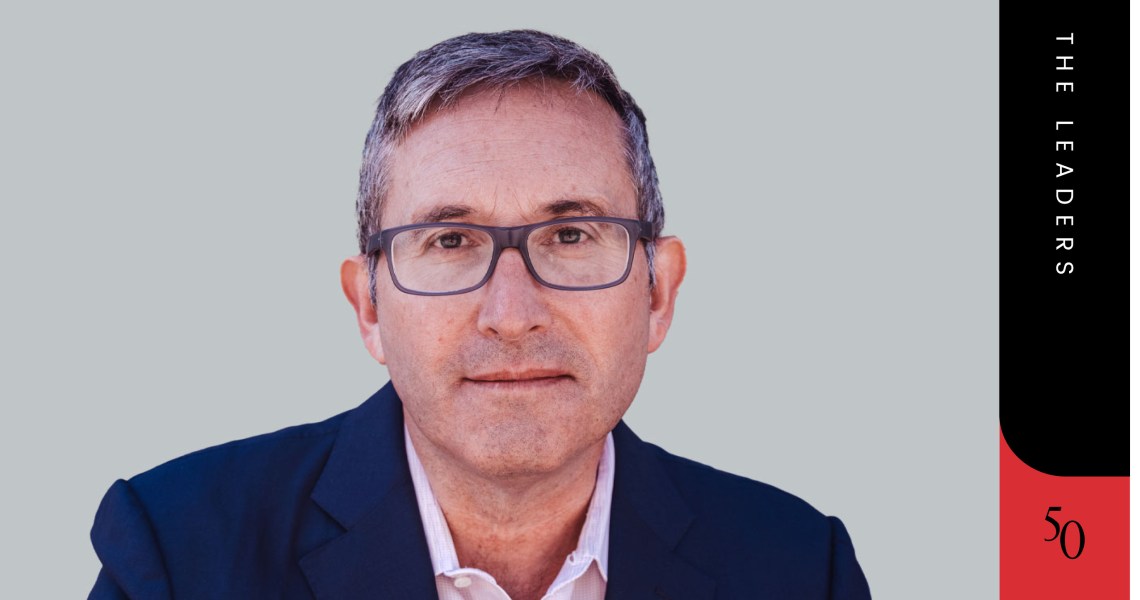
Twelve-year-old Oura Ring, helmed by veteran tech executive and CEO Tom Hale, has had a monumental 2025.
“We’ve sold 5.5 million rings in the company’s history, but half of them have been in the last 12 months,” Hale told Glossy.
The health tracker market grew 88% between January and July, according to Circana, with 75% of sales going to tracking rings. Oura announced an $11 billion valuation in October alongside a $900 million series E investment round. “More people don’t know about the Oura Ring than do,” Hale said. “The reality is that we’re just getting started.”
The health tracking trend has its roots in the post-pandemic “health is wealth” movement and is the backbone of the current longevity movement. Collecting personal health data, including sleep, movement, blood sugar, chronic pain, menstruation, diet and blood pressure, hit a fever pitch in 2025 with more consumers eager to gain autonomy over their health.
The Oura Ring sells for $349-$499, depending on color and finish, plus a $5.99 monthly subscription. Styles are HSA- and FSA-compliant and were offered for as low as $249 over the Black Friday sales weekend.
According to Verified Market Research, the global fitness tracker market was valued at $52 billion last year and could triple by 2032 to reach $189 billion.
Oura is a privately-held Finnish health tech company founded in 2013 and backed by a who’s who of individuals, like Shaquille O’Neal, Will Smith and Lance Armstrong, plus private equity firms including Fidelity Management, Forerunner Ventures and Whale Rock.
Oura brought its first tracking ring to market in 2015 and has since released several iterations. The most recent is a higher-end collection with a ceramic finish in expanded colorways.
Hale joined Oura in 2022. His CV includes COO of HomeAway, president of Momentive AI, and svp and gm at Adobe Systems.
This year, Hale doubled the company’s 2025 sales projection and sees an expansive runway for 2026. “Last year, we reported we would do $500 million in the [2025] calendar year, and this year, we think we’ll do $1 billion [in 2025],” Hale said.
Oura is known for its data analysis and diagnostics, including “symptom radar,” an in-app feature launched at the tail end of 2024. Powered by AI, it tracks and analyzes signs of strain in the body, often warning a user of an ailment, such as a cold or flu, days before symptoms appear, Hale told Glossy.
“We’re just scratching the surface of the kind of predictive work possible,” Hale said. “If [a user] has an AI model that’s tuned to you, and it knows what’s normal for you, and it knows you, and it’s making predictions about where your long-term or middle-term health trajectory is, that’s an incredibly powerful and useful tool in healthcare.”
Currently, Hale is focused on steady growth, propelled by integrations and opportunities in the healthcare sector for 2026. In July, health secretary Robert F. Kennedy Jr. announced a campaign to encourage all Americans to wear a health tracking device. “My vision is that every American is wearing a wearable within four years,” he said. Hale hopes to be a major player in this potential growth.
“There are more people who have a need for health education, guidance, coaching, diagnoses and support on their health journey than there are doctors or nurses to support them,” Hale said. “There are 200 million wearables sold on the planet every year, [and] we do maybe 1% of that. So doubling our business again and going from 1% to 2%? That seems approachable.”