The Glossy 50 honors the year’s biggest changemakers across fashion and beauty. More from the series →
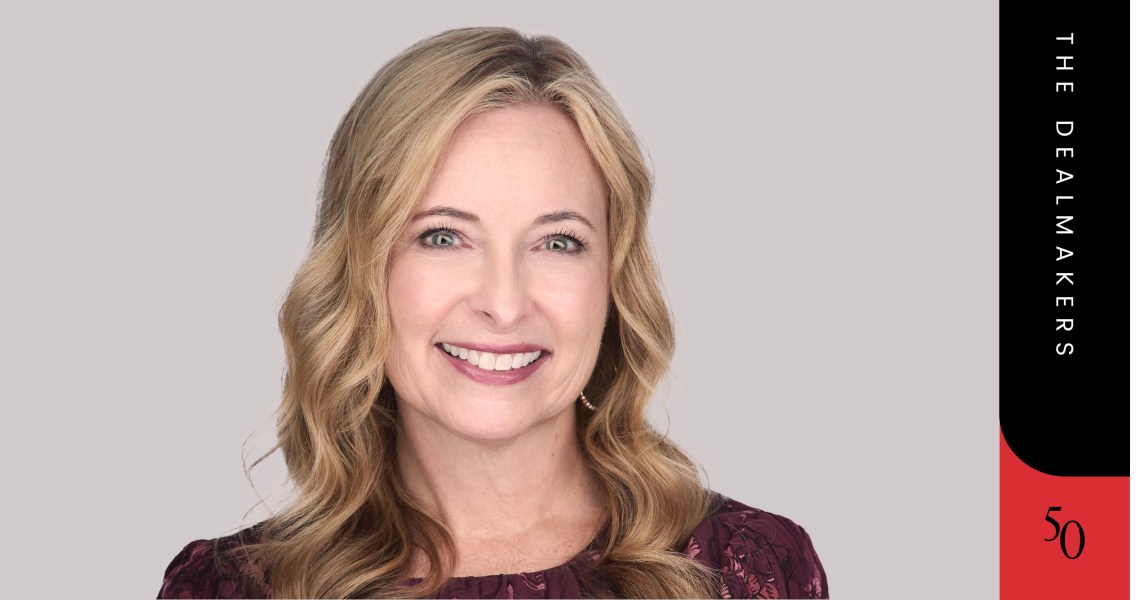
In January, Stacey Ramstedt was promoted to Church & Dwight’s CMO, a role that has her overseeing the marketing of 80 brands and $6 billion worth of consumer product goods. The products range from Arm & Hammer’s baking soda-based toothpaste to Hero’s pimple patches to Nair’s at-home wax to, most recently, Touchland’s hand sanitizers — Church & Dwight acquired Touchland in May for up to $880 million. The brands range from 5 years old to, in the case of Arm & Hammer, 180. A central focus for Ramstedt has been the conglomerate’s 14 “power brands,” nine of which increased market share in 2025.
But for each of them, Ramstedt’s M.O. is the same: “to reach consumers and grow with more consumers, and to grow household penetration.” Particularly with the beauty brands in the portfolio, that has meant increasing the focus on influencer marketing.
This year, dry shampoo brand Batiste tapped WNBA player Hailey Van Lith (1.5 million Instagram followers) as an ambassador. And the skin-care brand Hero appointed Olympic gymnast Jordan Chiles for the same role.
In the spring, Ramstedt — formerly the vp of Church & Dwight’s marketing, specialty hair and skin-care strategic business unit — began to sense a shift in consumer sentiment, which led her to shift Church & Dwight’s marketing, spotlighting value in the ad copy of 14 of the brands she oversees. “We are in a period of sustained inflation, as well as a rising cost of living, so consumers are looking for products that are value-conscious and really perform, at the right price,” she said.
For Arm & Hammer, that came to life through a campaign dubbed “The Whole Darn Arm,” meant to reflect the idea that, “We don’t just give you a helping hand, we give you the whole darn arm,” Ramstedt said, noting that the campaign ties to the logo, but but also the “strength and the power of this brand.” The campaign has seen over 5.4 billion impressions and driven up retail sales by 5% year-over-year across the Arm & Hammer portfolio.
This strategy was implemented differently for various brands in Church & Dwight’s beauty portfolio. For brands like Hero, which, according to Circana, is the No. 1 pimple patch brand, based on sales, the focus has been less on pricing and more on subtle nods to value. “We’re more so tapping into driving trust and efficacy,” Ramstedt said. Hero is nodding to the fact that consumers may be experiencing stress related to the state of the world, which could lead to a spike in acne. For Batiste, meanwhile, “We’re talking about how its dry shampoo works better than prestige brands that cost almost three times as much,” Ramstedt said. Nair has also used copy that emphasizes value, including “Skip the salon,” and “Long-lasting hair removal at a fraction of the cost.”
“Across all of the beauty brands at Church & Dwight, consumers want to look good so that they feel good,” Ramstedt said. “Whatever the economic situation, they want to feel confident and they want to feel empowered, especially in a time where they’re feeling uncertain and unsure about where [things are] headed. … Because we have beautiful products that really work, at the right value, we have brands that have meaning and are connecting with consumers.”
For the third quarter of 2025, Church & Dwight reported a 5% increase in net sales, bringing the company’s quarterly revenue to more than $1.5 billion.