This week, I checked in on K-beauty’s growth beyond traditional beauty categories like makeup and skin care, into everything from menstrual products to “scent care.” Additionally, Katie Jane Hughes’ makeup brand gears up for its Sephora debut, and Amouage reports yet more sales growth.
How everything became K-beauty
When the first K-beauty wave hit the U.S. market in the 2010s, the trend was largely synonymous with skin-care rituals built around sheet masks and buzzy ingredients like snail mucin serum. By 2026, you can find K-beauty’s influence in all kinds of personal care products — including in your lube.
“We always say that you know South Korea brought skin care to your bathroom shelf, and now Mila’s bringing it into your bedroom,” said Ada Trujillo, co-founder of sexual wellness brand Mila. Trujillo and Kim Aviv developed the formulations for their brand’s lubricants and vulva wipes in South Korea with “skin-care grade ingredients” like camellia sinensis leaf water and collagen. In June, the Miami-based sexual wellness brand emerged from stealth with $2.5 million in funding led by Mensch VC and Sticker Ventures.
A decade on from its first global explosion, the K-beauty trend has spread across beauty’s core categories, from makeup and skin care to hair and fragrance. And with the demand for Korean innovation only growing, K-beauty and K-beauty-inspired brands are seeing just how far they can push the category.
“The first wave [of K-beauty] was about rewriting skin care, rewriting makeup. Now it’s more mature; it’s like the second wave that’s coming, and it’s about flooding every other category,” said Marc-Alexandre Risch, co-founder of fragrance brand Obart.
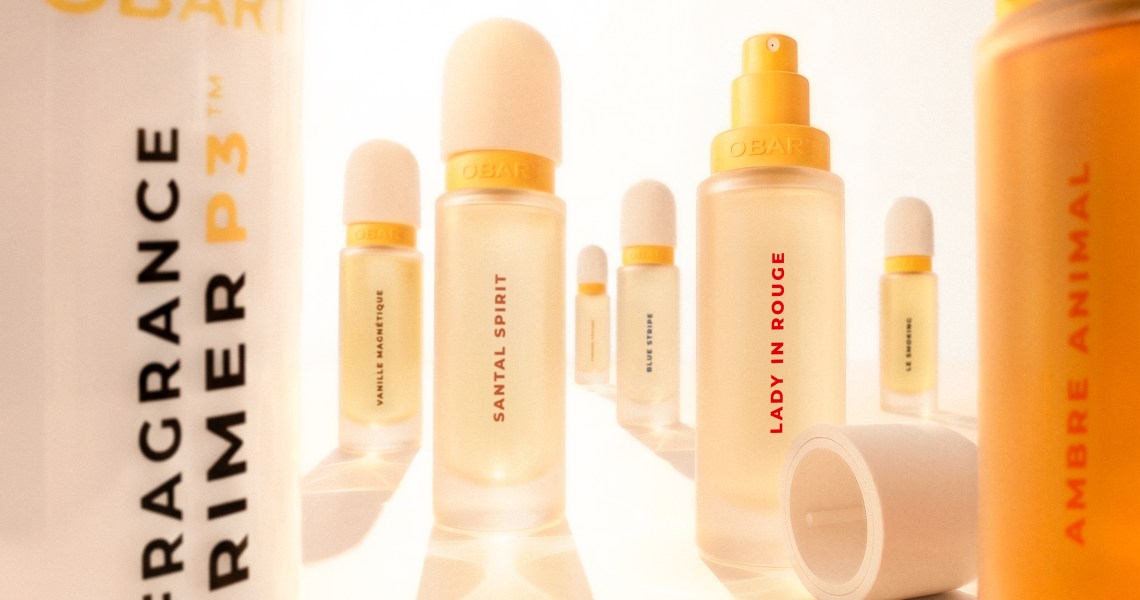
Though raised in France and based out of Dubai, Risch went to South Korea to develop the formulations for what he calls the first “scent-care brand.” On Monday, Obart launched its line of fragrance primers designed to increase perfume’s longevity at Sephora stores in the U.K., EU and Switzerland, followed by an arrival at Sephora U.S. in September. To certain beauty consumers, its “made in Korea” label is a promise of the top tier in beauty technology.
“People felt [K-beauty] was one category. People felt it was a trend. I think now they understand that it’s like a seal of quality and of innovation,” said Risch.
There’s ample motivation for founders to want their brands associated with Korean beauty. According to data from NielsenIQ, U.S. K-beauty sales reached $2.8 billion in early 2026, roughly a 48% increase from a year prior. On Amazon, K-beauty skin-care brand Medicube was the top-selling beauty brand for the second quarter of 2026, according to e-commerce agency Front Row. Sales of Korean facial skin-care sales as a whole on the e-commerce giant grew 80% in the first half of 2026 — three times the growth of sales in the skin-care category overall.
Certain beauty consumers will recall that while the first wave of K-beauty introduced BB creams and cushion compacts to the U.S. market, it didn’t stick around as a driving force in mainstream American retailers. What’s made the craze stickier and more expansive a second time around is Americans’ adoption of a faster, TikTok-fueled approach to beauty trends and commerce.
“Korean people really know how to make good products and sell them well. But they never really knew how to build long-lasting brands,” said Yanghee Paik, CEO and co-founder of Korean-inspired intimate-care brand Rael. “Before TikTok, when [beauty] was a lot about the founder story, brand building, storytelling, I don’t think the Korean companies were as well-equipped to really tackle the U.S. market.”
The growth in the U.S. of influencer-based marketing and livestreaming, already commonplace in much of East Asia, has created an optimal market to sell consumers on the sort of rapid-cycle innovation that Korean brands already do well, Paik said. That growing popularity has allowed K-beauty to spread not only across categories but also into more U.S. brick-and-mortar retailers; Sephora and Ulta are racing to add more K-beauty to their line-ups, and in May, South Korean beauty giant Olive Young touched down in the U.S. for the first time with the opening of its first Los Angeles store. On Friday, the retailer will host Olive Young Festa L.A. 2026, the first U.S. edition of its K-beauty festival in Los Angeles.
That shift has also impacted how Rael is approaching its marketing. When Paik launched Rael in 2017, the brand’s “clean” and organic credentials were a more effective point of differentiation in the pad and tampon aisle. Now, as K-beauty mania has returned and Rael has expanded to skin care and supplements, Paik and her co-founders’ Korean-American heritage, and the fact that the brand’s products like tampons are made in Korea, are increasingly important selling points.
“As our skin-care business crew, as K-beauty also gained a lot more mainstream popularity, it made sense for us to also explain that our feminine care technologies came from Korea, which people are starting to appreciate,” she said.
The growth of K-beauty trends across all categories is impossible to separate from an explosion of Korean aesthetics and products across nearly all aspects of culture; a year after its release in June 2025, the Netflix original film “KPop Demon Hunters” has accumulated over 20.5 billion viewing minutes in the U.S. and has yet to leave the Netflix Global Top 10 chart for even a single week. Unsurprisingly, there are co-branded “KPop Demon Hunters” beauty products, like a sheet mask with K-beauty brand Anua.
“The Korean culture has done such an incredible job in creating this very specific point of view across all the different industries. Whether it’s fashion, whether it’s food, whether it’s wellness, obviously music, I think they have done such an incredible job at putting out the best,” said Ani Hadjinian, co-founder and CEO of Mikayla Nogueira’s brand POV Beauty, which launched in 2025 with Korean-made skin-care products.
Executive moves:
- Alex Kalatzis joins social commerce agency SuperOrdinary as vp of marketing. Kalatzis was previously director of marketing at Tower 28 and held roles at GHD and Supergoop.
- L’Oréal names Rahquel Purcell as chief diversity, equity and inclusion officer for the cosmetics giant’s North America region. Purcell has been with the company since 2016, most recently as chief transformation officer for North America.
- Kira Jackson joins Mary Phillips’ M.ph brand as chief marketing officer. Jackson joins the makeup brand from Set Active, where she served as chief brand officer. Phillips launched her makeup brand in 2025 after years as a makeup artist for the likes of Hailey Bieber and Kendall Jenner.
- Clearstem names Diana Dennett as president. Dennett previously held roles at beauty brands such as Dermalogica and Oliveda. At Clearstem, she will be responsible for overseeing the skin-care brand’s growth across DTC and retail channels.
News to know:
- KJH Brand to launch at Sephora. The beauty brand founded by makeup artist Katie Jane Hughes will arrive online and at more than 300 Sephora doors across the United States and Canada on August 21. Sephora is the debut retail partner for the brand, which Hughes launched in 2023.
- Rare Beauty Brands opens applications for its accelerator program. The Kate Somerville and Patchology owner will provide mentorship and retail opportunities to early-stage beauty founders from underrepresented backgrounds, with winners receiving $10,000 in grant funding and the opportunity to pitch JCPenney.
- Amouage reports a 74% year-over-year sales growth for the first half of 2026 to approximately $360 million. The Omani luxury fragrance company attributed part of its growth to the opening of new boutiques in major cities like Beverly Hills and Shanghai, with a 286% growth in its China business alone.
Stat of the week:
Banana perfume is generating over 191,000 weekly views on TikTok, according to data from consumer trends agency Spate. Its popularity on the platform is up 560% year-over-year, based on views and searches.
In the headlines:
Ronald Lauder, a billionaire G.O.P. backer, closes his wallet. Claire’s is getting a major makeover, starting with the piercing station. I’m tracking 2026 beauty advent calendar launches, from Liberty to Lookfantastic. China’s home fragrance boom still lacks a habit.
Listen in:
In today’s episode of the Glossy Beauty Podcast, host Lexy Lebsack talks with beauty industry agents and PRTNRS Management founders Marissa Alfe and Lauren FitzGerald about how awards show beauty partnerships between artists, brands and celebs come together.
Need a Glossy recap?
Your favorite beauty brands are now also entertainment brands. Exclusive: Jupiter enters Ulta Beauty as the retailer targets dandruff, solution-based hair care. Rhode sells $27 million DTC in one day, plots 19-country expansion. Ulta Beauty bets on the growing scalp-care market with prestige hair-care brand Nutrire. Wellness Briefing: A new class of oral care disruptors hopes to shake up the space with novel offerings, plus news.