When does vintage inspiration become a designer rip-off? This week, a look at the controversy surrounding Connor Ives’ coats and the growing influence of secondhand fashion on luxury design. Plus, what the latest earnings reveal about the booming resale market, my conversation with Emilia Wickstead on the risks of playing it too safe, and executive moves at Ralph Lauren and Bergdorf Goodman. For tips or comments, email me at zofia@glossy.co.
Shoppers asking Seattle-based Rozier Vintage for the Conner Ives look are spending upward of $1,600 on its reworked vintage jackets. The retailer sold 20 pieces within days of launching a dedicated collection on October 25, most in the first hour, according to founder Lizzie Mintus. Its customers are paying a premium for vintage sourcing and alterations, raising a question for designer brands drawing on the same historical styles: What additional value does their label bring?
“We sourced vintage jackets and added custom fur trim for our own collection,” Mintus told Glossy. It launched to Rozier’s First Look subscribers on October 25 and the public on October 26. “Every piece is vintage and upcycled in-house.”
For designers working with vintage, the garments that inform a collection can also compete with it. Specialist sellers can source and alter older pieces to achieve a similar look, making it important for a high-end label to differentiate via craftsmanship, fit and clear signs of a designer’s intervention.
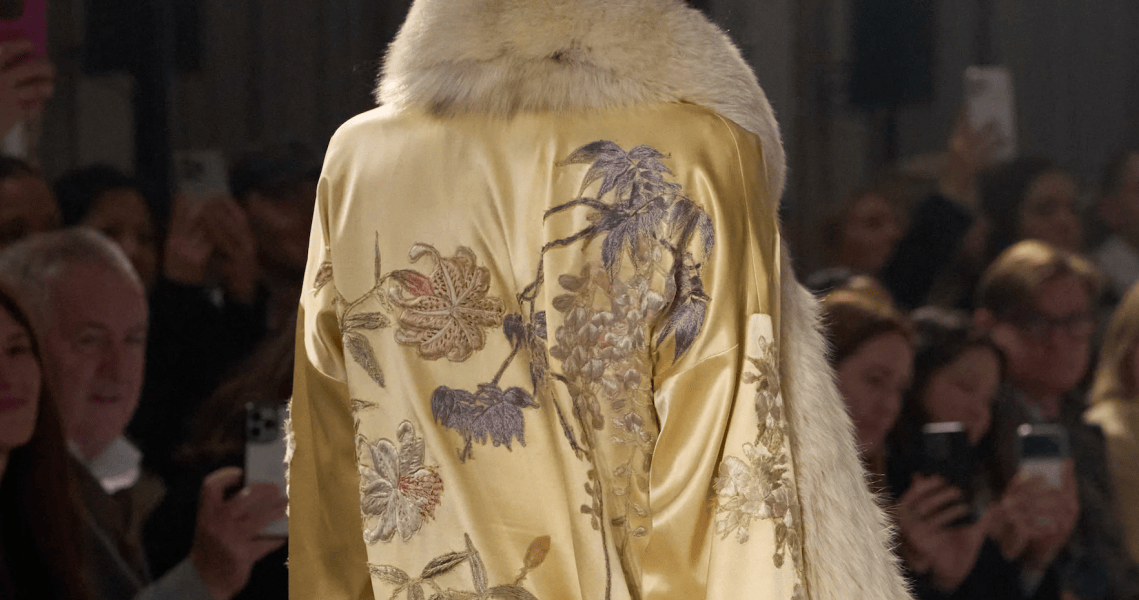
Searches for Conner Ives increased 49% quarter-over-quarter in the third quarter of 2026, according to the latest Lyst Index, released October 28. Additional data shared with Glossy showed searches for embroidered coats similar to his popular mouthful, “The Demi Couture Reconstituted Vintage Fur and Silk Robe,” rose 30% over the same period, outpacing overall coat demand.
“The robe was the standout piece from Conner Ives this quarter,” said Lyst’s Katy Lubin. Interest also extended to the designer’s scarves, dresses and shirts. “The Piano range, made from upcycled vintage silk, was a particular driver.”
For shoppers, however, an appetite for the look does not necessarily require buying the label. Vintage-shopping creator Katie Casper (58,500 Instagram followers) encountered that overlap while sourcing secondhand interpretations of fashion-week looks for her Substack, The Weekly Roundup. In an Instagram video, she described finding an Etsy listing from user Cecile, who runs the vintage resale shop HabitsDuDimanche, that appeared eerily similar to an Ives runway piece.
“I almost need a story behind it,” Casper said, regarding what led to the carbon-copy styles. “I need it acknowledged.” Commenting on the piece discussed in Casper’s video, Instagram user Stacy Collado (2,852 Instagram followers), who runs the Carlotta vintage store in NYC, called the resemblance a “direct copy paste” and “a little depressing / soulless.” The commenter asked: “Why waste materials when the same exact garment […] already exists?”
Casper’s comparison doesn’t establish the runway garment’s provenance or what alterations were made. It captures a question that becomes harder to avoid when shoppers can compare designer collections to decades of clothing available online: Which elements are the contemporary designer’s contribution?
Ives openly incorporates vintage into his work. His published product descriptions show distinct processes behind that proposition. The aforementioned robe is made in London, with collars and cuffs constructed from vintage blue fox coats. Produced to order, each carries an eight-to-10-week lead time. Meanwhile, a separate embroidered silk jacket by the brand states that it was developed from an antique tapestry, with artisans recreating its embroidery.
The product descriptions point to two different approaches: The robe combines silk with vintage fur, while the jacket features newly made embroidery based on an antique tapestry. Neither is described as an unaltered vintage garment. But the term “reconstituted vintage” — used in the name of Ives’ buzzy robe — does not, on its own, tell shoppers which parts are old, which are new or what the designer has changed.
The brand declined an interview request about its use of vintage and rising demand in time for publication.
There is evidence that customers value Ives’ vintage interpretations. The designer has previously said retailers initially passed on his opera robe. When he subsequently offered it through his website, it sold out within a week.
Explaining the work behind a product is also becoming a commercial priority for Etsy, where the vintage listing highlighted by Casper appeared. On its October 28 earnings call, CEO Kruti Patel Goyal said testing showed that making sellers and their creative processes more visible improved buyer trust, confidence and perceived value. For designers working with vintage, the same principle could apply: Explaining what was sourced, altered or newly made gives shoppers a clearer basis for judging the price.
The marketplace reported approximately $2.6 billion in third-quarter gross merchandise sales, up 8.8% year-over-year, according to the earnings. Spending per active buyer rose 3.9% on a trailing-12-month basis, while purchase frequency remained modestly down.
Etsy is incorporating seller stories and craftsmanship details to help customers understand “who’s behind it, how it’s made and what makes it special,” Goyal said.
Rozier’s sales suggest specialist vintage businesses also benefit from sharing similar stories behind their products. Mintus said a Reel featuring its jackets attracted nearly 200,000 views and 3,400 comments, and the business is preparing additional pieces.
“We’re making more to meet the demand, with first access going to our First Look [early-access] subscribers,” she said.
Emilia Wickstead on why consistency can be a weakness
As luxury’s biggest fashion houses turn to new creative directors to reignite consumer interest, London-based designer Emilia Wickstead is considering how much reinvention a brand actually needs.
“I think there is strength in consistency, but I think you also have to be really careful that it’s not so consistent that it becomes boring and too commercial,” Wickstead told me at a London event on Thursday evening, when asked whether a recognizable aesthetic had become a competitive advantage.
The New Zealand-born designer, who founded her namesake label in 2008, has built a following for her sculptural dresses and feminine tailoring. The Princess of Wales, Michelle Obama, Amal Clooney and singer Raye have worn her designs. But Wickstead is wary of allowing recognizable silhouettes to become a creative crutch.
She said some customers return for the same dress in five different colors, knowing exactly how it will fit. “You might see that pink coat dress come up a few times, but you’re going to see 70% of the collection feel really, really different,” she said.
The distinction is particularly relevant as luxury houses try to revive sales through creative reinvention, while still relying on established products and house codes.
When I last interviewed Wickstead in 2022, she was expanding beyond her signature dresses and experimenting with fashion films to reach a broader audience. Four years later, that approach has evolved. For spring 2027, she presented a film featuring Jeremy King, the celebrated London restaurateur who co-founded The Wolseley on Piccadilly, alongside a smaller physical runway show. The Wolseley brand, now operating separately from King, is expanding to New York, where it plans to open a restaurant and hotel in 2027.
Wickstead said the film format allows collections to “travel a little longer,” offering customers who never attend runway shows a more complete view of garments in motion.
The experiment raises another question for luxury brands: whether constant product reinvention is enough, or whether the way collections are presented to customers needs just as much attention.
Executive moves
- Ralph Lauren has promoted Ryan Lally to the newly created role of chief brand communications officer, overseeing global communications, talent and entertainment partnerships, events and experiences, after more than 20 years with the company; he will continue reporting to David Lauren, chief branding and innovation officer.
- Exemplar Luxury Group has appointed Lanessa Elrod president of Bergdorf Goodman, effective November 2, following her tenure as president and CEO of Louis Vuitton Americas, where she oversaw the U.S., Canada and Latin America.
- Etsy announced that chief financial officer Lanny Baker will leave the company on March 1, 2027, after about two years in the role, and will remain an adviser until July 1 while the company searches for a New York-based successor.
News to know
- The RealReal reported a 23% year-over-year increase in third-quarter gross merchandise value, with revenue up 19%, orders up 15% and average order value at $629.
- eBay and Depop generated about $9 billion in combined U.S. fashion gross merchandise volume over the past 12 months, growing mid-20% year over year on a pro forma basis, while Depop’s U.S. GMV, monthly active users and sold items more than doubled in the third quarter.
- Under creative director Louise Trotter, Bottega Veneta has returned to Instagram after nearly six years away, reactivating its account with about 2.4 million followers and a single “Ciao” Instagram Story. It departed the platform in January 2021 under Daniel Lee.
- L Catterton has made a strategic investment in Glance, an AI-powered personal shopping service available on more than 60 million U.S. devices, with 10 million monthly active users and a reported monthly purchase rate of nearly 15%.
- The 170-year-old Paris department store BHV Marais has filed for judicial reorganization after a cash-flow dispute with landlord Brookfield over €37.5 million in contested compensation, less than a year after the start of its controversial Shein partnership, set to end in December.
Listen in
In the latest Glossy Fashion Podcast episode, “After its pop-up controversy, does Good American owe anything to nano-creators?,” Glossy editor-in-chief Jill Manoff, senior fashion reporter Danny Parisi and international reporter Zofia Zwieglinska discuss the backlash to Khloé Kardashian and Emma Grede’s Good American pop-up in New York, where smaller influencers expecting an exclusive VIP experience faced long queues and disappointing treatment, raising questions about how brands manage creator relationships and expectations. Listen here.
Read on Glossy
Why couture house Zuhair Murad is trading the runway for Aldo’s mass-market reach. Can a $62 million investment turn nasal breathing strips into wellness’s next status symbol? Fashion brands are racing to cash in on New York’s marathon fever.