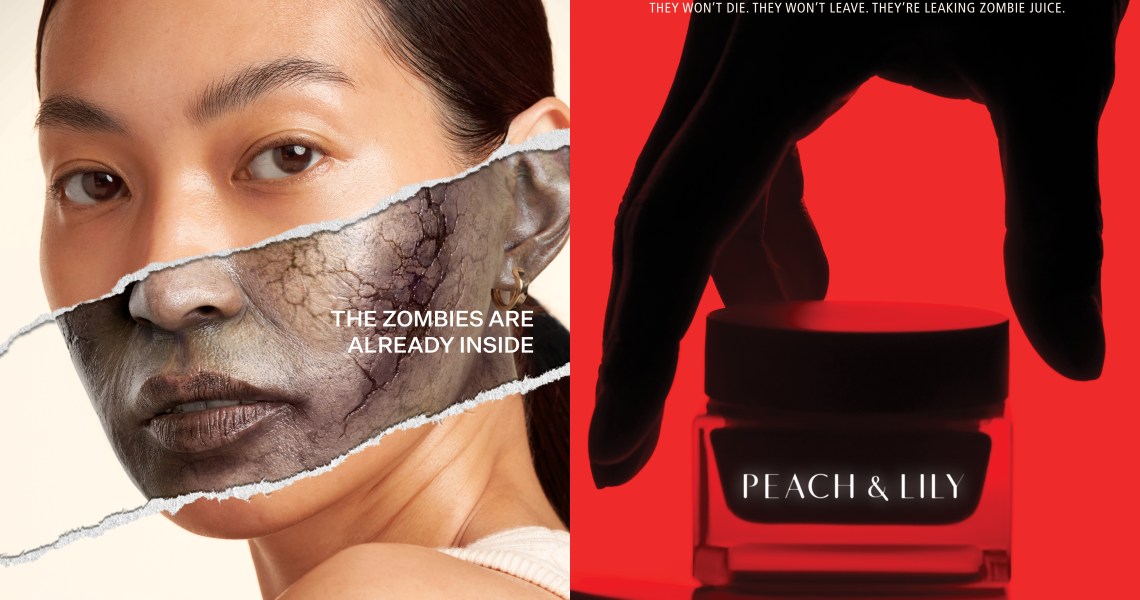
Peach & Lily is betting that, much like brands championing peptides, its focus on “zombie cells” can turn complicated science into a mainstream beauty category.
On Monday, Peach & Lily launched its Advanced Rebound BioGlow Zombie Cream for $59, exclusively at Ulta Beauty. The product is rolling out across more than 1,500 Ulta stores and Ulta.com under a 12-month retail exclusivity agreement, following three years of research and development.
The term “zombie cells” first became popular in aging research in the 2010s, especially after a 2011 Mayo Clinic study showed that removing senescent cells could slow age-related decline in mice. It refers to cells that stop dividing but don’t die and continue affecting nearby tissue.
The Advanced Rebound BioGlow Zombie Cream is designed to address the visible effects associated with senescent cells, or zombie cells. Rather than claiming to remove the cells themselves, Peach & Lily says the formula helps reduce the visible signs of these damaged or stressed cells, including loss of firmness, dullness and wrinkles.
To support the launch, Ulta is giving the product front-of-store secondary placement, additional endcap space, primary positioning on Ulta.com and the cover of the August issue of Ulta Beauty Magazine, the retailer’s monthly customer publication distributed in print and digital formats. The launch will also receive email, paid and organic media support. Peach & Lily said the package includes a mix of no-cost marketing support from Ulta and co-op activity funded jointly with the brand, though it did not break down which placements fall into each category.
The launch will also feature Ulta’s consumer-facing Cue the New event on August 30, when the product will be sampled across all of the retailer’s stores nationwide. Peach & Lily will separately run more than 90 public masterclasses at Ulta locations from August through January 2027. Titled “Longevity Decoded: The Science of Ageless Skin,” the sessions will be led by Peach & Lily employees and brand representatives and will focus on the cream and cellular senescence. A further sampling activation, featuring an ice cream cart, is scheduled for Ulta’s Herald Square store in New York on August 14.
The scale reflects the challenge: Peach & Lily is not only selling a moisturizer, but it’s also introducing a new concept to skin-care shoppers.
“People don’t really know about zombie cells,” said Peach & Lily founder and CEO Alicia Yoon. “We need to educate that it’s a real thing happening in skin and explain how it works, while also educating on the launch.”
People’s unfamiliarity with the concept of zombie cells is also part of the appeal. When the company began training its wider team, Yoon said the most common reaction was some version of, “Wait, what? I have zombie cells?”
The learnings on senolytics primarily come from laboratory, tissue and animal research — and the science is complicated. Because senescent cells are not universally harmful, simply eliminating every zombie cell is not the answer.
Ulta’s decision to support the launch was informed by growing demand for more technical skin-care products.
“While the term ‘senolytics’ may be new to many of our guests, we’ve found that skin-care enthusiasts are increasingly interested in science-backed ingredients,” said Penny Coy, Ulta Beauty’s svp of merchandising. “For us, this launch isn’t about introducing a new buzzword. It’s about making an innovative approach to skin care more accessible.”
Peach & Lily’s patent-pending 6.1% Tri-Senolytic System combines 3% Eterwell Youth, 0.1% fisetin and 3% of what the brand calls a Biosynthetic Placenta Growth Factor Complex. Eterwell Youth is an alpine willowherb extract developed by ingredient supplier DSM-Firmenich. The supplier says the ingredient reduced excess senescent cells by 52% in laboratory testing and has also been studied for its effects on wrinkles, elasticity and smoothness. Fisetin, meanwhile, is a plant-derived flavonoid that has separately demonstrated potential senolytic and anti-inflammatory activity in laboratory research. The growth-factor complex is intended to help repair visible damage associated with senescent cells.
That does not mean the finished moisturizer has been proven to remove zombie cells from consumers’ skin. The strongest cell-clearing figure comes from ingredient-level laboratory testing, not a study showing that the completed Peach & Lily formula eliminates senescent cells on the face.
The brand’s wording reflects this distinction. Peach & Lily says the cream visibly clears “signs of zombie cell damage,” rather than claiming it destroys the cells themselves.
The brand’s formula-level testing included in vitro studies, before-and-after photography, a blinded and controlled clinical study using instrumental measurements, and a consumer-perception study. In the latter, 95% of participants said their skin looked younger, smoother and firmer.
The cream also contains familiar moisturizing and barrier-supporting ingredients including ceramides, amino acids, antioxidants, squalane and glycerin. It arrives as interest in peptides is accelerating across the U.S. beauty and wellness market.
According to New York-based trend forecaster Spate, searches for “peptide therapy” increased 281% year over year on Google as of April 2026, while interest rose 459% on TikTok and 412% on Instagram. Spate expects the trend to grow by a further 33% over the following year.
Peach & Lily is betting that senolytics can follow a similar path, translating a technical biological mechanism into an ingredient category consumers recognize and actively shop. Peptides generally support processes associated with collagen production and firmness, while senolytic ingredients are intended to address senescent cells through a different pathway.
Still, the use of the phrase “zombie cells” seems to mimic beauty brands’ current use of “longevity” in marketing: It reframes familiar concerns around wrinkles, firmness and radiance through newer scientific language.
Yoon sees a precedent in Peach & Lily’s 2018 launch of its Glass Skin Refining Serum, when “glass skin” was still unfamiliar to many U.S. consumers. “At that time, you could Google it or search for it on social media, and it was crickets,” she said. “We knew we had to focus on education.”
Yoon and her husband subsequently visited 100 Ulta stores in two months to explain the product and the wider idea of glass skin to store associates and customers. Eight years later, she said, the serum remains one of the brand’s top sellers. By 2020, Instagram’s #glassskin hashtag had accumulated more than 473,000 posts, while research company Mintel identified the look as a wider beauty trend influencing product innovation in 2019. More recently, Pinterest searches for “Korean glass skin” increased 85% over four months in 2025 when K-beauty expanded in the States.
“I think this will be the same,” she said. “We’re trying to bring senescence into people’s consciousness.”
At $59 for 50 milliliters, the Zombie Cream carries a premium over Peach & Lily’s $45 Peptide Pro Firming Moisturizer of the same size, but remains within typical prestige skin-care pricing.
Ulta will monitor online engagement, reviews and repeat purchases to determine whether shoppers are buying into the concept rather than merely responding to the name. “Repeat purchase is often one of the strongest signals that an innovation is resonating beyond the initial buzz,” Coy said.
Founded by Alicia Yoon in 2012, Peach & Lily began as a K-beauty retail platform before launching its own skin-care line in 2018. The privately held company neared $100 million in annual net sales in 2023, according to previous Glossy reporting.