This week, we’re taking a look at the new round of tariffs on Canadian goods announced by the Trump administration. One category impacted, apparel brands are already looking at speeding up their investment in U.S.-based fulfillment centers. But local fulfillment isn’t cheap.
Just when the tariff chaos of last year seemed to be dying down, President Trump brought the topic roaring back.
This week, the president announced an additional 50% tariff on goods coming from Canada, in retaliation for what the administration called “discriminatory trade practices” on the part of Canada. In an 18-page list, the administration laid out a wide variety of categories that would be affected by the tariffs, including apparel.
For Canadian brands, the decision adds to the continued instability of the lucrative U.S. market and expedites plans for moves like establishing local distribution.
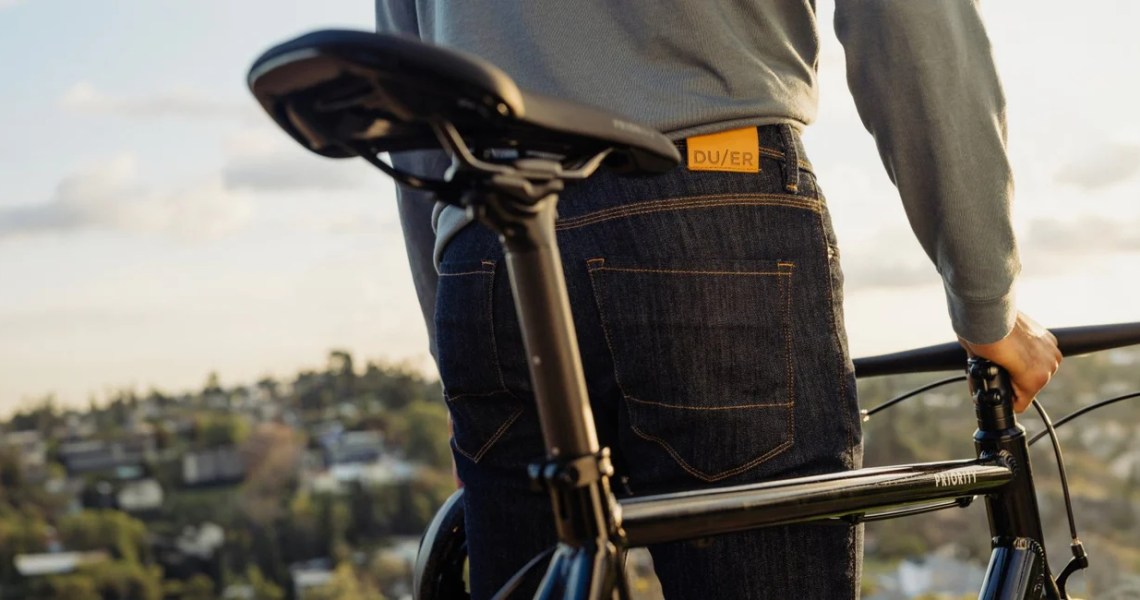
Saravie Brewer, vp of operations at the 11-year-old Vancouver-based activewear brand Duer, said the decision has produced a feeling of acute anxiety. While Duer is manufactured at its owned factory in Pakistan, not Canada, the brand has traditionally had its product shipped to Canada and then fulfilled to U.S. customers from there. Last year, it began having its factory fulfill orders directly to the U.S., rather than moving them through Vancouver first.
“Last year, we had to reprioritize a lot,” Brewer said. “The main priority became how to get goods into the U.S. Now, product is going from Pakistan to our warehouse in the U.S. and distributed from there.”
But the new round of tariffs has expedited Duer’s plan to own its own fulfillment in the U.S., rather than relying on a third-party distributor, which it does now. The U.S. is a major market for Duer. The brand’s revenue is over $80 million annually, with around 45% of that coming from U.S. consumers. By the end of the year, Duer will have 13 physical stores, four of which will be in the U.S. The brand is also carried in several major U.S. retailers like REI and Nordstrom. The brand saw 25% year-over-year revenue growth in the first quarter and is on track for 30% growth for the first half of the year.
“The first reaction is just: What is going to happen next?” Brewer said. “My selfish thought was relief that it’s not immediately directly impacting us. But the broader impact — what this will do to the economy, in general — is concerning. Last year, we saw an impact on consumer confidence and sentiment from all the rounds of tariffs.”
Ssense, the Canadian online fashion retailer, is also responding to tariffs by shifting its fulfillment strategy. The company told Glossy that, while it expects no immediate impact on U.S. orders since most of its goods do not come directly from Canada, it plans to launch a U.S.-based fulfillment strategy sometime in 2027 to help offset tariff issues in the future.
It’s a strategy that other Canadian brands have also embraced in the last year. Aritzia, based in Vancouver, shifted all of its U.S. fulfillment from its own supply chain in Canada to Ohio in October of last year.
But fulfillment costs in the U.S. are rising along with demand. U.S. fulfillment costs have risen by 20% in the last three years, according to the supply chain company Manhattan Associates.
Natalie Zink, international trade attorney at Lighthill PC and former attorney at the U.S. Department of Commerce, told Glossy brands should look at the effects of tariffs beyond duties on products themselves.
“Business should be looking beyond the tariff schedule at where their products and inputs are sourced, how their goods enter the U.S., and where unexpected costs or exposure could arise,” she said. “The U.S. and Canadian markets are deeply interconnected, and understanding that exposure early gives businesses more room to adapt.”
Other Canadian brands Glossy spoke to for this story said that tariffs over the last year have led to higher return rates, due to consumers being dissatisfied with the resulting higher prices. Anila Frroku, founder and CEO of the Canadian womenswear brand Motrati, said that “the long-term relationship [between Canada and the U.S.] has absolutely shifted.” She said return rates for her brand from U.S. customers this year are between 20-30%, compared to 10% prior to tariffs.
The longer-term effects of continued trade warfare between the two countries are difficult to pinpoint. But it’s clear that many leaders believe that mutually beneficial trade agreements with the U.S. are under pressure.
“This is the latest in a series of unilateral U.S. trade actions that began with the U.S. imposing a series of tariffs in direct violation of the Canada-United States-Mexico Agreement (CUSMA), the free trade agreement between Canada, the United States and Mexico,” Canadian Prime Minister Mark Carney said in a statement released by the Canadian government on Monday.
David Eby, premier of British Columbia, said in a TV interview on Tuesday that the Trump administration’s new round of tariffs “feels like an increasingly desperate and flailing approach to relationships with [Canada].”
Stat of the week
If you needed any more evidence that the World Cup was a big deal for brands, StockX data from this week shows how quickly big cultural moments like the World Cup final can impact sales.
- Sales of Spain-related apparel spiked on specific days, including July 14, the date of Spain’s semifinal win over France. The biggest spike came after Spain won the final, peaking at 6 p.m. ET when the match ended.
- Sales of soccer cleats have also jumped. Sales of soccer cleats in 2026 have already surpassed the entirety of 2024. Cleat sales will likely be double 2024 by the end of the year.
News to know
- Nike announced plans to cut off thousands of online distributors across China beginning in January. Instead, it will concentrate sales on its own website and app, along with official storefronts on select China marketplaces like Tmall and JD.com.
- Kate Spade announced Jonathan Saunders, formerly of Alexander McQueen, as its new executive creative director.
- France approved a law that would ban social media use for children under the age of 15. It is the first E.U. country to enact such a ban, though others like Greece, Denmark and the UK have all considered similar laws.