This week, a look at the growth of betting platforms like Kalshi and Polymarket, which are increasingly offering fashion-related bets and courting interest from brands in the fashion industry.
Think you know who will be seated in the front row of a Balenciaga show? What about who will appear at the Met Gala and what brand they’ll be wearing, or whether Miranda Priestly, played by Meryl Streep, will purse her lips in the upcoming “The Devil Wears Prada 2”?
If you’re feeling confident in your fashion industry intuition, these are just some of the fashion-related bets you could wager money on through betting platforms like Kalshi and Polymarket. These platforms, only recently legalized, have swiftly become massive businesses by letting people wager on everything from sports scores to the exact date that FBI Director Kash Patel will be fired by Donald Trump. Kalshi saw its revenue increase by 900% between 2024 and 2025, from $24 million to $260 million, and has a $22 billion valuation.
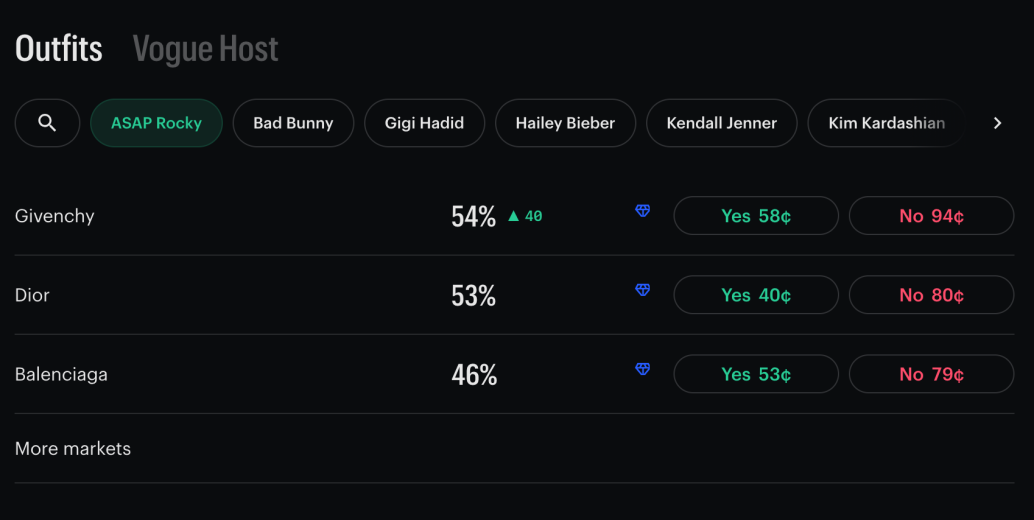
And increasingly, these betting markets are hosting fashion-related bets tied to big events like the Met Gala. They’re also partnering with fashion industry entities like StockX. As betting markets continue to rise in popularity, industry experts say their prevalence in fashion will only grow. But betting markets have also faced significant criticism, which may discourage fashion companies from working too closely with them.
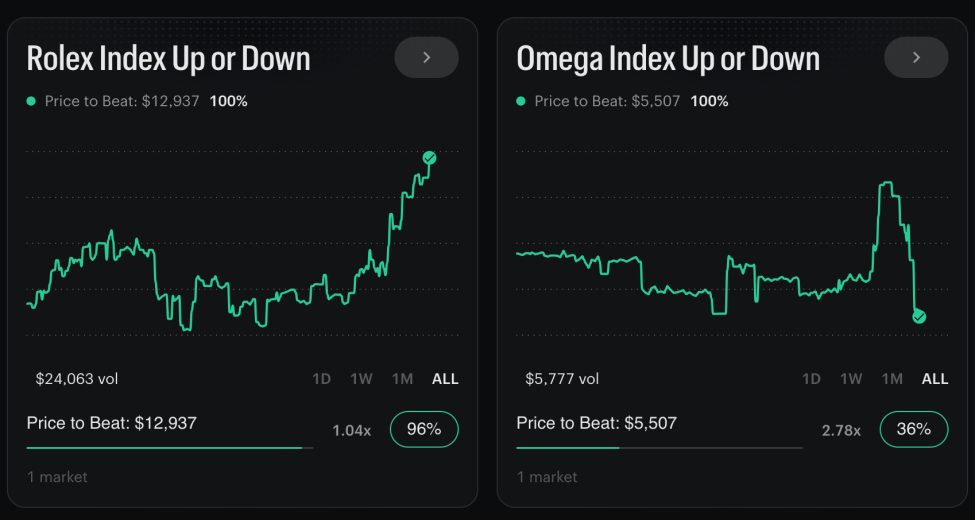
Bezel, the online watch marketplace, is one of the companies that has struck up an official partnership. Last month, Bezel announced a deal with Kalshi to become the official source of truth for all of Kalshi’s watch price-related bets. Kalshi hosts dozens of bets about fashions up for bid, like whether a Rolex Datejust Wimbledon will be above or below a certain price point.
Every market on Kalshi needs to have a clearly defined condition for whether the bet resolves to one outcome or another. For anything related to watch prices, Bezel’s in-house price data will be the definitive source of truth.
Bezel co-founder Quaid Walker told Glossy that he decided to work with Kalshi based on the seeming inevitability that prediction markets will saturate the watch industry.
“The markets are pervasive now, and I felt we had the best data to give the best experience to the watch collectors who are already doing this,” Walker said. “A lot of the bets, like whether Rolex will discontinue the Pepsi, are questions that are already being asked on watch forums.”
But Walker didn’t necessarily endorse Kalshi or other betting markets. He told Glossy that no money has changed hands: Bezel isn’t spending any money to promote Kalshi, nor did Kalshi pay for the use of Bezel’s data.
“People want to financialize their passions,” Walker said. “I don’t think it’s slowing down, for better or worse. It’s becoming pervasive. We just want there to be good data for the people using it.”
The rise of prediction markets like Kalshi and Polymarket has been met with widespread criticism for problems like insider trading and loose regulations.
“Prediction markets have grown fast, and a lot of that growth has come from people who didn’t really know what these platforms are, or how close their mechanics sit to gambling,” said Val Martinez, founder of the women’s sports betting community BettingLadies.com. “They’re sort of like the alcopop of betting, the vape to the cigarette — sweetened, repackaged and soft enough to feel like not-really-gambling. Underneath the surface, however, they are not that different.”
Martinez said she expects to see fashion brands approach betting markets carefully and slowly. The vast majority of bets on platforms like Kalshi — 90% or more — are still based around sports. But bets on predictions like which brands will be worn at the Met Gala could lure in more of the fashion audience.
Whether it’s worth pursuing those customers against the risk of being associated with a legally contentious industry like betting markets is less clear.
“The downsides are just as real [as the benefits,]” said Alexandra Miller, a luxury fashion veteran who is now head of marketing at investment firm 1kx. “Markets speculating on leadership changes or slow performance can amplify negative narratives in a way traditional media never could. There’s also regulatory uncertainty and a cultural mismatch, particularly for heritage luxury brands built on control and scarcity.”
Stat of the week
1 hour, 59 seconds. That’s how fast Sabastian Sawe ran the London Marathon on April 26, breaking the world record and becoming the first person to ever break the two-hour mark.
And he did it wearing Adidas’ Adizero Adios Pro Evo 3 running shoe, which Adidas immediately began integrating into its social marketing. A post from Adidas about the shoe, with Sawe’s time written on it, has over 170,000 likes and generated over $11 million in media impact value for Adidas, based on data from Launchmetrics.
News to know
- Both FedEx and UPS publicly promised to return any tariff refunds to customers. The opening of the federal government’s tariff refund portal sparked criticism that many tariffs were paid by customers but refunds would go to companies instead.
- EBay reported strong sales and a profit of $512 million last quarter. The company’s strong performance comes just after Vinted, another secondhand giant, earned an $8 billion valuation.
- This week, H&M began selling in Nordstrom. It’s the first time the brand has ever sold its clothes on an online marketplace in the U.S.