Launched by Wayfair to be its luxury counterpart, 9-year-old Perigold is in growth mode — against all odds.
“We’ve enjoyed very strong double-digit growth since our launch in 2017,” Rebecca Ginns, global head of Perigold, told Glossy at Shoptalk Spring.
That’s even as overall luxury growth has slowed and the home furnishings market is being hit hard by fewer home purchases due to high interest rates and, of course, tariffs.
In 2025, Perigold opened its first two stores, in Houston and West Palm Beach.
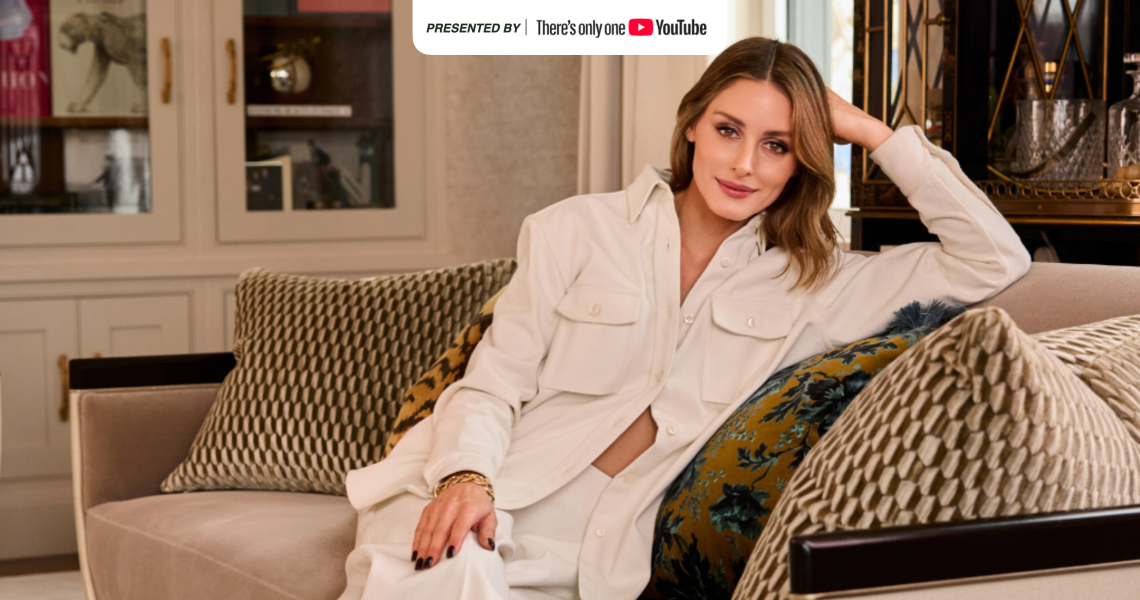
And just last month, the home furnishings retailer invested in its first major content collaboration, centered on fashion icon and entrepreneur Olivia Palermo’s new apartment, which was decorated using Perigold pieces. The company plans to engage in similar collabs on a quarterly basis.
Like the company’s “successful” digital marketing and print catalogs — which it distributes in various sizes throughout the year to current and prospective customers — its new stores and partnerships are awareness plays, said Ginns.
“Our customers love the brand, but we also have a huge amount of opportunity in the fact that we’re still relatively unknown when it comes to luxury home [retailers],” she said. “Collaborations like [with Palermo], for example, can expand our reach, expand our audience and help reach that customer who loves fashion but hasn’t really started to learn the luxury home brands yet.”
In a similar play, Perigold’s e-commerce site and stores feature product curations by high-profile interior designers. It will soon bring other tastemakers, including influencers, into the fold, Ginns said.
According to Ginns, some customers shop both Wayfair and Perigold, even though the two offer totally separate shopping experiences for B2C customers. But there’s also a strong segment of the Perigold customer base that is new to the Wayfair portfolio, suggesting they are more focused on high-end products. “It’s an affluent consumer, for sure,” she said.
“[The Wayfair and Perigold buying teams] go to market separately; we have a team that curates and markets independently,” Ginns said. “But we also really benefit from Wayfair’s technology and supply chain. So, ours is a luxury product and a luxury experience, but with the underpinnings of major infrastructure that Wayfair can support.”
In February, Wayfair Inc., which also owns Joss & Main, AllModern and Birch Lane, among other home retailers, reported total net revenue of $12.5 billion for 2025, marking a year-over-year increase of 5.1%. The company does not break out earnings by brand.
Perigold also has a growing segment of B2B customers who are part of its trade program and include designers, architects and contractors, for example. They use a gated portal with tabs for both Wayfair and Perigold, allowing them to quickly flip between the two. “They may want to shop for contract-grade flooring from Wayfair, but also lighting or plumbing from Perigold,” Ginns said. ”We see them cross-shop.”
Perigold’s top markets in the U.S. include California, Texas and the East Coast. Plus, because Perigold’s customer base tends to have multiple homes, the company also over-indexes in shoppers in “high-vacancy zip codes,” like vacation spots in Cape Cod, Ginns said.
While current customer proximity is considered, to some extent, when opening stores, Ginns called the location selection process “a little bit of art, a little bit of science.”
“We have a list of markets we think are interesting, largely based on their high affluent-customer concentration, their strong growth and the lower competition in the area. But then a piece of it is just totally pragmatic,” she said.
That’s because Perigold stores are large: Its Houston store is 20,000 square feet, while its West Palm Beach location is 30,000, due to the many product categories carried. According to Ginns, stores in the average luxury shopping center are often 5,000-6,000 square feet. As such, pinpointing “the right market and also the right luxury shopping center with a large space that we like” is a challenge, she said.
Ginns said the company has explored department store spaces, calling them “interesting” options. Many, however, are too large — a recently considered option was 75,000 square feet.
While Perigold intends to be in all key markets, eventually, that’s dependent on finding the right locations, Ginns said. At this point, no store openings are planned for 2026.
The expansion to stores has been “humbling,” Ginns said, noting that “service-level expectations are very, very high in-store,” and that there are very different shopping preferences between markets, hinting that unique product assortments will be needed for each new store.
“That certainly has implications for our operations, but it’s also an opportunity,” Ginns said.
As for broader market challenges, Ginns said Perigold has remained somewhat insulated.
“What we see with the luxury [home] customer is that the highs are more muted and the lows are more muted,” when it comes to their responses to broader economic shifts, she said. “A lot of times, the luxury customer has disposable income, and whether they’re willing to spend is more psychological [than essential]. We don’t tend to see the swings that other brands at other price points may see.”
What’s more, as Perigold is not its products’ importer of record but instead the platform connecting products to customers — it sells products by more than 1,000 brands, according to the company — it’s not directly paying tariffs. However, its suppliers are paying tariffs, so maintaining close relationships with them to manage the expectations of its luxury customers has become increasingly important, Ginns said.
On a similar note, Perigold has focused on meeting its customers’ evolving standards around shipping times. “When we started, the common perception was that luxury customers would wait,” Ginns said. “That was true, to some extent. But then, more luxury brands launched online, and the expectations around speed got a little higher.” The company also has a large made-to-order business, with some pieces requiring a lead time of just two to three weeks.
“Customers want it when they want it,” Ginns said. “They want to be able to specify, ‘I want it on this day between these two hours,’ and we should be able to deliver that. We’re not quite there yet, but we’re getting close.”
Among other focuses is maintaining the company’s current growth trajectory, she said.
“Perigold has been around for a bit, but I feel like we’re just getting started,” she said, noting that the company has already expanded from strictly selling furniture and decor to also selling home improvement products — It has a large luxury plumbing section, for example — and large appliances by the likes of Viking and GE Monogram. It recently forged a partnership to offer custom cabinetry, Ginns said, and it’s planning for further expansion.
“Distribution of appliances is often limited to a certain geography with a cheap delivery agent in that geography, which means if you want to buy here and ship over there, you actually can’t,” Ginns said. “That’s a problem for our customers shipping to their second homes, but that’s something we can unlock.”
Along with category and store expansion, B2B customers offer Perigold a growth opportunity. “They have a solid share of our business, and I expect that, in the coming few years, we’ll focus on offering more conveniences to those B2B customers who shops luxury,” Ginns said.
In addition, expanding its international presence is a growth lever Perigold will likely pull, potentially following in Wayfair’s footsteps by setting up shop in Canada.
Ginns said Perigold is set up for success, in terms of the current AI-driven evolution of the shopping experience. “Being within Wayfair, we have such deep tech capabilities, and so I expect us to be a leader in agentic shopping and [our ability to] meet the customer,” she said.
All of Perigold’s leaders are focused on AI, Ginns said, because it touches every part of the customer journey. “We’re looking at AI for imagery generation, both for marketing and product pages,” she said. “Historically, it has been really challenging and expensive for a luxury supplier to make a $7,000 sofa selling next to a $2,000 sofa look different. But this is gonna flip all that on its head, and there are similar opportunities in basically every area of the business.”