The denim wars are continuing to heat up, with brands like American Eagle, Gap and Levi’s all looking for ways to edge out their competition. But a new crop of brands is attempting to break into an already-crowded market: activewear brands.
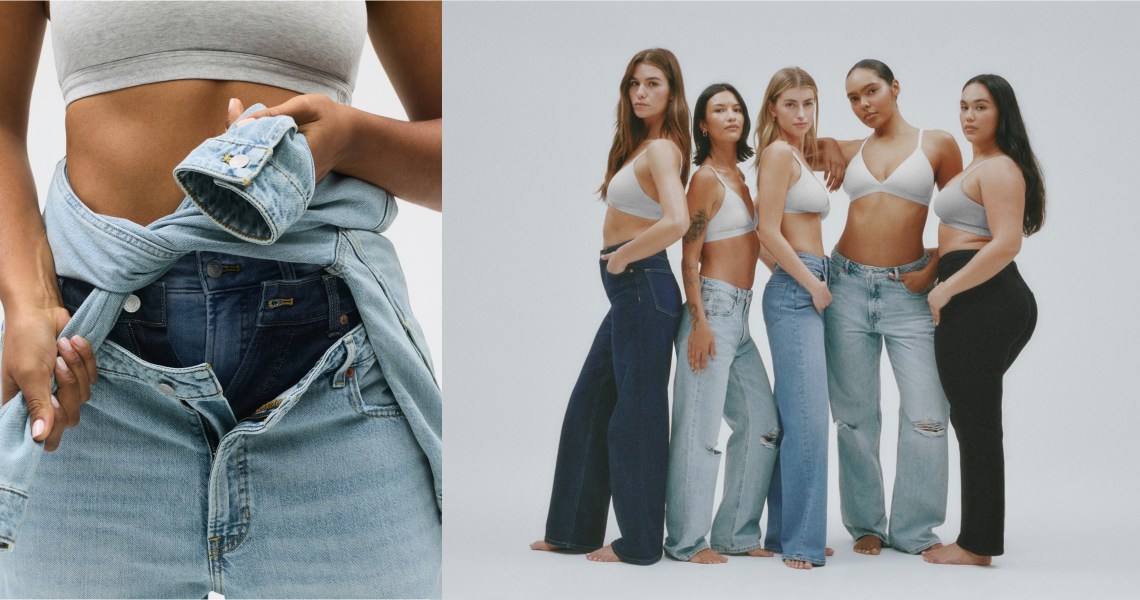
Within the last week, Fabletics launched its first premium denim collection, and Vuori came out with its first women’s denim collection after entering the men’s denim market in September of 2025. They join other active brands like Lululemon and Halara that have released denim collections in recent years.
For Fabletics, the decision was inspired directly by surveys of its more than 2 million members.
“More than 1 million of our VIP members told us they wanted denim from Fabletics,” said Kelli Dugan, chief merchandising and design officer at Fabletics. “And with this collection, we’ve made very intentional decisions surrounding fit, silhouette, fabric and style to deliver exactly what they know and love about Fabletics, re-imagined in classic denim.”
Experts say the move toward denim by active brands is likely driven by waning demand for activewear among American consumers.
“This move makes a lot of sense when you look at what’s happening in the broader market right now,” said Jen Boersma, editor-in-chief of The Tee List, a media company focused on the intersection of golf and fashion. Denim is typically against the dress code of many golf clubs, but active golf brands like Redvanly have begun pushing the envelope with denim releases.
“Athleisure had a massive pandemic boom, but that growth has been slowing, and savvy brands are looking for the next category to own,” Boersma said. “Denim is having a real moment, and these brands are paying attention.”
After the pandemic, activewear brands have slowly seen their sales slipping. Gap reported that same-store sales at Athleta dropped 10% last quarter, while Gap’s other brands all saw growth. Activewear as a whole is still growing, according to data from Boston Consulting Group, but growth is projected at 3-5% in the next three years. That’s below the double-digit growth percentages of the early 2020s.
Meanwhile, denim has seen healthier growth after experiencing a slowdown during activewear’s ascendance. Denim growth increased from 0.7% to 2% in the last year, while activewear dropped from 3% to 2% in the same period, according to Euromonitor. The Swiss financial services firm UBS said in a report last summer that denim’s resurgence isn’t just a cyclical fashion trend and that it expects denim growth to remain stable for the foreseeable future.
But denim is also a crowded and competitive market, and brands like Fabletics and Vuori have an uphill battle against both giants like Levi’s and niche premium brands like Agolde. Some stylists are skeptical that activewear brands pursuing denim will be able to break through.
“I think the activewear lines should stay in their lane,” said stylist Amanda Huller. “Come up with a fresh new idea for activewear. The denim market is saturated. This is where some activewear brands will struggle. There’s plenty more innovation to be done in activewear that can transition from workout into everyday wear without going after denim, and many major denim brands are already innovating ways to make their specific materials more comfortable.”
But other experts suspect that activewear brands may be more competitive in denim that one might expect.
“A lot of the athleisure brands are poised to become major players in the denim world,” said Maggie Gilette Sowislo, a fashion expert and principal at the Chicago-based fashion events company The Curio. Sowislo has years of experience working in high-end denim shops. She said the high degree of loyalty that active brands have — Fabletics has over 2.3 million active members — could be an asset.
“Since leggings have been the go-to pants for almost a decade, for someone in their twenties, purchasing from an activewear brand may be seen as a more approachable way to branch out into jeans than buying from a typical heritage denim brand,” Sowislo said.
Another stylist, Melony Huber, who is also the design director at the womenswear brand La Peony, echoed the point that activewear brands’ large loyal followings are powerful assets.
“Brands like Vuori, Fabletics, Shapellx and Lululemon already have a strong, established and loyal customer base,” Huber said. “They already have the loyalty of consumers and a large following of people who love their brand and clothing, so expanding into denim allows them to evolve into a more complete lifestyle brand. It is smart because it pushes their reach beyond a workout brand, and it’s absolutely a way for them to offer more options to their already loyal following.”
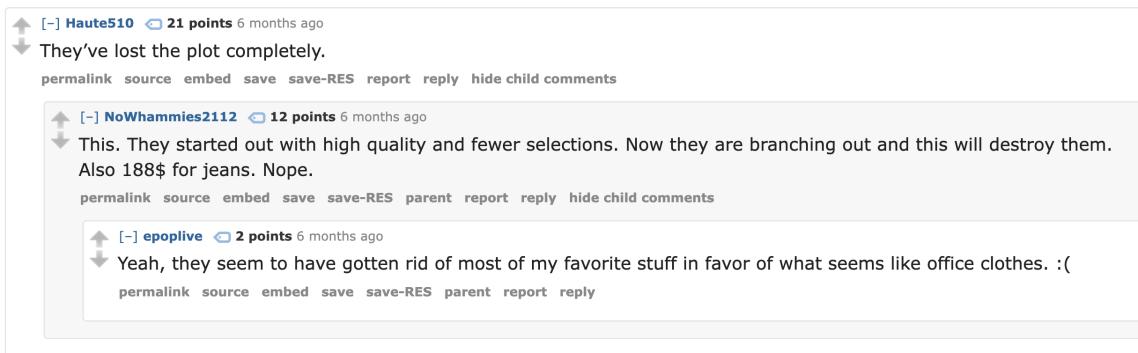
Both Vuori and Fabletics have dedicated Reddit forums unaffiliated with the brands. Reaction on Reddit has been mixed, with more positive comments on Fabletics’ denim announcement. Subscribers to the Vuori subreddit were more skeptical of the brand’s expansion.
One point of differentiation for active brands is in their materials. Vuori’s denim is made with 30% synthetic fibers and includes elastane, while Fabletics’ denim is a more traditional 100% cotton. Anthony Bolognese, owner of the Washington D.C.-based boutique Capitol Hill Clothiers said margins on both denim and synthetic materials likely provide an incentive for brands to enter the denim market.
“Denim is already pretty cheap as a fabric,” he said. “It’s even cheaper when your brand primarily, if not exclusively, mills or purchases a polyester-blend denim. These brands are used to selling polyester to their customers at massive markups. Why not expand into ‘stretch denim’?
Based on his knowledge of material prices, Bolognese estimates that, on Vuori’s $200 jeans, about $180 of is profit. Vuori was unable to respond in time for publication.