The gap between TikTok Shop creators who are scaling and those falling behind feels more pronounced than ever. Some creators are driving seven- and eight-figure sales through the platform. At the same time, content creation has become cheaper, more creators are entering the market and brands are spreading budgets across more voices.
Those finding success are relying on proven formulas, which have evolved over the years.
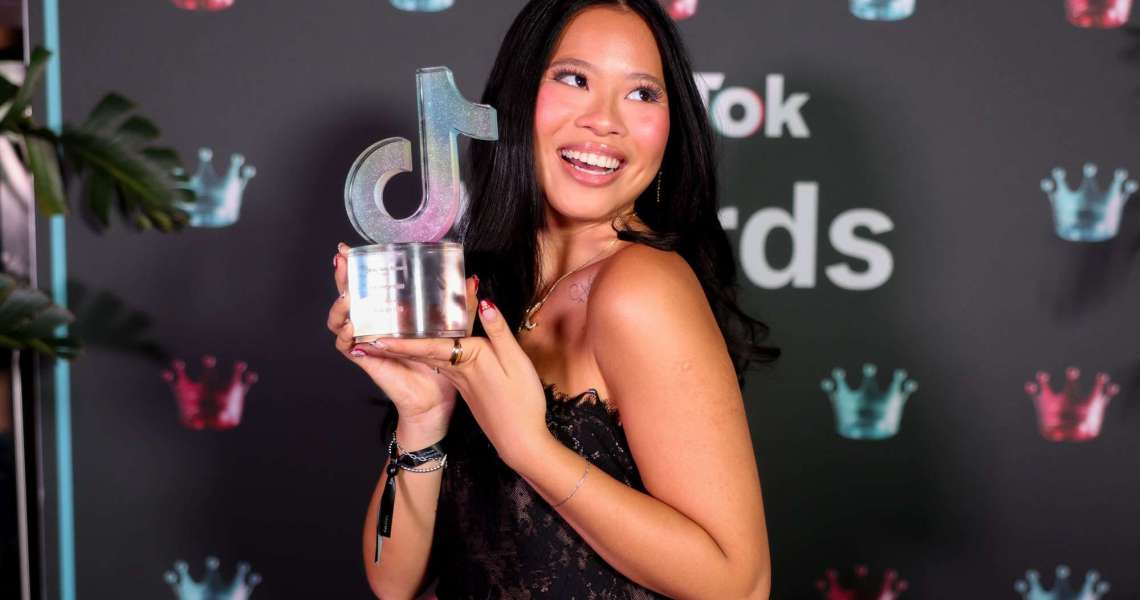
Among them are winners of December’s 2025 TikTok Shop Awards, several of whom Glossy spoke to for this story. Brooke Sobol (@boise_brooke; 272,000 followers), beauty creator Gini Vasquez (@giniglow; 153,000 followers), lifestyle and beauty creator Kelsey Martinez (@itsmekelsc; 423,000 followers), size-inclusive fashion creator Shamela Brown (@klothesminded; 126,000 followers), and beauty and livestreaming creator Lexi Rosenstein (@lexirosenstein, 133,000 followers) served as sources. Collectively, they reach more than 3 million followers and have driven tens of millions of dollars in sales through TikTok Shop.
Unanimously, the creators said sustained results were no longer relying on viral moments. Instead, each had defined a repeatable system that consistently produces sales. Formats are reused, products that convert are brought back repeatedly, and the posting cadence is as important as storytelling.
“I’ve learned that videos aren’t pushed out to the same people, and TikTok Shop rewards consistency and quantity,” said Sobol, a top 1% TikTok Shop affiliate who generated more than $7 million in sales in 2025, including nearly $1 million in March alone.
Sobol posts at high volume, focusing on beauty, skin care and everyday lifestyle products. Much of her content is built around bundle-led recommendations, where complementary products are sold together as routines. That strategy has made her valuable to brands looking for predictable sell-through. She now works with brands on exclusive bundles and has established long-term affiliate partnerships, effectively functioning as a direct sales channel across multiple products at once.
Vasquez has generated more than $10 million in cumulative TikTok Shop sales over the past two years using a similar model. Her content, centered on skin care, fragrance and product education, is designed to drive repeat purchases.
“[In 2025] I stopped chasing virality and focused on consistency and conversion,” she said. Vasquez now works with brands to identify what converts, then reintroduces those products through bundles, routines and repeat content formats rather than relying on one-and-done posts around product launches, for example.
For her part, Martinez has found success posting face-to-camera explanations of how products fit into her daily routines. Last year, she drove $175,000 in sales from a single TikTok Shop video featuring Tarte concealer and helped a lip product to sell out across both TikTok Shop and Sephora, she said. As she sees it, viral moments can drive short-term lifts, but consistent audience trust is what sustains sales. That trust has increasingly translated into deeper partnerships with the brands she consistently sells for, extending beyond TikTok Shop into retail and longer-term collaborations.
On the fashion side, Brown has driven nearly $5 million in gross merchandise value since joining TikTok Shop in November 2024, including $700,000 in sales during one of her highest-performing months. Her try-on videos focus on bras, shapewear and size-inclusive fashion, emphasizing fit and real-life wearability. Much like the others, she said, “I stopped treating TikTok Shop content as one-off viral moments and started building it like a repeatable system.” Also like the others, she now prioritizes ongoing affiliate relationships that support steady sell-through rather than novelty-driven launches.
Behind the scenes, creators say their ability to scale has also been shaped by new tools. Many now rely on AI-powered software to format, edit and process content at volume. Tools like CapCut, Descript and Adobe’s AI features are used to automate captioning, resize videos across formats and speed up editing, while others use ChatGPT or Notion AI to plan scripts, organize content calendars and track performance. The result is faster production and lower costs, but also a lower barrier to entry for new creators.
That cost compression is reflected in brand spending. According to Collabstr’s 2026 Influencer Marketing Report, nearly 80% of influencer collaborations now cost under $300. Average TikTok payouts sit at $186 per engagement, while UGC content averages $154. The number of TikTok-specific campaigns declined year over year on the platform, while UGC campaigns grew 133% as brands prioritize reusable assets that can be deployed across paid media, product pages and e-commerce.
Kyle Dulay, founder of influencer marketplace Collabstr, said brands are deliberately spreading budgets across more creators to test faster and reduce risk. “By working with 15, 20 or 30 creators, brands get more shots on goal,” he said. “They can see what angles are working and refine much faster than if they put their entire budget into one or two creators.”
For creators, that shift has raised expectations. Although AI tools have made content cheaper and faster to produce, competition has intensified. Fees have come down, output demands have gone up and creators are under increasing pressure to prove their value through measurable performance.
And for brands, as budgets continue to shift away from Meta and Google toward commerce-led platforms, TikTok Shop creators are increasingly functioning as decentralized retail media networks. “Content lifespan is much shorter now,” Dulay said. “As a result, brands want higher volumes of content, whether that’s for their own channels, ads or product pages.”