This week, I checked in on the trends primed to drive the fragrance market in 2026. Additionally, Sacheu updates its C-suite with new additions, Pat McGrath goes up for sale, and Coty welcomes an interim CEO.
Asian brands, savory aromas and Gen Alpha consumers are poised to dominate fragrance in 2026
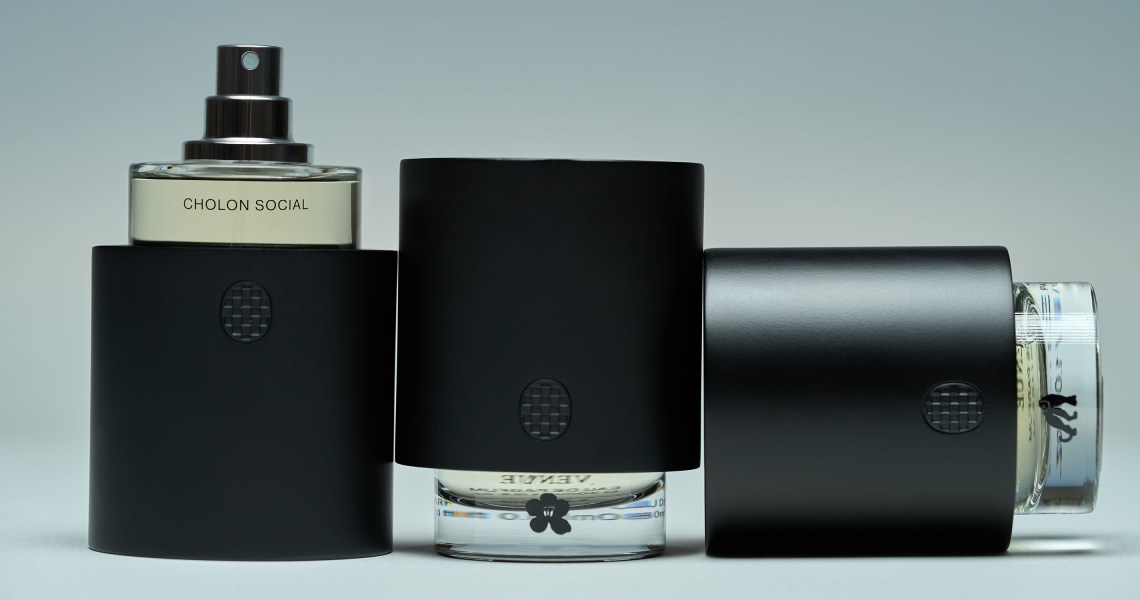
Though just a few months old, the niche perfume brand Venue has already found supporters across the globe. Launched in September and based between the U.S. and Vietnam, the brand has secured retail partners including Dover Street Parfums Market in Paris and the New York City niche boutique Stéle.
“Our goal is to have our own customer experience, [our own] store at some point,” said Venue co-founder Daphne Pham. “From now until then, we really want to have a curator-first distribution strategy, meaning working with a very small group of retailers who share our values and sensibility.”
Pham and her co-founders, VSCO alums Thanh Nguyen and Wayne Wu, aimed to look at cultural narratives like Vietnamese history over market research trends in building Venue. Fortunately for them, Venue happens to sit at the nexus of a few key trends poised to lead the fragrance market in 2026. That includes the growing prominence of many Asian perfume brands on the global stage, as well as an appetite for boutiques and brands that prioritize niche curation over mainstream appeal.
“I feel like the center of gravity for fragrance, or for luxury, is moving beyond traditional places like Paris or New York City,” said Pham.
Venue is not the only Vietnamese perfume brand to make a splash on the global perfume market in recent years. D’Annam, launched by Nick Hoang in 2023, has gained popularity in the U.S. for scents like Matcha Soft Serve and White Rice. Vietnamese perfumer Sy Truong won a 2024 Art & Olfaction award for the scent Molotov Cocktail for Sylhouette Parfums; Truong is also the nose behind numerous scents for Toouch, the Vietnamese brand which made its way to U.S. niche perfume retailer Luckyscent in October.
“I think what might surprise a lot of people is how sophisticated the local fragrance culture is,” said Pham. “There are a lot of niche specialty stores. Many young people nowadays in Vietnam skip the prestige [category] entirely and move to a niche.”
Major conglomerates have taken notice of the globalization of perfume, as well. In recent years, L’Oréal has invested in Korean brand Borntostandout, as well as Chinese brand To Summer, while Estée Lauder took a minority stake in Mexican brand Xinú in November. And that trend may continue into 2026.
“I’d be very surprised if D’Annam doesn’t take in a huge amount of money,” said Steven Wildenberg, founder and CEO of sales at creative agency Golden Meteors. “Because this brand is like the niche brand of ‘25 and is selling out at all the perfume stores — they can’t keep it in stock. And it’s a very small kitchen table operation.”
While a spate of new brands — Venue, D’Annam and Toouch, all launched in the 2020s — makes for a crowded market, there is also a growing home of indie retailers whose consumers are eager for such labels.
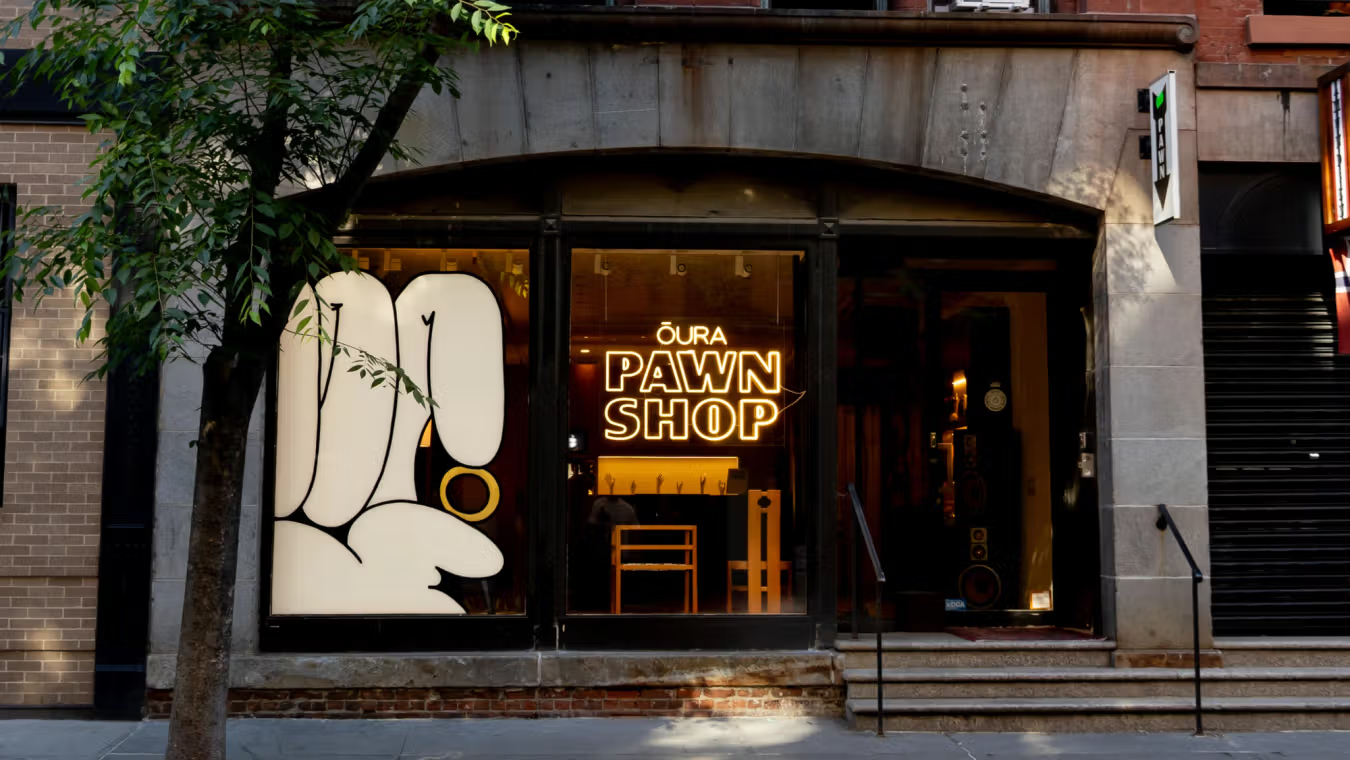
“You have no idea how many emails we get from people that are opening stores and want the brand,” said Carlos Huber, founder of niche perfume line Arquiste. He said requests to carry his Arquiste line are specifically coming from independent boutiques in smaller cities across the U.S., like Denver, Nashville and Las Vegas. And those indie stores are quickly finding a market of fragheads who are seeking out the kind of niche brands and experiential marketing not often found in large-scale department stores.
“The department store is no longer where you launch a fragrance at all,” he said.
With so many players competing for the niche fragrance consumer, staying ahead means offering more quality and value, said Chloé Prigent, manager of the Parisian perfume house D’Orsay. She said the brand is phasing out roughly a handful of fragrances from its line to focus on its top 10 best-sellers. New consumers have also gravitated to D’Orsay’s extrait de parfum line, which it launched in 2024 and expanded in 2025 with scents like the on-trend Holy Berry, a milky strawberry scent that Prigent said has done well in Asia.
“You have to be the best to survive. And being the best means you have to elevate yourself,” she said. “We know there are really 10 that are strong, and we decide to bet on the best.”
Going into 2026, Prigent said D’Orsay will concentrate on launching regional exclusives and limited-edition launches.
“Limited edition, creative collaborations and regional exclusives also help us to stand out and create more targeted, more experience-driven moments for the consumer,” said Prigent.
Huber, as well, is contemplating the launch of extrait versions of some of Arquiste’s best-selling scents for 2026. But while some forecasters and conglomerates have cautiously anticipated a slowdown in the fragrance market, Huber sees a whole new generation of consumers eager for more fragrances. He said he has seen trade shows like Esxence in Milan and ScentXplore in New York become increasingly public-facing as consumers seek to try out the latest in niche perfumery.
“The excitement I see from people about fragrance, and especially younger people, is growing. It’s not diminishing,” said Huber. And that applies not only to Gen-Z boy fragheads, but also to even younger consumers. “Whenever friends have kids or young teenagers, or, like — I kid you not — even five-year-olds, they get obsessed [with fragrance]. And they come to my office, and they all want samples.”
Gourmands have dominated the fragrance category in recent years, with sweet-tooth scents focused on notes like vanilla and marshmallow appealing to those many young consumers discovering both niche and mass fragrance. But both Arquiste and D’Orsay are looking to expand the gourmand category in 2026 to include savory aromas.
“We’re doing that rice vapor, which I’ve seen other people using before. We’re doing shitake mushrooms. We’re doing soba buckwheat. We’re using soy sauce,” said Huber of an upcoming Arquiste scent that will be part of a Japanese-inspired launch. “It’s all umami notes. It’s like looking for the new gourmand.”
Executive moves:
- Coty CEO Sue Nabi to depart the conglomerate. Former P&G exec Markus Strobel has been named interim CEO. The beauty giant has reportedly considered selling off its makeup brands like CoverGirl and Rimmel to focus on its more profitable fragrance division, where it owns designer licenses like Marc Jacobs and Burberry.
- Sacheu hired former K18 chief marketing officer Michelle Miller as its first CMO. The beauty brand, known for its viral peel-off lip stain, also brought on former Topicals chief financial officer Connie Kim as CFO.
- Leandro Barreto will take on the chief marketing officer role at Unilever, effective January 1. Esi Eggleston Bracey will depart as chief growth and marketing officer. The conglomerate, which owns brands such as Dove and Liquid I.V., is in the midst of a restructure through 2027 as it plans to cut 7,500 roles across the globe.
- Ariadne Oliveira joined Revlon as vice president of marketing innovation for global professional hair. She was previously global senior vice president of the hair division at professional hair-care brand Wella.
News to know:
- Pat McGrath Labs’s assets are up for sale as the once viral beauty brand takes a hit. U.S.-based firm Hilco Global is handling the sale, with bids due January 26. Founded by legendary makeup artist Pat McGrath in 2015, the brand secured an investment from Eurazeo in 2018 that valued the line at more than $1 billion. McGrath designed Louis Vuitton’s debut makeup line, La Beauté, which launched in September.
- Coty sold its 25.8% stake in hair-care brand Wella to investment firm KKR for $750 million. The sale comes as the conglomerate has shared plans to consolidate its business, including the rumored sales of its cosmetics lines CoverGirl and Rimmel.
- Anya Taylor-Joy, Jisoo and Willow Smith were named the new faces of the Dior Addict perfume line. The new scents were created by Dior in-house perfumer Francis Kurkdjian and will launch in January along with reformulated versions of Dior’s Addict Lip Glow Oil.
Stat of the week:
TikTok Shop now drives 55.4% of social commerce videos, compared to 31.7% for Amazon, according to data from Virlo.ai. Micro creators are driving higher engagement, as well, with small accounts achieving a reach of up to 95 times their follower size on TikTok Shop.
In the headlines:
What happened to Karoline Leavitt’s lips? Culture predictions for 2026: 19 thoughts on AI, pants, and everything in between, guest starring Chloe Malle, J Wortham, Tony Wang, and more. Line Sheet’s beauty mailbag: ’26 forecasting edition. How a beauty brand loses its cool — and gets it back.
Listen in:
As 2025 comes to a close, the Glossy Beauty team — Sara Spruch-Feiner, Lexy Lebsack and Emily Jensen — came together on the Glossy Beauty Podcast to reflect on some of the defining themes that shaped the beauty industry, and their own reporting, this year.
Need a Glossy recap?
Read my lips: How lip products saved makeup in 2025. Wellness Briefing: The 2025 wellness trends that drove the industry this year. Exclusive: Target continues to lean into K-Beauty with the addition of Haruharu Wonder. The campaigns that caught marketers’ attention in 2025.