As artificial intelligence becomes embedded within luxury operations, from marketing and personalization to inventory and clienteling, brands are increasingly doubling down on what technology cannot replicate: emotional connection.
Over the past decade, luxury has relentlessly optimized for ROI, investing heavily in data, CRM systems and performance marketing. And at Shoptalk Luxe, vendors and brands alike described deeper AI integration than ever before, with automation now underpinning everything from media buying to e-commerce search. But as growth slows and consumers become more selective, executives are questioning whether efficiency and scale alone can sustain long-term value.
“At the very top end of luxury, you’re not selling a product, you’re selling a feeling,” said Michael Ward, managing director of Harrods. “People don’t come to Harrods just to transact. They come for theatre, inspiration and experiences that stay with them. That emotional connection is what brings them back. We’ve invested heavily in private shopping, so we have three grades now of private shopping — a fantastic service at the entry point.”
Ward said technology now plays a critical role in understanding customer behavior, but it cannot replace atmosphere or intuition. “AI helps us see patterns at scale,” he said. “But if you reduce luxury to efficiency, you lose what makes it special.”
That tension has surfaced repeatedly across the conference this week. AI has often been referred to as core infrastructure, but many leaders have stressed that it has made the human layer more important, not less. As discovery and transactions fragment across platforms, brands have less control over where customers encounter them and more pressure to deliver meaning wherever those interactions occur.
As a result, brands are rethinking what success looks like. Gaetano Sodo, chief digital officer at Loro Piana, said traditional e-commerce metrics often fail to reflect luxury buying behavior. “High bounce rates don’t necessarily mean failure,” he said. “Many clients start online and complete their journey in-store.” He went on to call customer lifetime value a more meaningful success indicator than a single-transaction conversion.
At Loro Piana, digital tools are used to support store advisors with insights about client preferences and behaviors so they can deliver more informed, high-touch service in-store. Advisors don’t get raw data, but instead grouped insights into a customer’s preferences based on their search behavior, Sodo said.
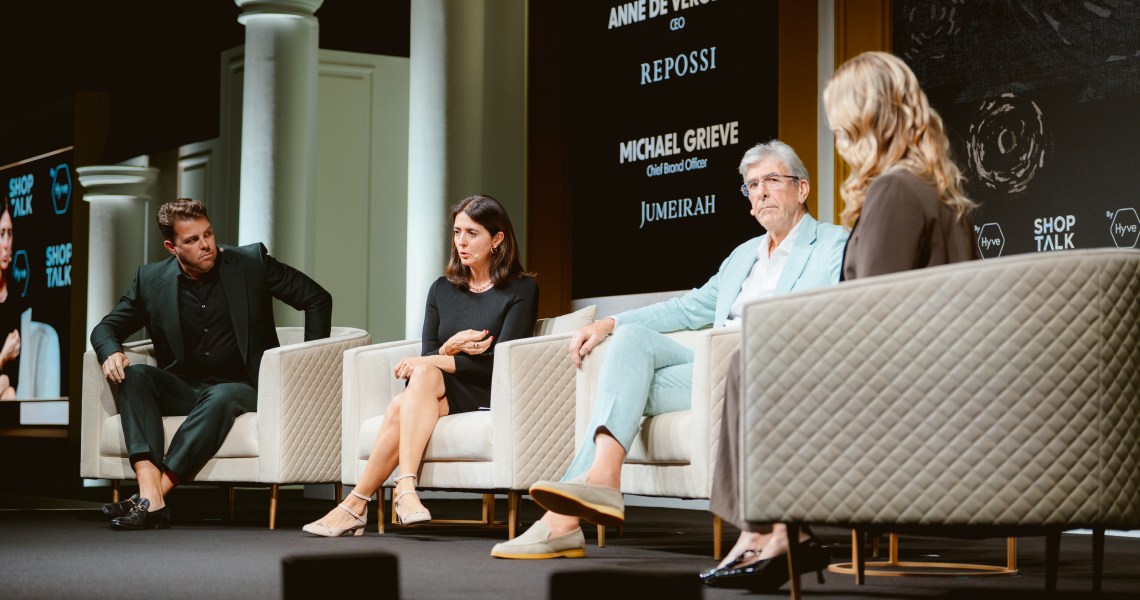
In categories like fine jewellery, the focus on emotional value is even more pronounced. Anne Azais de Vergeron, CEO of Repossi, said consumers are buying less frequently but with greater intention. “Luxury today is about meaning,” she said. “Clients are not looking for accumulation. They want pieces that reflect who they are. That emotional layer is what creates longevity.”
LVMH-owned Repossi has resisted the pressure to scale aggressively, even as technology makes it easier to do so. The brand focuses on bespoke appointments and co-creation, working closely with clients on custom pieces and redesigns that emphasize personal meaning and long-term attachment over impulse buying. “Creativity doesn’t fit neatly into performance metrics,” de Vergeron said. “But without creativity, there is no desire. And without desire, there is no luxury.”
Omani fragrance brand Amouage has taken a similar view. CEO Marco Parsiegla described scent as one of the most direct emotional triggers available to brands. “Scent goes straight to memory,” he said. “It creates a deeply personal response that algorithms alone cannot replicate.” While digital tools support discovery and distribution, Parsiegla said emotional storytelling remains central to the brand’s strategy. At Amouage, boutiques, for example, are designed as sensory spaces. Parsiegla said customers spend “hours” playing with scented and digitized fragrance combination cubes found on a special display in the brand’s stores.
Hospitality leaders argue that this emphasis on emotion has long been fundamental to their industry and is now influencing luxury retail more broadly.
Philippe Zuber, CEO of luxury hotel group Kerzner International, which owns hotel companies Atlantis, One&Only, the wellness-focused SIRO, and Rare Finds, said hospitality measures success beyond transactions. “We talk about return on emotion,” he said. “How welcome did the guest feel? How memorable was the experience? In hospitality, your product really is the experience you’re serving from the moment the guest arrives until they leave.”
As technology automates more operational tasks, he added, the role of people becomes more visible and more valuable as they become the stewards of the human connection with customers. For brands present at the boutiques in Kerzner’s properties, the company pairs the shopping experience with service rituals like curated arrivals, personalized gifting and experiential dining before or after purchases.
The shift has become more pronounced as traditional growth levers show diminishing returns. With luxury demand from the biggest groups like LVMH softening in key markets, brands are finding that performance-driven strategies have limits. “There is a ceiling to optimization,” Ward said. “At some point, the numbers stop telling the full story.”
Michael Chalhoub, CEO of Chalhoub Group, the Middle East’s leading luxury retail giant, framed the change as a rebalancing rather than a rejection of technology. “AI is an important tool and we use it across the business,” he said. “But luxury has always been built on patience and trust. Emotion is what creates endurance.”
Few executives suggested stepping away from data or AI. Instead, many described a recalibration, with technology handling efficiency and scale while humans focus on creativity, judgment and connection. Flagship stores are increasingly viewed as brand media rather than pure sales drivers, and experiences are evaluated over longer timelines as a result.
“Emotion doesn’t replace data,” de Vergeron said. “It gives data a purpose.”